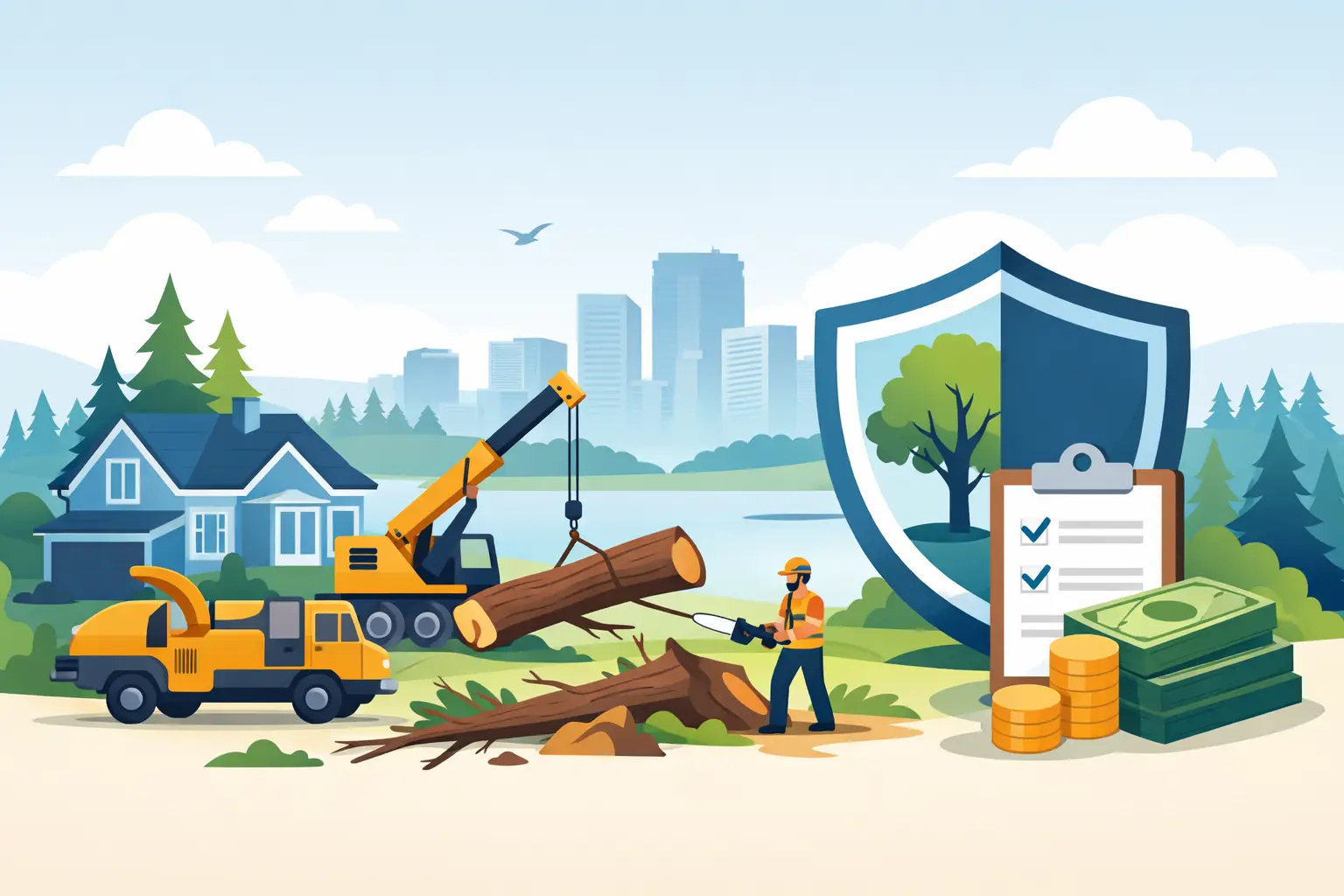
When a maple is leaning toward the garage or storm damage leaves limbs over a driveway, the first concern is getting the danger removed safely. The next concern should be tree removal insurance. Tree work involves climbing, rigging, equipment, vehicles, and heavy wood moving near homes, fences, power lines, and landscaping. The right coverage helps protect the property owner and the crew if something does not go as planned.
Price matters, but it should not be the only thing compared in an estimate. A low bid can become expensive quickly if the contractor is uninsured, underinsured, or unclear about what their coverage actually applies to.
Why Tree Removal Insurance Matters
Removing a tree is not the same as hauling away brush or mowing a lawn. Even a straightforward removal can involve dropping sections of trunk, lowering branches with ropes, operating a skid steer, or grinding a stump near underground utilities. Conditions can change fast when wind, decay, ice, limited access, or nearby structures are involved.
A professional tree company carries insurance because accidents, while uncommon with careful planning, can happen. General liability coverage is designed to address third-party property damage or injury claims that result from the contractor’s work. If a limb damages a roof, fence, parked vehicle, or neighboring property, this is the type of coverage homeowners expect the contractor to have.
Workers’ compensation is just as important when a company has employees. Tree work has real injury risk, and homeowners should not assume an injured worker’s medical costs will be handled without proper coverage. Ask the contractor whether workers’ compensation applies to the crew working on your property. If the business uses subcontractors, ask how those workers are insured as well.
Commercial auto coverage can also matter. Tree crews use trucks, trailers, chippers, loaders, and other equipment that travel through residential neighborhoods and driveways. A company that takes safety seriously plans for the entire job site, not only the moment a tree comes down.
What to Verify Before Hiring a Tree Service
A legitimate company should be comfortable discussing insurance. You do not need to become an insurance expert, but you should get clear answers before the crew arrives.
Start by asking for proof of current general liability insurance. A certificate of insurance can show the named insured, policy dates, carrier, and coverage limits. Make sure the business name on the document matches the company providing the estimate. A certificate is useful, but it is not a substitute for asking direct questions about the planned work.
For larger, higher-risk, or commercial jobs, property managers may want to confirm that the coverage is active with the insurance provider. They may also ask to be listed as a certificate holder. That does not automatically make the customer insured under the contractor’s policy, but it provides a record that insurance information was supplied for the project.
Before accepting an estimate, confirm these points:
- Does the company carry current general liability insurance for tree removal work?
- Are employees covered by workers’ compensation, and how are subcontractors handled?
- Does the written estimate describe what will be removed, hauled away, or left on site?
- Who is responsible for protecting turf, fences, driveways, landscaping, and nearby structures?
- Does the crew have a plan for traffic, neighboring property, utilities, and cleanup?
Clear answers are a good sign. Vague answers, reluctance to provide documentation, or pressure to book immediately are reasons to slow down.
Insurance Does Not Replace a Careful Work Plan
Insurance is a backstop, not a work method. The best outcome is still a job completed without damage or injury. That starts with looking at the full site before work begins: tree condition, lean direction, access, overhead lines, nearby windows, underground utilities, and the condition of the ground.
For example, a healthy tree in an open backyard may be removed in manageable sections with a clear drop zone. A decayed oak squeezed between a house and a fence may require controlled rigging and more time. The second job costs more for a reason. It requires more planning, more labor, and a greater focus on protecting the property.
At Xtreme Tree Service MN, the goal is safe removal, clear communication, and a clean site when the work is done. Insurance supports that standard, but careful crew work is what protects the property in the first place.
Does Homeowners Insurance Cover Tree Removal?
This depends on why the tree came down, what it damaged, and the terms of your individual policy. Homeowners insurance may help with removal when a tree falls because of a covered event and damages a covered structure, such as a house, garage, or fence. Storm-related claims often involve deductibles, coverage limits, and separate rules for debris removal.
A tree that simply falls in the yard without damaging an insured structure may not be covered. The same can be true for a tree that was already dead, neglected, or removed as routine maintenance. Most policies are not intended to pay for preventive trimming, removal of a healthy nuisance tree, or stump grinding after routine work.
If a neighbor’s tree falls onto your property, the situation can be frustrating, but fault is not always automatic. Insurance decisions often come down to the cause of the fall and whether the owner knew, or reasonably should have known, that the tree was hazardous. A visibly dead or damaged tree that was ignored may be treated differently than a healthy tree that came down in a major windstorm.
When damage occurs, take photos before cleanup when it is safe to do so. Document the tree, affected structures, and visible damage. Then contact your insurance carrier or agent to understand the claim process before authorizing non-emergency repairs. If a tree is creating an immediate safety hazard, such as blocking access or resting on a structure, emergency removal may need to happen first. Keep the estimate, invoice, and photos for your records.
Storm Damage Creates Different Questions
After a Minnesota storm, many homeowners need help fast. That urgency is understandable, especially when a tree is on a roof, driveway, or power line. It is also when uninsured operators can show up with promises that sound convenient but create more risk.
Do not let urgency push you into hiring someone who cannot explain their insurance or provide a written scope of work. A professional crew can assess the hazard, explain what needs to happen first, and identify whether utility involvement is necessary. Never assume a downed line is safe because it is not sparking. Keep people and pets away and contact the utility provider or emergency services as appropriate.
Emergency work may cost more than scheduled work because crews are responding outside normal hours, working around unstable conditions, or prioritizing immediate access and safety. That does not mean you should accept an unclear price. Ask what the emergency scope includes, whether debris will be removed, and whether follow-up work such as stump grinding or final cleanup is separate.
Red Flags That Should Concern Property Owners
Tree removal insurance should be easy for a qualified contractor to discuss. Be cautious if a company only offers a verbal price, will not provide proof of coverage, asks for full payment before work begins, or insists permits and utility concerns are not their problem.
Another warning sign is an estimate that is dramatically lower than every other qualified bid. Sometimes a job truly is simpler than it appears. More often, a much lower price means something is missing: proper equipment, labor, cleanup, insurance, or time needed to do the work safely.
Also pay attention to the wording of the estimate. It should make clear whether it includes removal, hauling, brush chipping, log handling, stump grinding, and site cleanup. This is not only about avoiding surprise charges. A clear scope gives everyone the same expectations before equipment enters the yard.
The Right Questions Protect Your Property
You do not need to handle a tree emergency alone or take on the risk of a difficult removal yourself. Ask direct questions, get the work in writing, and choose a crew that treats insurance, safety, and cleanup as part of the job.
A good tree service will not make the insurance conversation complicated. They will explain the plan, show up prepared, protect what they can, and leave you with a safer property instead of another problem to solve.