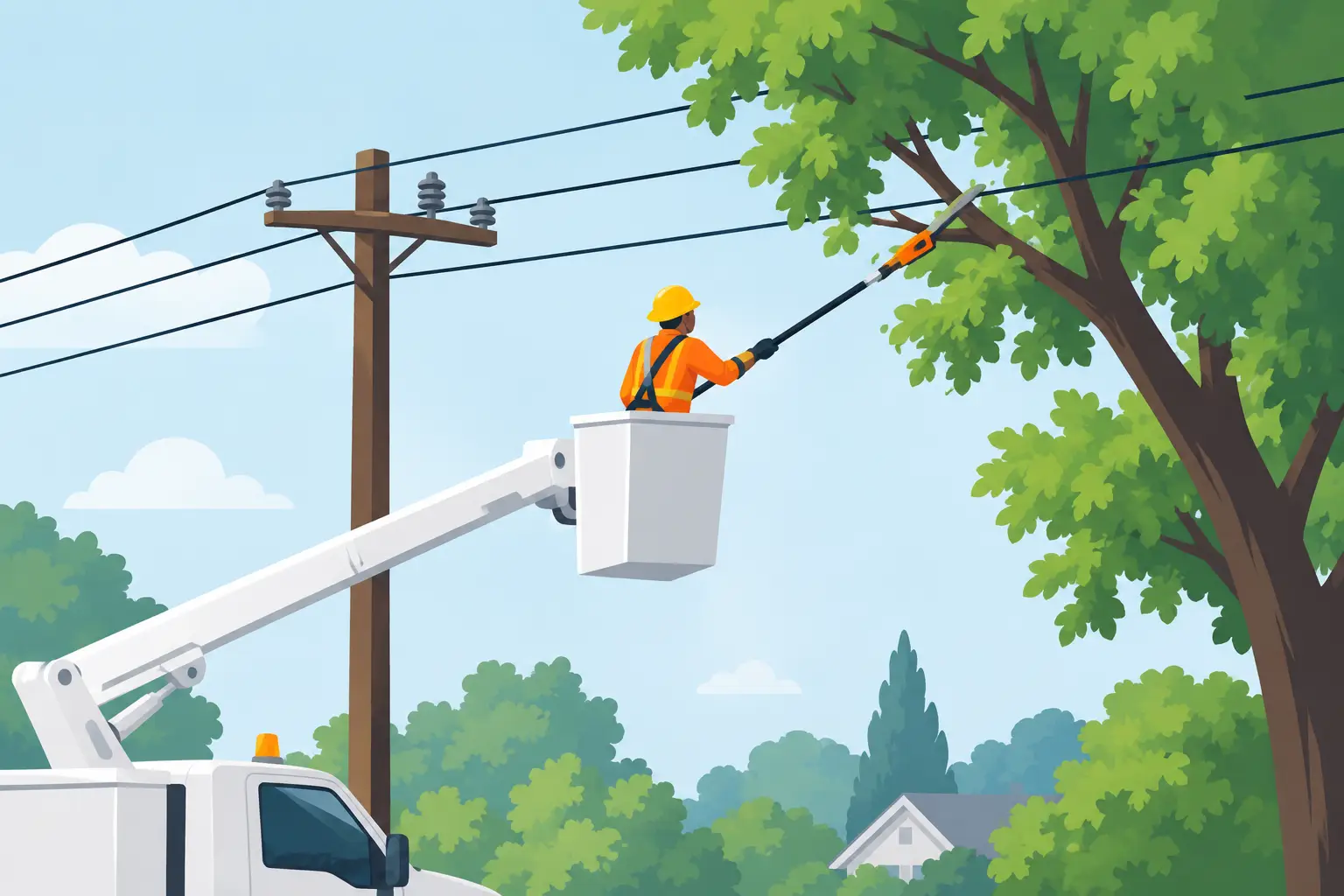
A tree can look like the immediate problem, but the utilities around it can turn routine work into a serious safety issue. This guide to protecting utility lines explains what homeowners and property managers should check before tree removal, trimming, storm cleanup, or stump grinding in Plymouth and the West Metro.
Start With the Utility Lines You Can See
Overhead power lines deserve the most caution. A branch does not have to touch a line directly to create danger. Wet wood, climbing equipment, ropes, ladders, and falling limbs can all carry or create a path to electrical hazards. If a tree is growing into or hanging over a power line, that is not a standard pruning job.
Homeowners should never attempt to cut, pull, or climb a tree near energized electrical lines. Keep people, tools, and equipment well away from the area. Call the utility company if a limb is resting on a service line, a line is low, or a tree has brought down wires after a storm. If a line is on the ground, stay back, keep others away, and treat it as energized even if there are no sparks.
Telephone, cable, and internet lines may not carry the same electrical risk, but they still need protection. A falling branch can pull a service connection loose, damage siding or roof flashing, or create a repair issue that delays cleanup. A professional tree crew plans where limbs will land and how they will be lowered before making cuts.
Know the Difference Between a Service Line and a Utility Line
The line running from the street-side pole to your house is often the electrical service line. It may cross directly through the path of a mature tree. The power utility may handle work around its own distribution lines, while the homeowner is responsible for clearing or removing a tree on private property.
That division can be confusing, especially after storm damage. The practical rule is simple: if branches are near electrical conductors, stop and get qualified help. Do not assume a line is safe because it appears insulated or because the tree has been touching it for years.
Call Before Digging Near Underground Utilities
Tree work is not only an overhead concern. Stump grinding, planting replacement trees, installing a fence, setting posts, and moving heavy equipment can affect underground utility lines. Before any digging project, contact 811 to request utility locates. This step gives utility companies time to mark many public lines before work begins.
The markings help identify buried electric, gas, water, sewer, communications, and cable lines. They do not remove the need for caution. Marks can fade, site conditions can change, and some lines may be buried deeper or shallower than expected.
It also depends on the property. Utility locates commonly cover public utility lines, but private lines may not be included. A private gas line to a garage, an electrical feed to a shed, a sprinkler system, landscape lighting, or a private water line may be the property owner’s responsibility to locate. If you are unsure, ask before the job starts rather than finding out when a grinder or excavator hits something buried.
Why Stump Grinding Needs a Site Check
Stump grinding stays close to the surface, but roots can spread farther than most people expect. Older yards may also have abandoned lines, shallow cable runs, drain tile, or irrigation components near the stump. A crew should inspect the work area, review visible markings, and discuss any known private utilities before bringing in equipment.
Grinding a stump near a marked line may still be possible, but the approach may need to change. In some cases, the stump can be ground to a safe depth while avoiding a specific area. In other cases, full removal is not worth the risk. Clear expectations before work protect the property and avoid expensive surprises.
Plan the Drop Zone Before the First Cut
Safe tree removal depends on more than the tree itself. Crews need room to work, a planned drop zone, and a way to protect nearby structures and utilities. A tree leaning toward a garage, overhead line, fence, or neighbor’s yard may need to be dismantled in sections instead of felled in one piece.
This is where experience matters. A controlled removal may involve climbing, rigging, or lowering branches with ropes so they do not swing into service lines or land on landscaping. It can take more time than a simple cut-and-drop job, but the trade-off is controlled work around the things that matter most.
Before a crew arrives, homeowners and property managers can help by making access clear. Move vehicles away from the work zone, unlock gates, and point out septic covers, irrigation heads, invisible dog fences, outdoor lighting, and known utility routes. If a line feeds a detached garage, pool equipment, or yard feature, mention it during the estimate.
Storm Damage Changes the Risk
Storm-damaged trees are unpredictable. A split trunk, hanging limb, or uprooted root ball may be under tension. Branches can be tangled in utility lines even when the damage is not obvious from the ground. Wind and ice can also weaken lines, poles, and connections that looked fine before the storm.
Do not walk under hanging branches or try to pull debris free from a wire. Keep children, pets, and neighbors out of the area. If a tree has damaged an electrical line or pole, contact the utility provider first. Once the electrical hazard is addressed, a professional tree crew can assess what remains and remove debris safely.
Fast response matters after a storm, but rushing the first cut is not the answer. The right order is to secure the area, identify utility hazards, stabilize the damaged tree when possible, and then remove material in manageable sections. That protects people, homes, and the crew doing the work.
What to Expect From a Careful Tree Service
A dependable tree service should ask questions before starting, not after a problem occurs. During an estimate, the crew should look for overhead lines, access limits, structures, fences, and signs of underground utilities. They should also explain whether the tree can be removed directly or needs a more controlled method.
For work near utilities, clear communication is part of the safety plan. The property owner should know where equipment will be staged, which areas need to stay clear, and whether the job requires coordination with a utility company. There is no benefit in promising a quick removal if site conditions call for a slower, safer approach.
At Xtreme Tree Service MN, protection of nearby homes, landscaping, and structures is built into the job plan. That includes taking utility lines seriously, using the right removal method for the space, and leaving the site clean when the work is complete.
Common Mistakes That Lead to Utility Damage
The most common mistake is assuming a small branch cannot cause a major problem. A limb can catch a wire as it falls, especially when wind changes its direction or the branch is heavier than it appears. Another mistake is using a ladder near overhead lines. Ladders, pole saws, and extension tools increase the chance of accidental contact.
Property owners also run into trouble when they skip the locate request because the job seems minor. A new shrub, replacement tree, or small stump may be enough to hit a shallow cable or private line. The few days spent waiting for marks are far less disruptive than an outage, gas leak, damaged irrigation system, or emergency repair bill.
Finally, do not rely on old landscaping plans or memory alone. Yards change over time. Previous owners may have added utilities, contractors may have rerouted lines, and visible features do not always show what is underground.
A Safer Way to Move Forward
Before scheduling tree work, walk the property and note every overhead wire, utility box, service connection, and area that may contain buried lines. Request locates when digging or stump work is involved, and share anything unusual with the crew before equipment arrives.
If a tree is close to a power line, damaged by a storm, or growing above a buried utility route, getting a professional assessment is the practical next step. A clear plan before the first cut helps keep a manageable tree problem from becoming a utility emergency.
Leave a Reply