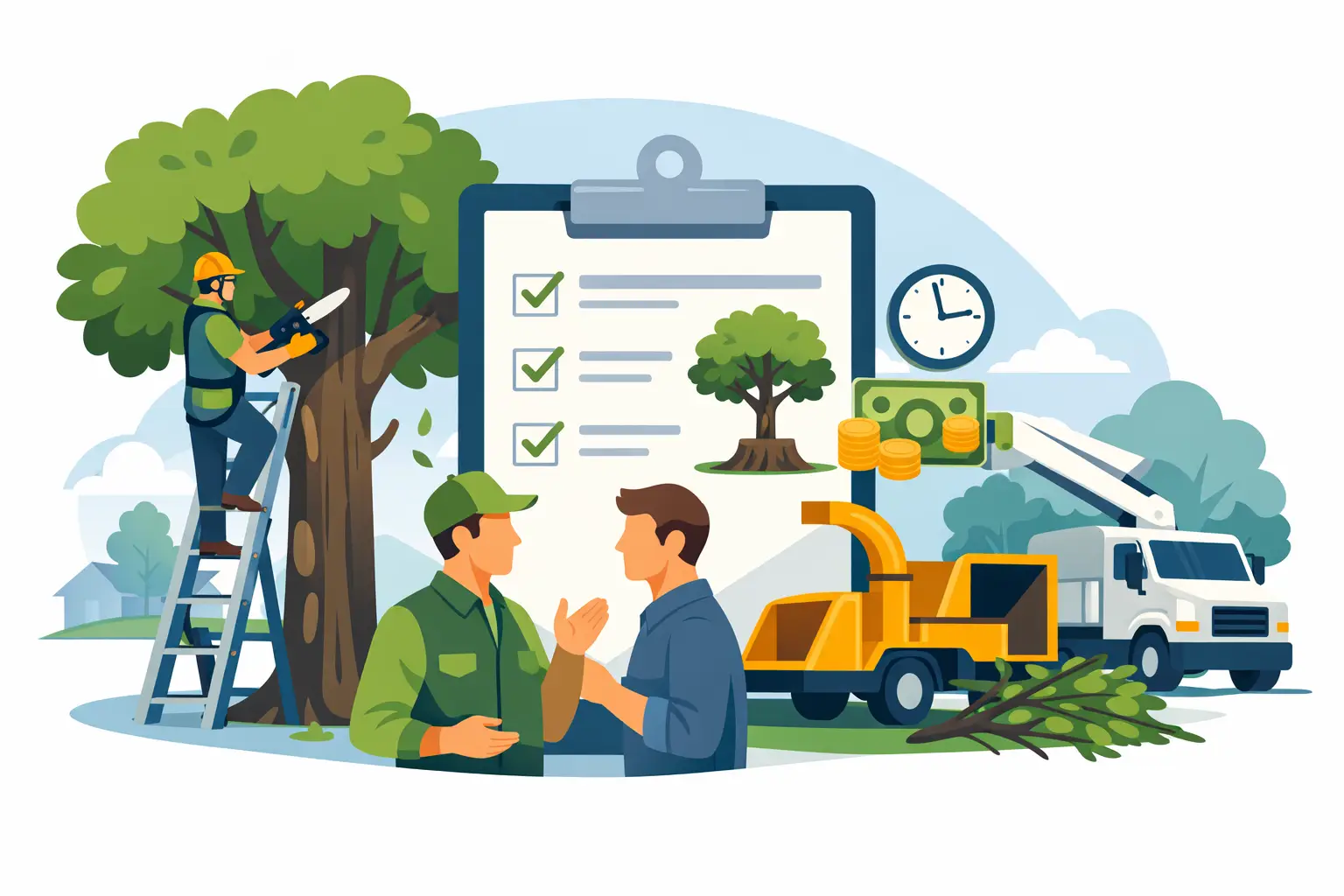
A low number on a tree service estimate can look good right up until the crew shows up with the wrong equipment, damages the yard, or leaves a pile of brush behind. Tree work is one of those jobs where the details matter. If you’re hiring for removal, pruning, stump grinding, or storm cleanup, the estimate should tell you more than just the final price.
For homeowners and property managers in Plymouth and the West Metro, a good estimate does two things. It gives you a clear scope of work, and it shows how the company plans to protect your property while getting the job done safely. That matters when large limbs are hanging over a roof, access is tight, or the ground is soft and landscaped.
What a tree service estimate is really for
A tree service estimate is not just a number. It is the working plan for the job. It should explain what is being cut, removed, ground, hauled, or cleaned up so there is no confusion once the crew arrives.
That matters because tree jobs can change a lot based on the tree, the location, and the risk. Removing a small ornamental tree in an open yard is different from taking down a mature maple over a driveway and power lines. Pruning a few dead limbs is different from full canopy reduction or clearance work over a home. If the estimate is vague, the chances of missed expectations go up.
A clear estimate also helps you compare companies fairly. One bid may look cheaper simply because it leaves out hauling, stump grinding, or cleanup. Another may include everything from debris removal to site protection. If you are only comparing totals, you are not really comparing the same job.
What should be included in a tree service estimate
The best estimates are specific without being hard to read. You should be able to look at the document and understand exactly what is being done and what is not.
Scope of work
This is the first thing to check. The estimate should identify the tree or trees involved and describe the service. That could mean removal, trimming, pruning, deadwood removal, storm damage cleanup, stump grinding, brush hauling, or a combination of services.
If there are multiple trees on the property, each one should be listed clearly. General wording like “tree work in backyard” leaves too much room for disagreement later.
Cleanup and debris removal
Cleanup is a big part of the job. Ask whether branches, logs, chips, and sawdust are included in removal. Some customers want wood left behind for firewood. Others want the site cleared completely. The estimate should say which option applies.
Good cleanup is one of the easiest ways to tell whether a company is thinking through the full job. When the work is done, you should not be left with a mess unless you agreed to that upfront.
Stump grinding, if needed
A lot of people assume stump grinding is included with removal. Often it is not. That does not mean the estimate is wrong, but it should be clearly stated either way.
If stump grinding is included, the estimate should mention how deep the stump will be ground and whether surface roots are part of the work. If it is not included, that should be spelled out so there are no surprises.
Access and site conditions
Access affects price, equipment choice, and timing. A tree in a fenced backyard with limited gate access may need to be climbed and cut in smaller pieces. A front-yard removal with open truck access is usually faster and simpler.
A solid estimate will account for obstacles such as fences, patios, sheds, retaining walls, gardens, septic areas, and overhead lines. These details are not small. They shape how the job is done and how much care is needed to protect the property.
Property protection
This part matters more than most people realize. Tree crews may need to move heavy wood, run equipment across turf, or lower limbs over structures. The estimate should reflect a safety-first plan, not just a fast one.
That may include controlled rigging, use of mats to reduce lawn impact, or special handling around homes, garages, and landscaping. When a company pays attention to these details before the job starts, that is usually a good sign.
Price terms and timing
The estimate should show the total price and whether there are conditions that could change it. In most routine residential work, the price should be straightforward. If there is a chance of extra charges due to hidden issues or storm-related complications, that should be explained upfront.
You should also know the expected schedule. Not every company can promise same-day service for routine work, but they should be able to tell you whether the job is likely to be done this week, next week, or after a weather delay.
Why tree service estimate prices vary so much
If you’ve gathered more than one bid, you may have noticed that prices can be far apart. That does not always mean someone is overcharging. It often means the jobs are being scoped differently.
Tree size and condition
Larger trees usually cost more because they take more time, labor, and equipment. A dead, storm-damaged, split, or leaning tree can also raise the difficulty. Brittle wood, unstable trunks, and hanging limbs create more risk and require a slower, more controlled approach.
Location and hazards
A tree next to a home, garage, deck, fence, or utility line is not priced the same as a tree standing alone in open space. Hazardous locations call for more rigging, more precision, and often more cleanup.
Equipment and crew needs
Some jobs can be handled quickly with standard equipment. Others need climbing, specialty rigging, a lift, or extra crew members. If the estimate reflects a safer setup, that may be worth more than a lower price with corners cut.
Cleanup expectations
Full haul-away, detailed raking, and site cleanup all add labor time. If one estimate includes a thorough cleanup and another does not, that will show up in the price.
How to compare estimates without guessing
When you review a tree service estimate, slow down and look past the total. Ask whether both companies are quoting the same work, the same cleanup level, and the same level of property protection.
If one estimate is much lower, ask what is excluded. Is stump grinding separate? Is brush hauling extra? Will they leave logs behind? Are they trimming the whole tree or just a few limbs? A short conversation can save a lot of frustration later.
You should also pay attention to communication. A company that is prompt, direct, and clear during the estimate process is usually easier to work with once the job starts. That matters when you are dealing with a damaged tree after a storm or trying to coordinate work around tenants, vehicles, or access schedules.
Red flags in a tree service estimate
Some estimates raise concerns right away. If the scope is vague, the cleanup is not addressed, or the company cannot explain how the work will be done near structures, ask more questions.
Another red flag is pressure. You should not need to make a rushed decision on routine tree work just to hold a price. Clear service, fair pricing, and direct answers tend to be better signs than a high-pressure sales pitch.
It is also worth watching for missing basics. If the company cannot describe the work clearly or seems casual about safety and site protection, that is a problem. Tree work is skilled, physical, and potentially hazardous. The estimate should reflect that reality.
Tree service estimate questions worth asking
A few simple questions can make the estimate much more useful. Ask what is included in cleanup, whether the stump is part of the job, how the crew will protect the lawn and nearby structures, and what the expected timeline looks like.
If the tree is close to the house or visibly damaged, ask how they plan to remove it safely. If access is tight, ask what equipment they expect to use. Straight answers are a good sign. So is a company that is willing to look at the whole site, not just the trunk.
For local homeowners, this is where a practical company stands out. Xtreme Tree Service MN focuses on clear communication, safe work, and full cleanup because those are the parts customers remember after the sawdust settles.
A better estimate leads to a better job
The best tree service estimate is the one that leaves fewer questions, not just the one with the lowest price. It should tell you what is being done, how your property will be protected, what cleanup to expect, and when the work can happen.
When the estimate is clear, the job usually runs smoother from start to finish. That gives you a better chance of getting what you actually need – safe tree work, less stress, and a yard that looks taken care of when the crew leaves.