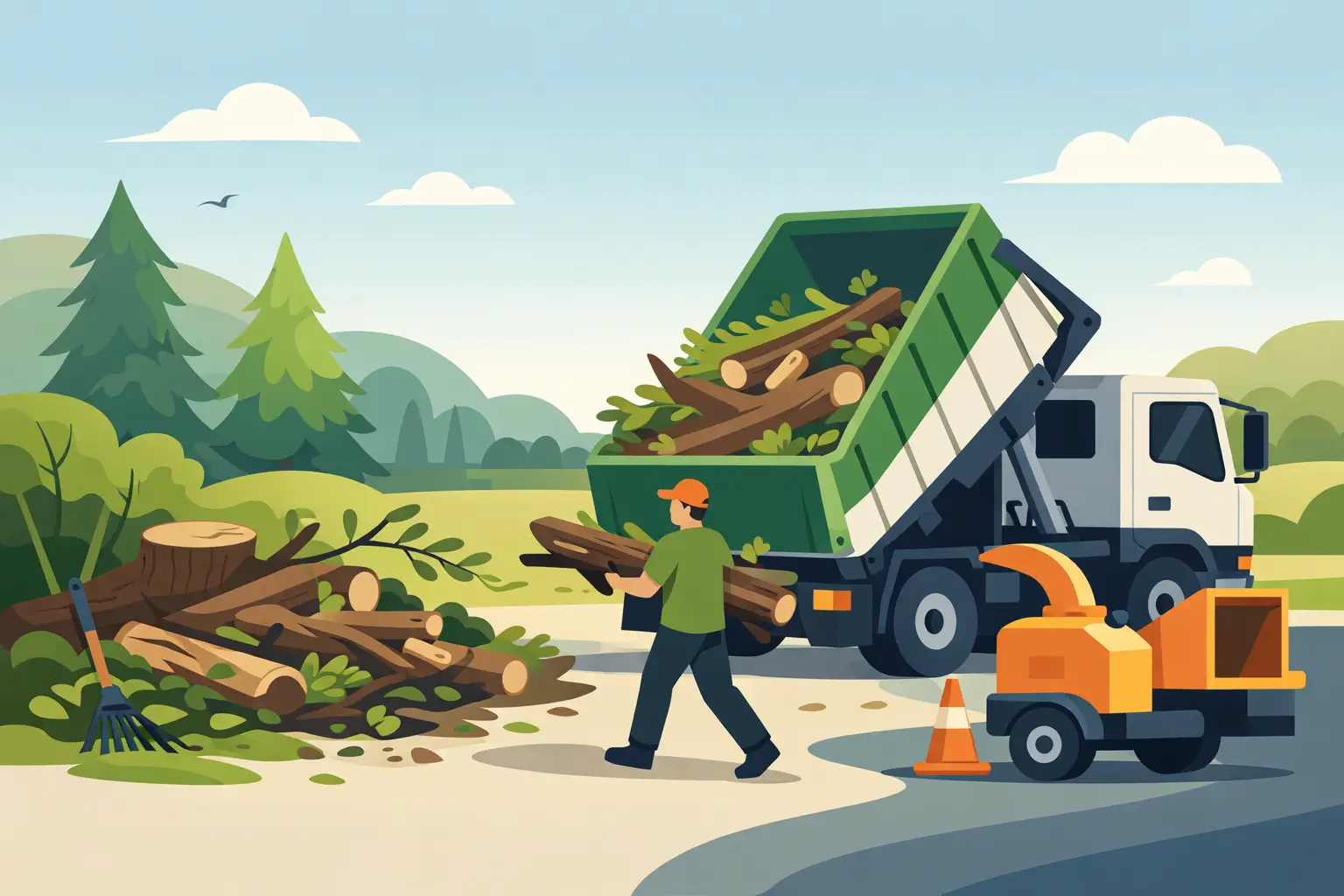
A downed branch can look manageable until it becomes a pile of brush, cut logs, and tangled limbs spread across the lawn. Tree debris hauling is the part of tree work that gets your property back to normal after removal, trimming, or storm damage. For homeowners and property managers in Plymouth and the West Metro, it means less time wrestling with heavy material and less risk of leaving a cleanup problem behind.
What Tree Debris Hauling Should Include
Hauling is more than loading a few branches into a truck. A proper cleanup starts with moving debris safely away from the house, driveway, garden beds, fences, and other areas that need protection. The crew should then sort, cut, load, and remove the material according to the scope of the job.
Depending on the project, tree debris may include:
- Fallen limbs and storm-damaged branches
- Brush, twigs, and smaller cuttings from pruning
- Sections of trunk and larger wood rounds
- Wood chips or sawdust left from cutting
- Debris scattered across lawns, roofs, driveways, or parking areas
Not every job requires every piece of material to leave the property. Some homeowners want logs saved for firewood, while others prefer wood chips left for mulch. The right plan depends on available space, the condition of the wood, and what will be useful to you. Clear communication before work starts prevents a surprise pile at the curb or a load of wood left where you did not want it.
Why Debris Is Not a Simple DIY Cleanup
Small piles from routine yard work are one thing. Debris from a mature tree, a large pruning job, or a storm-damaged canopy is another. Green wood is heavy, branches do not stack neatly, and brush can hide sharp cut ends, hanging vines, or broken limbs under tension.
Dragging large pieces across a yard can also damage turf, irrigation heads, gardens, and hardscapes. Trying to cut up a branch that is resting against another branch or structure can be dangerous if the weight shifts unexpectedly. After a storm, the risk is higher because damaged limbs can be cracked, hung up, or connected to nearby utility lines.
Professional hauling keeps the cleanup tied to the tree work itself. The same crew can manage the material with the right equipment and account for the hazards that created the debris in the first place. That matters when the goal is not just a cleaner yard, but a safe one.
When to Schedule Tree Debris Hauling
Hauling makes sense whenever the volume or weight of material exceeds what your regular yard waste setup can handle. It is especially useful after tree removal, major trimming, stump work, and severe weather.
After Tree Removal or Major Pruning
Removing a tree creates more material than most people expect. Even a modest tree can produce a surprising number of branches, brush piles, and trunk sections. Pruning a large maple, oak, or cottonwood can create the same issue, particularly when overgrown limbs are taken down to improve clearance or reduce risk.
A crew can chip brush, cut larger wood into manageable sections when requested, and haul away the remaining debris. This leaves the work area clear so you can use the yard again without spending the next several weekends making small disposal trips.
After Wind, Snow, or Ice Damage
Minnesota weather can turn a healthy-looking tree into an immediate cleanup problem. Heavy snow, ice, and strong winds can break limbs onto lawns, driveways, roofs, fences, and parked vehicles. In these situations, hauling should follow safe removal of unstable material.
Do not work beneath hanging branches or attempt to pull a large limb off a roof, vehicle, or power line. Keep people and pets out of the area, take note of any visible damage, and contact a qualified tree service. If a branch is in or near electrical lines, contact the utility provider or emergency services as appropriate before anyone touches it.
Before Selling, Renting, or Opening a Property
Curb appeal is not just about mowing the lawn. Brush piles, fallen branches, and old cut wood can make an otherwise well-kept property look neglected. For property managers, debris can also block parking, sidewalks, common areas, and access routes for tenants or contractors.
Prompt removal helps keep the grounds usable and presents a better first impression. It also reduces the chance that children, visitors, or maintenance staff will trip over hidden limbs or try to move material that is too heavy to handle safely.
What Affects the Cost of Hauling
The cost of tree debris hauling usually depends on volume, access, material size, and site conditions. A few branches from a backyard pruning job are different from hauling a large tree that came down across a fenced lot after a storm.
Access is a major factor. A crew can work more efficiently when trucks and equipment can get close to the debris. Narrow gates, steep slopes, soft ground, landscaping, and material behind a house may require more hand carrying and careful routing. That extra care protects the property, but it can add labor time.
The type of debris matters too. Loose brush is often chipped or compacted efficiently, while long heavy logs require cutting, lifting, and loading. Clean wood is different from a mixed pile containing soil, rocks, fencing, construction material, or other household waste. A straightforward estimate should explain what material is included and whether there are conditions that could change the scope.
How to Prepare Without Creating More Work
You do not need to cut, stack, or drag debris into one giant pile before the crew arrives. In fact, moving damaged branches can make the situation less safe. A few simple steps are enough.
Keep vehicles out of the work area and move outdoor furniture, toys, planters, or other portable items away from where debris will be removed. If there is a gate, let the crew know its width and whether it is accessible. Point out sprinkler heads, septic components, buried lines, garden features, and areas you want protected.
If you want firewood or chips left behind, decide that before the estimate or before work begins. Let the crew know where the material should go and whether you need it cut to a certain length. If you want a full removal, say so clearly. Good cleanup starts with everyone agreeing on the final condition of the site.
A Clean Job Site Is Part of the Service
Tree work naturally creates sawdust, wood chips, and small pieces of brush. The goal is not to pretend the work never happened, but to leave the property orderly, safe, and ready for regular use. That means removing the agreed-upon debris, collecting loose material, and checking the work area before the crew leaves.
For a larger project, some minor settling or scattered sawdust may be normal, especially around a stump grinding area. But driveways, walkways, lawn areas, and access points should not be left blocked by branches or covered with avoidable debris. If something needs special attention, such as a garden bed or a shared commercial entrance, mention it before work begins.
Xtreme Tree Service MN approaches hauling as part of finishing the job right, not an afterthought once the cutting is done. The focus is safe removal, careful handling around your property, and clear expectations about what stays and what goes.
Choose a Crew That Plans for the Last Load
When you request an estimate, ask how debris will be handled, whether brush will be chipped, and whether logs can be removed or left for your use. Confirm that cleanup includes the areas affected by the work, not just the spot where the tree stood. These details are simple, but they are what separate a completed project from a yard full of work still waiting for you.
A clear plan for hauling lets you look at the result of tree work instead of the mess it created. Whether the cause is routine pruning or a branch down after a storm, the right cleanup leaves your property safer, cleaner, and easier to enjoy.