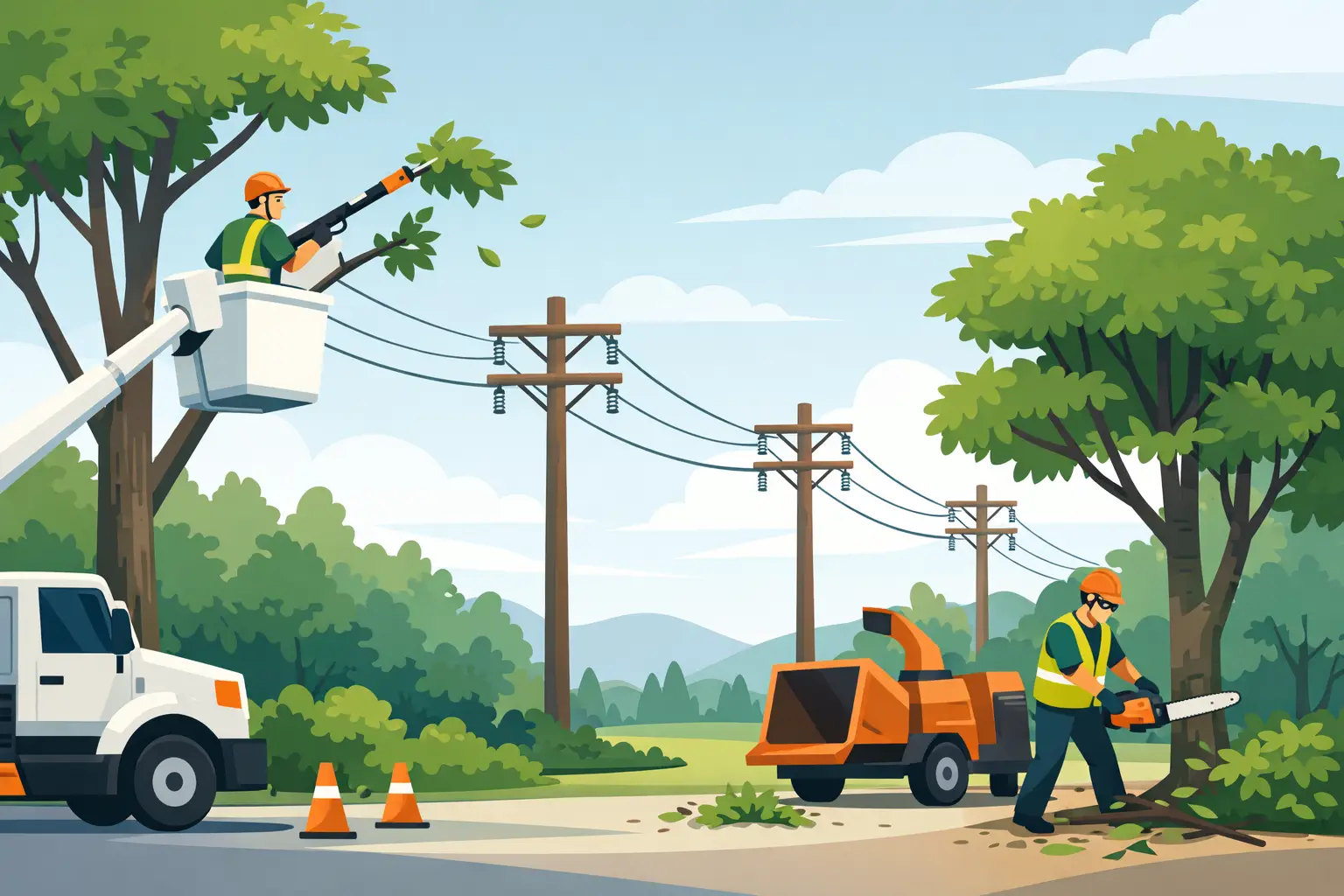
A branch brushing a power line may look like a small yard issue, but it can become a service outage, fire risk, or serious safety hazard without much warning. Utility tree clearance is the work of managing trees and limbs near overhead electrical equipment so lines remain accessible, reliable, and safer during wind, ice, and heavy snow.
For homeowners and property managers in Plymouth and the West Metro, the right response is not to grab a ladder or start cutting. Trees and power lines require a clear plan, the right equipment, and coordination with the utility when needed. The goal is to protect people first, then protect the home, landscaping, and the surrounding property.
What Utility Tree Clearance Means
Utility tree clearance is different from routine tree trimming. Routine pruning may improve a tree’s shape, remove deadwood, or open up a view. Clearance work focuses on preventing branches, trunks, and falling limbs from contacting electrical lines, transformers, poles, and related equipment.
That work may involve selective pruning, removing dead or weak limbs, reducing overextended branches, or removing a declining tree that cannot safely coexist with the line. The right approach depends on the tree species, its condition, how close it is to the line, and whether the line is a utility-owned distribution line or the service line running from the pole to a home.
The utility often manages vegetation around its own primary lines. Property owners are still responsible for watching trees on their property, reporting concerns, and addressing trees that threaten buildings, driveways, fences, or lower service lines. Responsibilities can vary by utility and location, so assumptions can lead to delays.
Signs It Is Time to Address Trees Near Utilities
A healthy-looking tree can still create a problem when it grows into the wrong space. Watch for limbs resting on or repeatedly contacting lines, branches hanging directly above a service drop, or a canopy that has grown tightly around utility equipment.
Dead branches are another concern. A dry, cracked, or partially detached limb may fall during a summer storm or under the weight of wet snow. Leaning trees, split trunks, heaving roots, and decay at the base can also turn a clearance issue into a removal decision.
Pay attention after storms. Wind can move branches closer to lines without breaking them, and ice can add enough weight to create a dangerous bend. If a limb is down on a wire, a line is sagging, or you see sparking, smoke, or a damaged pole, stay well away. Keep others out of the area and contact the electric utility or emergency services right away. Do not approach the line, touch the tree, or try to move debris.
Why DIY Cutting Near Power Lines Is Not Worth the Risk
The risks are not limited to direct contact with a wire. Electricity can travel through wet wood, tools, ladders, ropes, and the ground. A branch that appears clear of a line can shift unexpectedly while it is being cut. A falling limb can also pull on a service line, damage the connection at the house, or hit a nearby structure.
Working from a ladder adds another layer of risk. Tree limbs rarely fall exactly where expected, especially when they are under tension or tangled in other branches. A property owner may be able to handle light pruning well away from utilities, but clearance work near energized equipment is not a weekend project.
Professional planning matters because the crew must consider more than the cut itself. They need to identify nearby lines, set a safe work zone, control the drop area, protect roofs and landscaping, and determine whether utility coordination is required before work begins.
Utility Tree Clearance Starts With the Right Plan
Before pruning or removal, a qualified crew should inspect the full site. That includes the tree’s health, lean, decay, branch weight, access for equipment, nearby structures, and the location of every overhead line. The work plan should also account for fences, gardens, patios, sheds, vehicles, and underground utilities where equipment may be used.
There is no single clearance distance that fits every property. Required spacing depends on line voltage, local utility practices, and the type of work being performed. That is why a reputable tree service will not make a blanket promise about trimming close to a line without first evaluating the situation.
If a tree is too close to energized conductors, the utility may need to de-energize, cover, or otherwise manage the line before tree work can proceed. In other cases, utility-qualified line clearance crews may need to perform the trimming themselves. A professional tree company can help identify the issue and explain the next practical step, but it should not overstep the utility’s safety requirements.
Pruning Versus Removal
Pruning is often the better choice when a tree is healthy, structurally sound, and can be directed away from the line without damaging its long-term form. Selective cuts can reduce branch weight and keep future growth from crowding the same area too quickly.
Removal is often the safer answer when a tree has major decay, repeated storm damage, poor structure, or a trunk that is growing directly into the utility corridor. It can also make sense when repeated trimming would leave the tree weak, misshapen, or likely to fail.
Removal has trade-offs. It changes shade, privacy, and the appearance of the property. It can also require stump grinding and replacement landscaping afterward. Still, a hazardous tree next to a line or over a home is rarely a problem that improves with time.
What a Safe Crew Does Differently
Good utility clearance work is controlled from start to finish. The crew establishes a work area, keeps people and pets clear, and chooses equipment that fits the site. Depending on the tree and access, that may mean climbing, rigging sections down, using a bucket truck, or bringing in specialized equipment.
The crew should remove material in manageable pieces instead of taking uncontrolled cuts. This helps prevent damage to roofs, fences, gardens, and neighboring property. It also keeps branches from swinging into lines or dropping into spaces where they cannot be safely retrieved.
Cleanup matters, too. Tree work near utilities can leave a surprising amount of brush, sawdust, and wood behind. A complete job includes hauling debris, clearing work areas, and discussing any remaining stump or landscape needs. Xtreme Tree Service MN approaches tree work with that same practical focus: safe execution, clear communication, and a clean property when the crew is done.
Planning Ahead Reduces Emergency Calls
The best time to evaluate trees near power lines is before a storm exposes the problem. In the West Metro, spring growth, summer thunderstorms, and winter ice all put pressure on trees and utility infrastructure. A quick property walk in late summer or early fall can reveal branches that are closing in on service lines before snow and wind arrive.
Property managers should also include tree clearance in regular exterior inspections, especially around parking areas, entrances, dumpsters, and shared utility corridors. A branch over a sidewalk or access drive can become both a safety issue and a maintenance headache after a storm.
If you are unsure whether a tree is the utility’s responsibility or yours, start by documenting what you see from a safe distance. Note the location, whether branches are touching or merely nearby, and whether the tree appears damaged. The utility can address immediate electrical hazards, while a tree professional can evaluate the tree itself and explain safe options for pruning, removal, hauling, or stump grinding.
A tree does not need to be on the ground to be a problem. If branches are crowding a line, a trunk is failing, or storm damage has changed the situation, address it while there is time to plan the work safely and keep your property running normally.