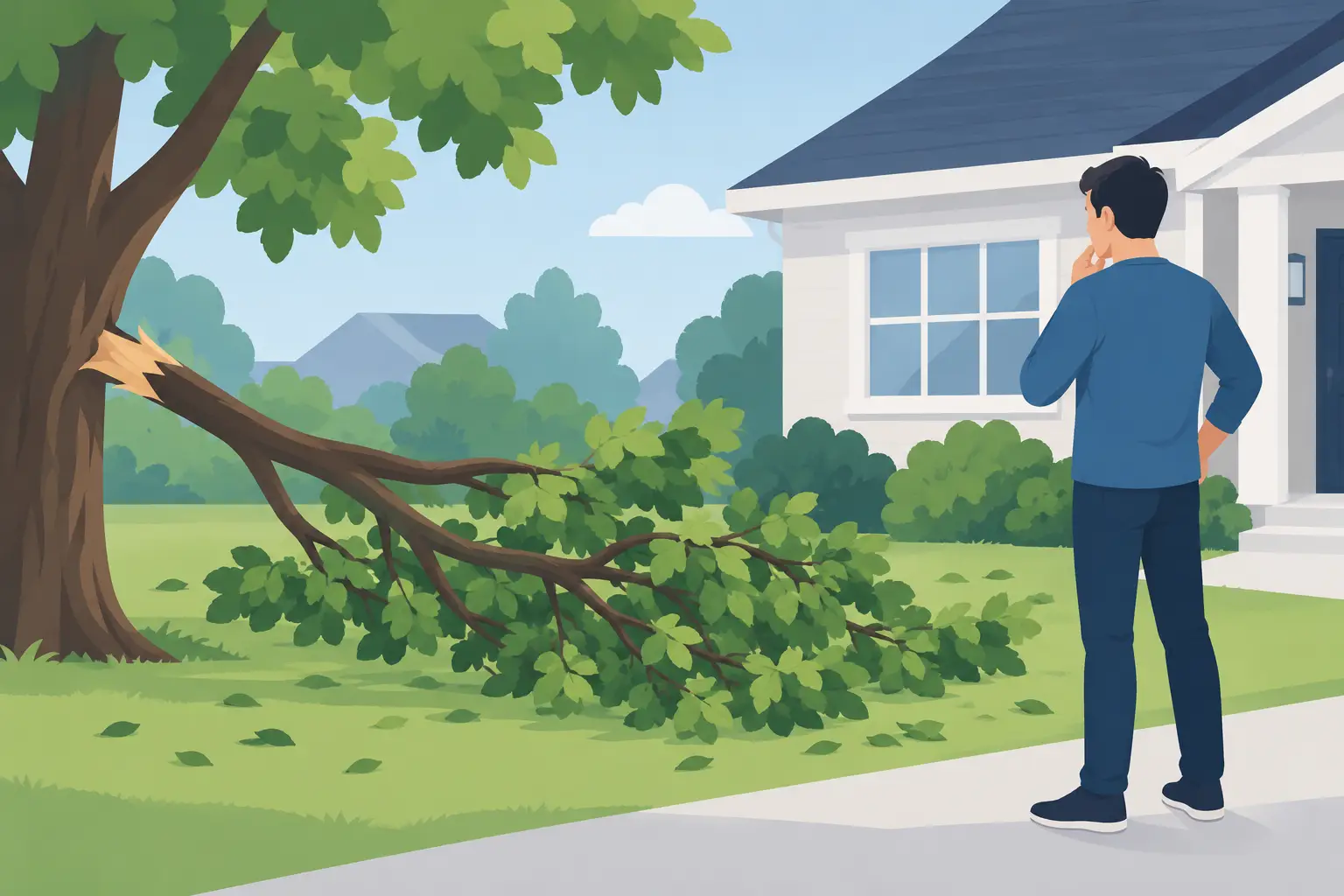
A branch comes down overnight, blocks the driveway, dents a fence, or lands across a shared property line. The first question is usually practical: who is going to clean this up? But are fallen branches homeowner responsibility? In most cases, the answer depends on where the branch landed, whether it caused damage, and whether someone knew the tree was unsafe before it fell.
For Plymouth, Minnetonka, Maple Grove, and other West Metro homeowners, the best first step is to make the area safe, document what happened, and avoid assumptions about who owes what. Tree and property questions can get complicated quickly after wind, ice, or heavy snow.
Are Fallen Branches Homeowner Responsibility in Minnesota?
Generally, homeowners are responsible for fallen branches that land on their own property. That includes routine cleanup after a storm, branches that fall from their own tree, and branches from a neighbor’s healthy tree that happen to land in their yard.
That may feel unfair when the branch came from next door, but property and insurance matters often focus on the location of the damage and whether negligence was involved. A healthy tree can lose limbs in high winds without anyone being legally at fault.
If a branch falls in your yard and causes no damage, it is usually a straightforward cleanup job. If it damages a roof, vehicle, fence, shed, or power line, the situation deserves more care. Take photos before moving debris, especially if you may file an insurance claim or need to discuss the issue with a neighbor.
This is general information, not legal advice. Property lines, local rules, insurance policies, and the condition of the tree can all affect the outcome.
When the Tree Owner May Be Responsible
A homeowner may have more responsibility when they knew, or reasonably should have known, that their tree posed a hazard and failed to address it. For example, a tree with dead hanging limbs, a visibly split trunk, extensive decay, or branches repeatedly overhanging a structure may need professional attention before the next storm arrives.
The key issue is often notice. If a neighbor had been told about a clearly hazardous tree, had seen obvious decline, or had received a recommendation to remove dangerous limbs but did nothing, there may be a stronger argument that they were negligent. Evidence matters. Photos, written communication, inspection notes, and dates can help establish the condition of the tree before the branch fell.
That does not mean every dead branch automatically makes the owner liable. Storms can cause sudden failures in otherwise healthy-looking trees. Severe wind, ice loading, and saturated soil put unusual stress on mature trees throughout the Twin Cities area.
If there is damage or disagreement, keep conversations calm and factual. Share photos, identify the branch and its origin, and contact your insurer before agreeing to repairs or assigning fault.
What If Your Neighbor’s Branch Lands in Your Yard?
If your neighbor’s branch falls into your yard without causing major damage, you will typically arrange and pay for cleanup on your side. You can certainly talk with the neighbor, particularly if the branch is large or the tree has an ongoing problem, but do not assume they are automatically required to remove it.
A different situation arises when the branch is still attached and extends over your property line. In many cases, a property owner can trim branches back to the property line, at their own expense, as long as the work does not harm the tree. That sounds simple, but mature trees are not always simple. Cutting too much from one side, removing major structural limbs, or making improper cuts can create a hazard and may damage the tree.
For larger limbs, trees near homes, or trees with visible decay, a professional assessment is the safer route. A qualified tree crew can determine whether pruning is appropriate, whether the tree needs more extensive work, and how to complete the job without dropping material onto roofs, fences, or landscaping.
Fallen Branches on Driveways, Streets, and Shared Areas
A branch across a private driveway is generally the homeowner’s problem to clear, provided it can be handled safely. A small limb can often be moved by hand. A large limb under tension, resting on a roof, tangled in another tree, or touching a utility line is not a do-it-yourself cleanup project.
If a branch falls into a public street, sidewalk, or right-of-way, contact the city or the appropriate public works department. Do not block traffic while attempting to cut it apart. Municipal responsibility can vary depending on whether the tree is on private property, in the boulevard, or within a public easement.
For townhome communities and commercial properties, check the association documents or property maintenance agreement. Common-area trees and shared landscaping may fall under an HOA or property manager’s responsibility. Still, if a branch is creating an immediate hazard near your unit, vehicle, or entrance, report it promptly and document the issue.
When Insurance May Help With Fallen Branch Damage
Homeowners insurance may cover sudden damage from a fallen tree or branch, such as damage to a roof, garage, fence, or other covered structure. Coverage depends on the cause of the fall, the type of property damaged, the policy limits, and the deductible.
Cleanup coverage is often more limited than homeowners expect. Many policies provide some debris-removal coverage only when the tree or branch damages an insured structure. If a branch falls in an open yard and causes no damage, cleanup may not be covered. Calling your insurance agent is the clearest way to understand your policy before filing a claim.
Do not wait to prevent further damage. If a branch has punctured a roof or is pressing against siding, carefully document the scene and arrange reasonable emergency protection or removal. Keep invoices and photos. Your insurer may need them.
When a neighbor’s tree damages your property, your own insurance policy may still be the first place to start. Your insurer can review the circumstances and determine whether there is a reason to pursue the neighbor or their insurer later.
Know When a Fallen Branch Is an Emergency
Not every fallen limb needs same-day service. A branch on the lawn can often wait for scheduled cleanup. A branch on a house, vehicle, power line, driveway, or pedestrian path should be handled quickly.
Stay clear of downed or sagging utility wires, even if they appear inactive. Call the utility company or emergency services as appropriate, and keep people and pets away from the area. Do not attempt to move branches touching wires with a rake, pole, ladder, or chainsaw.
Avoid cutting limbs that are bent, twisted, or pinned under another tree. Wood under tension can release without warning. Likewise, do not climb onto a roof to remove storm debris. The branch may be unstable, and roof surfaces can be slick or damaged.
A professional crew can assess the weight, tension, access, and nearby hazards before making a cut. The goal is not just to get the branch down. It is to avoid turning a cleanup problem into an injury or a larger repair bill.
Preventing the Next Branch Problem
Regular pruning is one of the most practical ways to reduce fallen-branch risk. It removes deadwood, reduces weak or overextended limbs, and helps identify cracks, decay, or structural issues before a storm exposes them.
Pay attention to branches over roofs, driveways, patios, play areas, and parked vehicles. Watch for dead limbs, peeling bark, fungal growth near the trunk, cracks where limbs join, and branches that have suddenly started hanging lower than usual. These signs do not always mean a tree must be removed, but they are worth evaluating.
Good pruning is selective. Overcutting a tree can cause stress and weak regrowth, while topping can create long-term safety and health problems. A proper plan focuses on the limbs that create real risk and protects the rest of the tree where possible.
A Clear Next Step After Storm Damage
Take photos, keep everyone clear of the hazard, and contact your insurer if property was damaged. Then arrange safe removal and cleanup based on the size and location of the branch. Xtreme Tree Service MN helps homeowners and property managers handle storm-damaged limbs, hazardous branches, and thorough debris removal with clear communication from the estimate through cleanup.
A fallen branch is easier to deal with when the responsibility is clear, but safety comes first either way. Address the immediate hazard, keep good records, and have questionable trees checked before the next round of Minnesota weather puts them to the test.
Leave a Reply