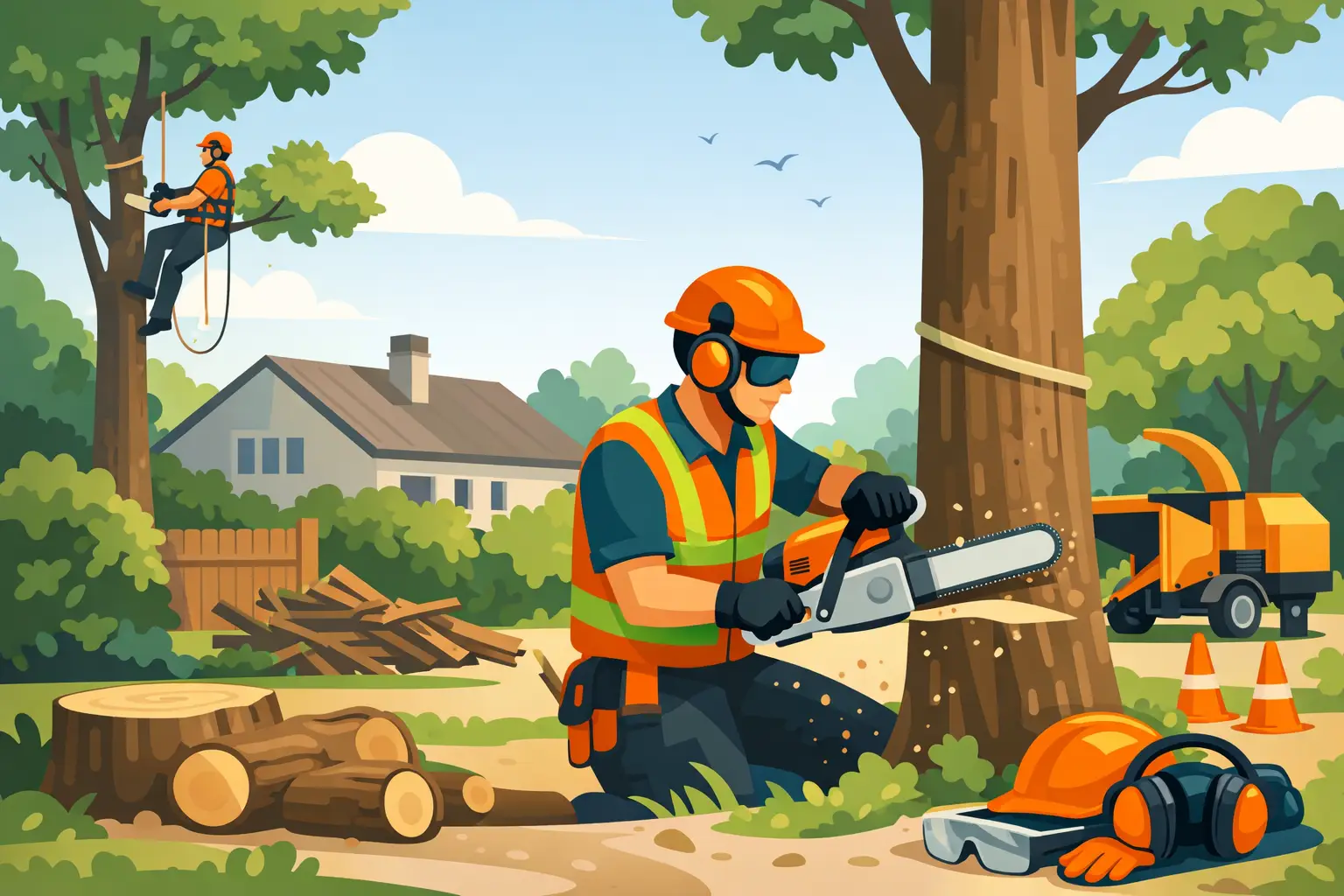
A tree can look manageable from the ground right up until the first cut goes wrong. That is why tree removal safety matters so much for homeowners and property managers. One bad angle, one hidden crack, or one branch over a roofline can turn a routine job into damage, injury, or a much bigger cleanup.
For most properties in Plymouth and the West Metro, the real question is not just whether a tree needs to come down. It is whether it can be removed without putting the house, garage, fence, landscaping, power lines, or people at risk. Safe removal starts well before a saw is started, and that planning is usually what separates a controlled job from a costly mistake.
What tree removal safety really means
Tree removal safety is not just about wearing protective gear. It means controlling the entire job site so the tree comes down where it is supposed to, debris stays managed, and the crew protects everything around it.
That sounds simple, but every property adds variables. A dead ash tree near a driveway behaves differently than a healthy maple in an open backyard. A tree leaning over a shed calls for a different approach than one tangled with other canopies. Weather, soil conditions, decay, access for equipment, and nearby structures all affect how safe the work can be.
For homeowners, the safest job often looks less dramatic than expected. It may involve taking a tree down in sections instead of dropping it in one piece. It may require rigging, climbing, or equipment to control each cut. It may also take longer because protecting the property is part of the work, not an extra.
Why risk goes up fast on residential properties
Open field removals are one thing. Tight suburban lots are another. In neighborhoods across Plymouth, Minnetonka, and Maple Grove, trees are often close to homes, patios, fences, neighboring yards, and utility lines. That changes the margin for error.
A branch does not need to hit the roof directly to cause trouble. It can glance off shingles, crack gutters, crush shrubs, tear screens, or bounce into a window. Limbs under tension can spring unexpectedly. Dead wood can fail sooner than it appears. Even the trunk itself may not react the way it looks from the ground if there is internal rot.
Storm damage adds another layer. A partially broken tree can look stable while still holding stored pressure in the wood. Trees twisted into other limbs or hanging above a driveway are especially unpredictable. Those are the jobs where people get hurt trying to save time.
The warning signs that a removal may be high risk
Some trees clearly need professional handling. Others fool people because they still have leaves or because only part of the tree looks damaged. A tree may be higher risk if it is dead, hollow, split, leaning more than before, or shedding large limbs. The same goes for trees growing close to structures or showing root problems after storms or excavation.
Access also matters. A moderate tree in a backyard with no clear drop zone can be harder to remove safely than a larger tree in an open area. If the crew has to work between a house and a fence, over decorative landscaping, or around a shared property line, the removal becomes more technical.
Power lines are in their own category. If a tree is anywhere near service lines or utility lines, that is not a guessing game. It calls for the right coordination, spacing, and removal method. The cost of getting that wrong is far beyond a broken branch.
Tree removal safety starts with the estimate
A good estimate is not just a price. It is the first safety review of the job. The crew should be looking at lean, canopy spread, defects, obstacles, access points, ground conditions, and where debris will go. They should also be thinking through how to protect the lawn, nearby plantings, driveways, and structures during both removal and cleanup.
This is also where expectations should get clear. If a tree can be dropped safely in one section, that may save time. If it needs to be pieced down carefully, that should be explained up front. Fast service matters, but safe service matters more.
Straight communication is part of safety because surprises create problems. Property owners should know whether equipment needs gate access, whether vehicles should be moved, and whether the work area needs to stay clear for a period of time.
How professional crews control the job site
The safest removals are controlled from start to finish. That means setting a work zone, managing traffic around the property, and making sure each cut serves a clear purpose. The crew is not just cutting wood. They are managing weight, movement, fall paths, and debris flow.
In many residential removals, the tree is dismantled in stages. Upper limbs come off first. Heavier sections are lowered or directed into a safe landing zone. The trunk is then removed in manageable pieces. That method takes more planning, but it reduces the chance of damage when space is limited.
Cleanup is part of the safety process too. Brush, logs, and sawdust left scattered around a site create hazards for homeowners, kids, pets, and vehicles. A clean finish is not just about appearance. It is part of leaving the property safe and usable again.
Why DIY tree removal is usually a bad bet
There are small yard tasks homeowners can handle. Tree removal usually is not one of them. The issue is not just skill with a chainsaw. It is judging compression and tension in the wood, understanding how a tree will react once weight shifts, and having the equipment to control the fall.
People often assume a smaller tree is safe enough to handle on their own. Sometimes that is true in a wide open area with no targets nearby. Often it is not. A modest tree can still damage a roof, crush a fence panel, or kick back unexpectedly during cutting. Add a ladder to the mix and the risk gets worse.
There is also the liability side. If a branch lands in a neighbor’s yard, clips a vehicle, or brings down a line, the money problem can quickly outgrow whatever was saved by skipping professional help. For property managers, that risk is even harder to justify.
Tree removal safety and property protection
For most customers, safe tree work is really about protecting what surrounds the tree. That includes siding, windows, decks, gardens, irrigation, retaining walls, and even the lawn. Heavy equipment, dropped wood, and dragged brush can all leave a mark if the job is not planned carefully.
That is why experienced crews pay attention to access and surface protection, not just cutting. Sometimes a removal method is chosen specifically to reduce turf damage. Sometimes hauling routes matter just as much as the removal itself. It depends on the property, the season, and how tight the work area is.
In Minnesota, ground conditions can change that calculation. Wet soil, snow, and spring thaw can all affect equipment access and yard impact. The safest plan is the one that fits the site as it is, not the one that looked easiest on paper.
What homeowners should ask before hiring
If you are comparing companies, ask how they plan to remove the tree and protect the surrounding property. Ask what access they need, how cleanup is handled, and what changes if the tree is more damaged than it first appears.
You do not need a long technical explanation. You do need clear answers. A dependable company should be able to explain the approach in plain language and set expectations before work begins. That is one reason local homeowners call Xtreme Tree Service MN when they want direct communication and no-pressure estimates. The job is safer when everyone is clear on the plan.
Price still matters, of course. But tree work is one of those services where the cheapest option can become the most expensive if corners are cut. A fair estimate paired with careful execution usually saves more in the long run than a rushed job that leaves damage behind.
If a tree on your property looks questionable, do not wait for the next storm to make the decision for you. The best time to handle a risky tree is when the work can be planned, the site can be controlled, and the removal can be done the right way. A safe job protects more than the tree line. It protects the whole property and the people around it.