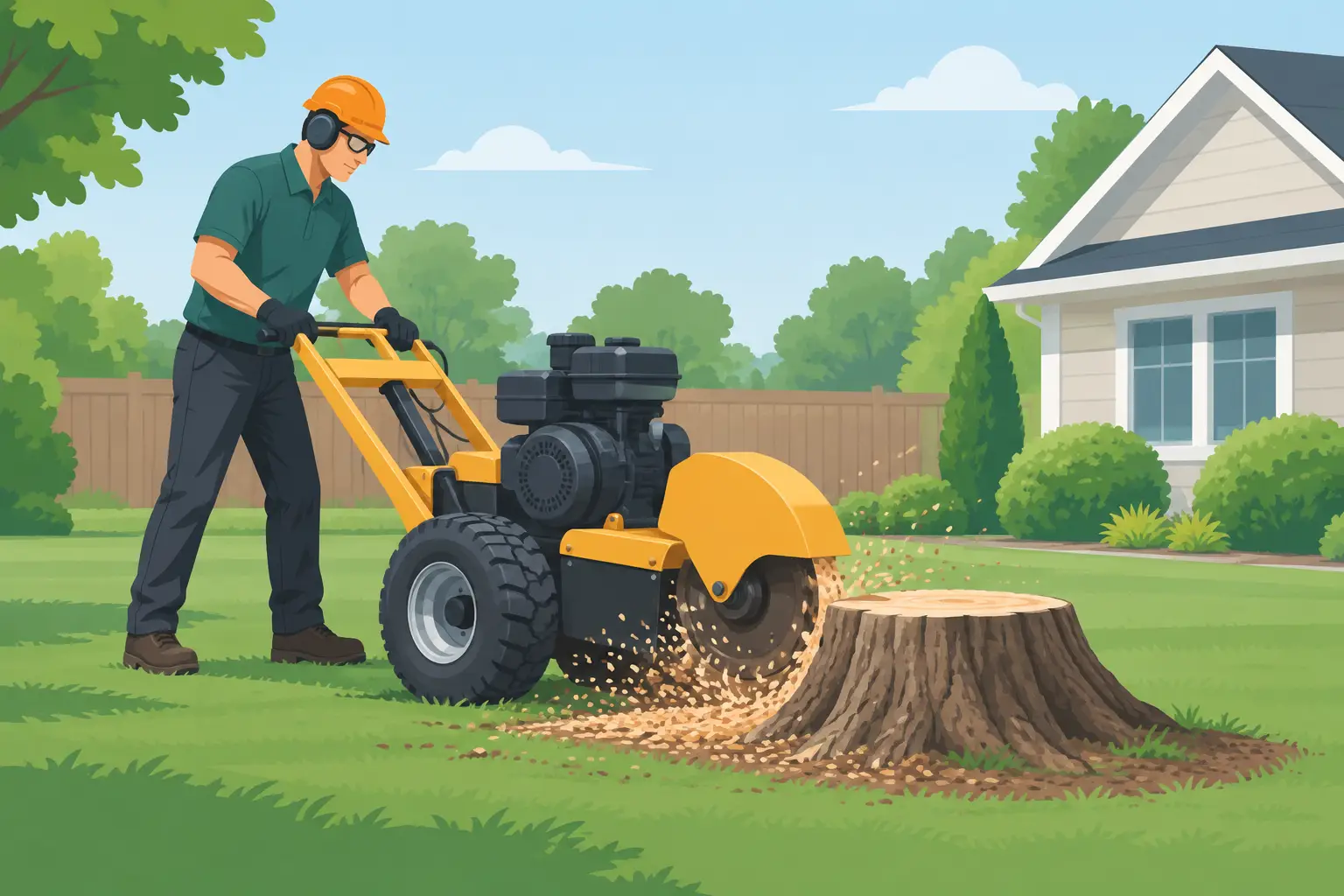
A stump can look harmless until it gets in the way of mowing, landscaping, a new fence, or kids playing in the yard. This guide to residential stump grinding explains what the job involves, what affects the cost, and how to prepare your property for safe, clean results.
Why Grind a Stump Instead of Leaving It?
After a tree is removed, the stump is still part of the problem. It can be a tripping hazard, damage mower blades, attract insects as it decays, and make an otherwise clean yard feel unfinished. In a tight suburban lot, it can also limit where you place a garden bed, patio, shed, or replacement tree.
Stump grinding removes the visible stump by using a machine with a rotating cutting wheel. The wheel works the wood down into chips, usually below ground level. It is generally faster and less disruptive than full stump removal, which requires pulling the stump and much of its root system from the ground.
Grinding is the right choice for most residential properties because it avoids tearing up a large section of lawn. Full removal may make sense when a construction project requires completely clear ground or when a large root mass must be addressed. For everyday yard use, grinding usually gives homeowners the cleaner, more practical result.
What Residential Stump Grinding Includes
A professional stump grinding job starts with access and safety, not just turning on a machine. The crew checks the stump’s size, location, nearby utilities, landscaping, fences, and structures. They also look for hidden concerns such as rocks, metal, old fence hardware, or buried debris that can damage equipment or create a safety risk.
The grinder is positioned over the stump and moved back and forth across the wood. Most residential stumps are ground several inches below grade. That is deep enough for grass, mulch, or many landscape plans. If you are installing a patio, driveway, footing, or other hardscape, let the contractor know before work begins. Those projects may need a deeper grind or additional excavation.
Grinding creates a mix of wood chips and soil, often called grindings. The amount depends on the stump’s diameter, species, and root flare. A small ornamental tree may leave only a manageable pile. A mature maple, ash, oak, or cottonwood can produce a significant amount of material.
Cleanup should be discussed during the estimate. Some homeowners want the grindings left for mulch in a natural area. Others prefer the chips hauled away so the area is ready for topsoil and seed. Clear expectations before the crew arrives prevent surprises after the work is finished.
Residential Stump Grinding: Access Matters
The same-size stump can be a very different job depending on where it sits. A stump beside a driveway is usually easier to reach than one behind a narrow gate, down a slope, or surrounded by established garden beds.
A professional crew considers the route from the street to the work area. Gates, steps, retaining walls, septic components, irrigation heads, utility pedestals, and soft ground can affect equipment choice and setup. Smaller grinders can fit through many backyard gates, but they may work more slowly than larger machines. That trade-off can be worth it when protecting fences and landscaping is the priority.
Tell the estimator about anything that may be buried or hard to see. This includes invisible pet fencing, irrigation lines, landscape lighting wire, private gas lines, old concrete, and abandoned posts. Public utility locating is essential before digging or grinding near marked utility areas, but it does not always identify privately installed lines. Homeowners and property managers should point out those private systems in advance.
What Affects Stump Grinding Cost?
Stump grinding is typically priced by the size and difficulty of the job, not by a single flat rate. Diameter is a major factor, but it is not the only one. A broad, low stump with heavy surface roots can take longer than a taller stump of a similar diameter.
The biggest cost factors are usually stump size, tree species, access, root flare, the number of stumps, and cleanup needs. Hardwood stumps such as oak can take more time than softer wood. Stumps near a house, fence, utility box, or delicate landscape feature require more careful operation. Hauling away a large volume of grindings can also add labor and disposal costs.
Multiple stumps are often more efficient to handle in one visit because travel, setup, and cleanup are shared across the job. If you have several old stumps around the property, it is worth having them evaluated together rather than scheduling separate visits.
A good estimate should explain the work area, expected grind depth, whether surface roots are included, and what happens to the chips. Price matters, but clear scope matters just as much. The lowest number is not always the best value if it leaves you with unplanned cleanup or a stump ground too shallow for your project.
How to Prepare Your Yard Before the Crew Arrives
A little preparation keeps the job moving and helps protect your property. Move vehicles away from the access route and clear lawn furniture, potted plants, toys, hoses, and loose decorations from around the stump. If a gate needs to be opened or a dog needs to stay indoors, handle that before the scheduled arrival time.
Mark private lines and point out sprinkler heads, landscape borders, or drainage features that may be close to the work zone. If the stump is in a fenced backyard, measure the gate opening if you are unsure about equipment access. Photos can help an estimator evaluate the situation, but an on-site look is often best for difficult locations.
Do not try to cut the stump lower right before the appointment unless requested. A very low stump can reduce the amount of wood available for the grinder to work against. Leave the site as it is and let the crew determine the safest approach.
What to Do With the Grindings
Fresh stump grindings are not finished soil. They are mostly wood material, and they settle as they break down. If you want lawn over the area, remove excess chips or spread them elsewhere, then add quality topsoil and seed or sod. A level surface may need more than one light topsoil application as the ground settles over time.
For a mulched bed, some grindings can be used as a base material, but avoid piling them against the trunk of a living tree or the foundation of your home. They work best when spread out and mixed with other mulch rather than mounded in one thick pile.
If you plan to plant another tree in the same area, shift the new planting location away from the old stump whenever possible. The old roots will continue to decompose underground, and the soil may settle. A nearby but offset location gives the new tree better soil and room to establish.
Timing Stump Grinding in Minnesota
Stump grinding can be done through much of the year when conditions allow. Dry, firm ground usually makes access easier and reduces turf damage. In the West Metro, late spring through fall is often a convenient time to schedule work around landscaping plans.
Winter work is possible in some situations, especially when frozen ground helps protect turf. Deep snow, ice, or limited access can make a job less practical. Spring thaw is another variable. Saturated lawns can rut under equipment, so waiting for drier conditions may be the better choice when protecting the yard is a priority.
If a stump is creating an immediate hazard, blocking repairs, or holding up a project, do not wait solely for the perfect season. A site review can determine whether the work can be completed safely now or should be scheduled for better ground conditions.
Why DIY Stump Grinding Is Often Not Worth the Risk
Rental stump grinders are available, but they are not simple lawn tools. The machines are heavy, powerful, and capable of throwing wood chips, rocks, and debris. Operators must manage uneven ground, underground hazards, nearby structures, and a spinning cutting wheel at the same time.
DIY work may be reasonable for a small, open-area stump when the operator understands the equipment and has the right protective gear. It becomes much less attractive when access is tight, the stump is large, or there are fences, utility lines, landscaping, and people nearby. Equipment rental, transportation, fuel, and disposal can narrow the savings quickly.
For most homeowners, professional stump grinding is about more than speed. It is a way to get the stump handled with the right equipment, controlled work practices, and a cleanup plan that fits the yard.
A stump does not need to stay in the way of the next project. With a clear plan for access, grind depth, cleanup, and the finished landscape, the space can become useful again instead of remaining a reminder of the tree that used to be there.
Leave a Reply