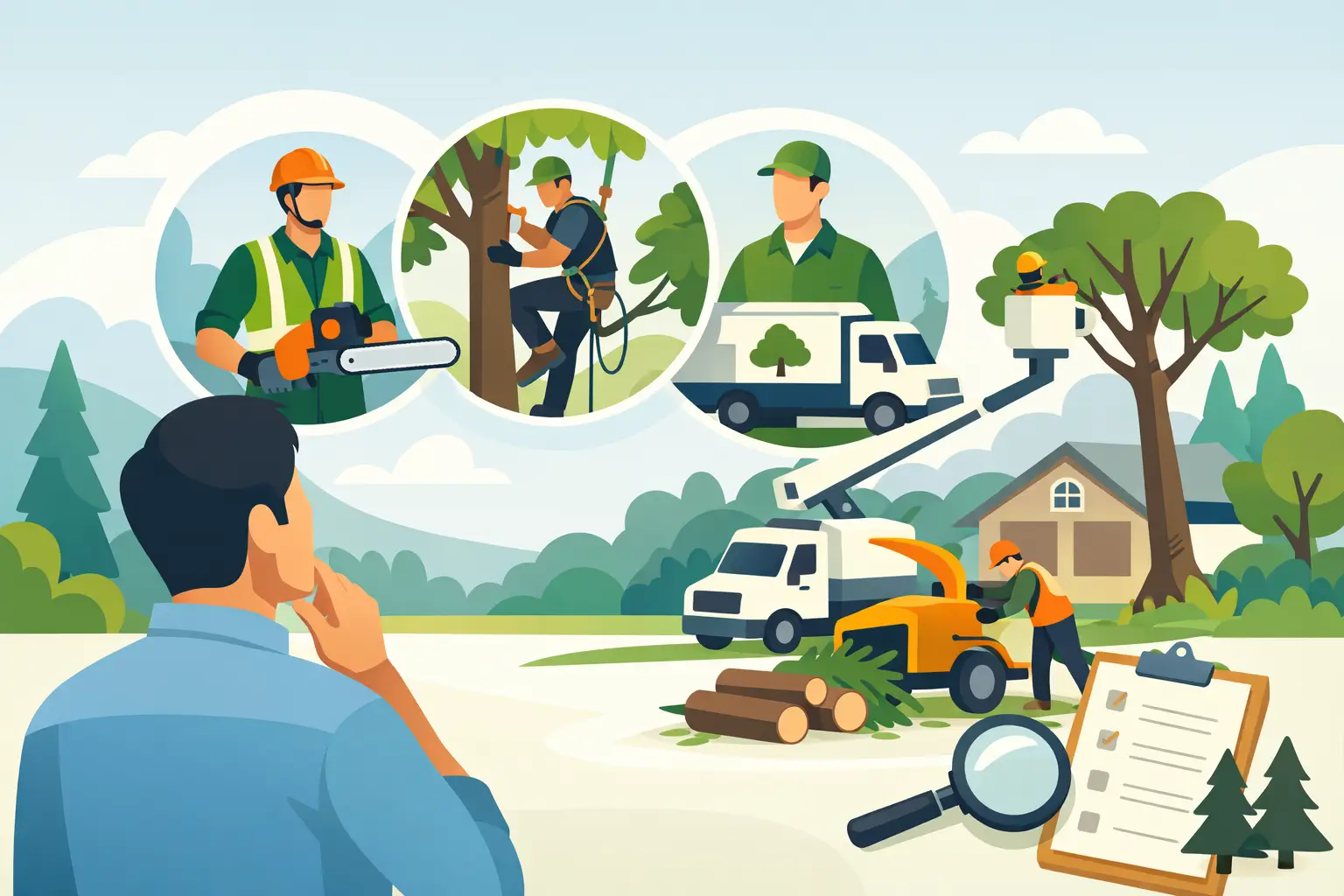
A low quote can get expensive fast if the crew shows up without the right equipment, damages your yard, or leaves a half-finished cleanup behind. If you’re figuring out how to choose a tree company, the goal is not just to get the tree work done. It’s to protect your home, your property, and everyone around it while the job is being done.
Tree work is one of those services where the difference between a solid crew and a careless one is obvious once the cutting starts. Branches may be hanging over a roof, a driveway may need to stay accessible, or a storm-damaged tree may already be unstable. In those situations, clear communication and safe execution matter more than a flashy sales pitch.
How to choose a tree company starts with safety
The first thing to look for is whether the company talks about safety in a practical way. You want to hear how they plan to protect your house, nearby trees, fences, landscaping, and vehicles. A good tree company should be able to explain how they handle rigging, falling limbs, tight spaces, and site access without making it sound complicated or vague.
This matters even more for removals and storm damage work. A company that does routine trimming well is not always the right fit for a large hazardous removal. Some jobs need bucket access, climbing skill, specialized rigging, or a clear plan for working around power lines and structures. If a crew seems too casual about those details, that is a red flag.
Insurance is part of safety too. Ask whether the company carries liability insurance and workers’ compensation coverage. If something goes wrong, you do not want uncertainty about who is responsible. A professional company should be ready to answer that question directly.
Look closely at how they estimate the job
A good estimate should make the scope of work clear. That means what trees are being removed, what branches are being pruned, whether brush and logs are hauled away, and whether stump grinding is included or priced separately. If the estimate feels too general, you may end up paying for items you thought were already covered.
Fast estimates are helpful, but speed should not replace clarity. The best companies keep the process simple while still setting expectations up front. You should know what is happening, where equipment will go, and what the yard should look like when the crew leaves.
Pricing is important, but tree work is not a commodity. One bid may include full debris hauling and thorough cleanup, while another may leave wood stacked in the yard and ruts in the lawn. A lower number is not always the better value if it creates more work or risk for you afterward.
Communication tells you a lot before the work begins
One of the easiest ways to judge a tree company is to pay attention before you hire them. Do they return calls or texts promptly? Do they answer questions clearly? Do they show up when they say they will for the estimate?
That early communication usually reflects how the job will go. If getting basic information is difficult before work starts, it likely will not get easier once equipment is in your driveway. Homeowners and property managers usually want the same thing here: straightforward answers, no pressure, and no guessing.
Good communication also means the company is honest about timing. Weather, emergency storm calls, and equipment schedules can affect tree work. That is normal. What matters is whether the company keeps you informed instead of leaving you wondering.
Ask what cleanup actually includes
Cleanup is where many tree jobs are judged. Most people can tolerate some noise and disruption during the work. They are much less patient with sawdust in the grass, scattered branches, or deep tire marks left behind without any discussion.
Ask what the crew does after the cutting is finished. Will they rake and blow off the area? Will all brush, wood, and debris be hauled away? If stump grinding is part of the work, will they remove the grindings or leave them on site? There is no single right answer, but there should be a clear answer.
This is especially important for residential neighborhoods in Plymouth, Minnetonka, Maple Grove, and nearby West Metro communities, where yards are often finished spaces with landscaping, patios, fences, and close property lines. A dependable company understands that tree work does not stop at the cut. It ends when the site is left in good shape.
Reviews matter, but specifics matter more
Online reviews can help, but do not just look at the star rating. Read for patterns. Are customers talking about safe work, prompt response, professional crews, and complete cleanup? Do they mention that the company handled difficult removals without damage? Those details are more useful than a generic comment saying the service was great.
You can also look for signs that the company works regularly in neighborhoods like yours. A crew that is used to suburban residential properties often has a better feel for tight access, lawn protection, and working around garages, sheds, and ornamental plantings.
Word-of-mouth still carries weight too. If a neighbor, property manager, or local contact had a good experience, that can tell you a lot. Tree service is the kind of business where reputation is usually built one job site at a time.
Make sure the company fits the type of work you need
Not every tree company is the same, and not every job calls for the same crew. If you need light pruning for appearance and clearance, many established companies can handle that well. If you need a large removal near a home, emergency storm response, or cleanup after limbs come down, you need a company that is equipped for that kind of work.
This is where asking a few direct questions helps. How often do they handle storm damage? Do they remove trees close to homes and garages? Can they grind the stump afterward? Will they haul everything away? A company that does this work regularly should answer without hesitation.
It also helps to know whether they work with homeowners, property managers, or both. For a property manager, scheduling, access, tenant coordination, and clear invoicing may matter just as much as the field work itself. The right company understands those practical needs.
Watch for red flags when comparing bids
A few warning signs come up again and again. One is a bid that seems unusually low without a clear explanation. Another is a company that avoids talking about insurance, cleanup, or how they will protect the property. Pressure to book immediately can also be a bad sign, especially if you are being pushed to decide before you understand the scope.
Vague language is another problem. If the estimate says something like trim trees and clean up, that leaves too much room for disagreement later. Tree work needs enough detail that both sides know what is included.
You should also be cautious if a company cannot explain why one approach makes more sense than another. Sometimes a tree can be pruned and preserved. Other times removal is the safer option. A professional should be able to walk you through the trade-off in plain language.
How to choose a tree company without overcomplicating it
The process does not need to be complicated. You are looking for a company that is safe, insured, responsive, clear about scope, and serious about cleanup. You also want a crew that respects your property and communicates like professionals from the first estimate to the final pass through the yard.
That standard is not too much to ask. In fact, it is the baseline for good tree service. A company like Xtreme Tree Service MN builds trust by keeping the process simple: clear communication, safe work, and a clean finish. That is what most homeowners and property managers are really hiring for.
If you are deciding between a few companies, the best choice is usually the one that gives you confidence before the first branch is cut. When a crew is clear, prepared, and easy to work with from the start, the job tends to go the same way.