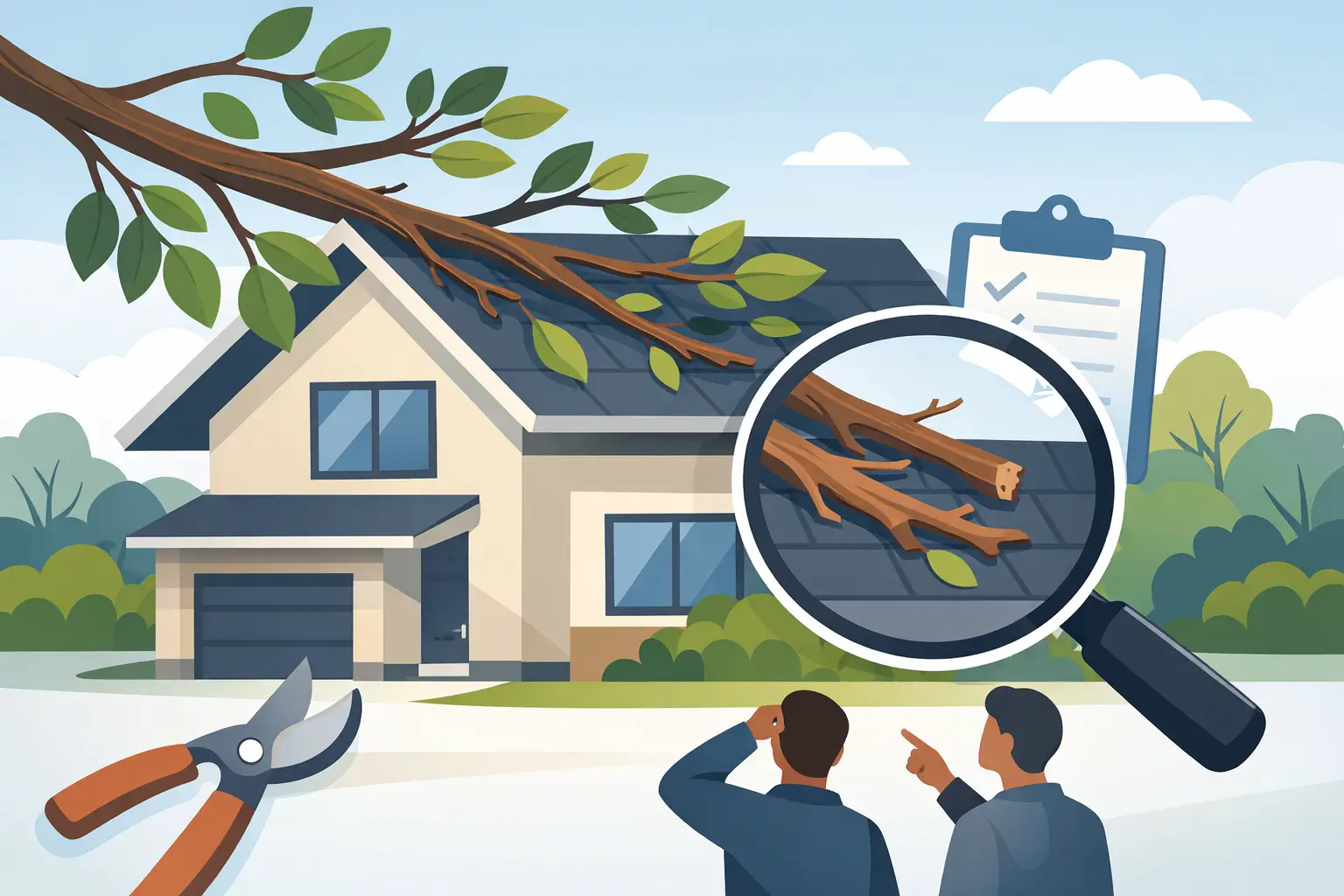
When branches start rubbing your roofline or pressing against siding, the question is usually immediate: branches touching house what to do, and how fast do you need to act? In most cases, you should not ignore it. Even light contact can lead to scraped shingles, worn siding, clogged gutters, pest access, and more movement during the next windy day.
A lot depends on the size of the limb, the type of tree, and where it is making contact. A small leafy branch brushing a wall is different from a heavy limb resting over a garage or grinding against the roof after every storm. The goal is to deal with it before it becomes a repair bill.
Branches touching house what to do right away
Start by looking at the contact point from the ground. If a branch is touching the roof, gutter, chimney, siding, window trim, service line area, or fence connected to the house, treat it as a property protection issue. You do not need to wait for obvious damage to take it seriously.
If the branch is large, cracked, storm-damaged, or hanging over an entry, keep people clear of the area. The same goes if you hear creaking, see splitting at the branch union, or notice that the limb has shifted after wind or heavy rain. Those are signs the problem may be less about trimming and more about immediate hazard reduction.
If there are power lines anywhere near the branch, stop there. Do not attempt to cut or move it yourself. Tree work around electrical lines needs the right equipment, training, and in some cases coordination with the utility.
For smaller limbs that are clearly reachable from the ground with hand pruners, some homeowners handle basic cleanup. But once a ladder, pole saw near the roof, or chainsaw is involved, the risk goes up fast. Falls and bad cuts happen quickly, and poorly placed cuts can make the tree less stable or cause the branch to swing into the house.
Why branches touching a house cause real damage
The damage is not always dramatic at first. More often, it builds over time.
Branches that scrape shingles can wear away granules and shorten roof life. On siding, repeated contact can strip paint, scratch vinyl, or trap moisture against the wall. Over gutters, limbs drop leaves, twigs, and seed debris that lead to overflow and standing water. On windy days, even a flexible branch can act like sandpaper.
There is also the pest issue. Branches create easy access for squirrels, raccoons, ants, and other pests looking for a path onto the roof or near attic openings. In Minnesota, winter snow load and ice can turn a manageable limb into a heavier one in a hurry. A branch that seems fine in summer may become a different problem under snow, freezing rain, or strong wind.
Shade can matter too. Trees near a roof are not always bad, but dense overhang can slow drying after rain and encourage moss or debris buildup. That does not automatically mean the whole tree should come down. It does mean the canopy may need selective pruning so the house and tree both have more breathing room.
When trimming is enough and when it is not
A common mistake is assuming any branch touching the house just needs a quick cut. Sometimes that is true. Sometimes the real issue is that the tree has outgrown the space, has weak structure, or has dead wood throughout the canopy.
If one or two healthy limbs are making contact, pruning may solve it cleanly. The branch can be reduced back to a suitable lateral, or removed at the correct union, giving the house proper clearance without overcutting the tree.
If the tree is leaning over the structure, has multiple large limbs over the roof, shows decay near the trunk, or has repeated storm breakage, trimming alone may only buy time. In those cases, it makes sense to look at the tree as a whole and decide whether heavier pruning or removal is the safer long-term choice.
This is where experience matters. Good pruning is not just about getting wood away from the house today. It is about making cuts that help the tree respond well, reducing future failure points, and avoiding the kind of topping or random cutting that leads to weak regrowth.
What not to do when branches hit the roof or siding
Do not cut large overhead limbs from a ladder. That is one of the fastest ways to lose control of the saw, the branch, or your footing. A branch under tension can move unpredictably, and a ladder against a house does not make the setup safer.
Do not make flush cuts against the trunk or leave long stubs. Both can create problems for the tree and lead to poor healing. If you are not sure where the branch collar is or how the limb will move when cut, it is better to stop.
Do not assume a branch is harmless because it is alive and green. Healthy limbs still break, especially after storms or under snow load. And do not pull or push a limb off the house with a rope unless you fully understand the weight and direction of movement. That can transfer force straight into the gutter, fascia, or roof edge.
How much clearance should there be?
There is no single number that fits every tree and every home, but visible separation is the goal. Branches should not rest on roofing, siding, gutters, or trim. You want enough clearance that normal wind movement does not bring them back into contact right away.
For smaller ornamental trees near a house, that may mean light annual pruning to maintain space. For fast-growing shade trees, the work may need to be more strategic so the canopy stays off the structure without leaving the tree unbalanced. Trees near garages, sheds, and multi-unit properties often need attention sooner because the clearance disappears gradually and goes unnoticed until damage starts.
In practice, the right amount of clearance depends on species, growth rate, branch flexibility, and exposure to wind. A professional assessment usually catches the difference between a minor trim job and a larger structural issue.
Branches touching house what to do after a storm
After a storm, treat any new contact as unstable until proven otherwise. Wet wood is heavier, partially broken limbs can hold tension, and damage is not always visible from the ground. If a limb has dropped onto the roof or is hung up in the canopy above the house, stay out from under it.
Take a look from a safe distance. Check whether the branch is simply resting on the roof, tangled in other limbs, or pulling on the trunk. Also look for cracked leaders, uprooting, or fresh splits where the branch attached. Those details affect how the work should be done.
This is usually the point to call for help rather than experiment. Emergency tree work is about controlled removal and protecting the structure underneath. The cleanup matters too. A careful crew will remove the hazard, protect landscaping as much as possible, and leave the site in good shape instead of creating a second problem in the yard.
Why local conditions matter in Plymouth and the West Metro
In this area, mature maples, oaks, ash, and other large yard trees are common. So are strong summer storms, wet spring snow, and wind events that expose weak limbs fast. A branch that sits lightly on a roof in calm weather may hit much harder during the next storm cycle.
That is why many homeowners and property managers deal with this as preventive maintenance instead of waiting for damage. If you are already seeing contact, the tree has told you the space is too tight. A straightforward estimate and a clear plan usually cost less than roof, gutter, or siding repairs later.
For properties with multiple trees or recurring issues, it also helps to look ahead. Sometimes one pruning job solves the current contact while also reducing dead wood, lifting limbs over a driveway, and improving clearance around the rest of the home. That kind of planning is often more efficient than calling after each separate problem shows up.
The right next step
If the branch is small, easy to reach from the ground, and far from wires or the roof edge, simple pruning may be enough. If it is large, overhead, storm-damaged, or already pressing on the house, it is time to bring in a professional tree crew.
A company like Xtreme Tree Service MN should be able to tell you quickly whether the job is routine trimming, hazard reduction, or removal, and do it with attention to the house, the yard, and the cleanup. That is what most property owners actually need – not guesswork, just a safe fix and clear communication.
When a branch is touching your house, waiting rarely improves the situation. The best move is to address it while it is still a tree service job and not a roofing claim.