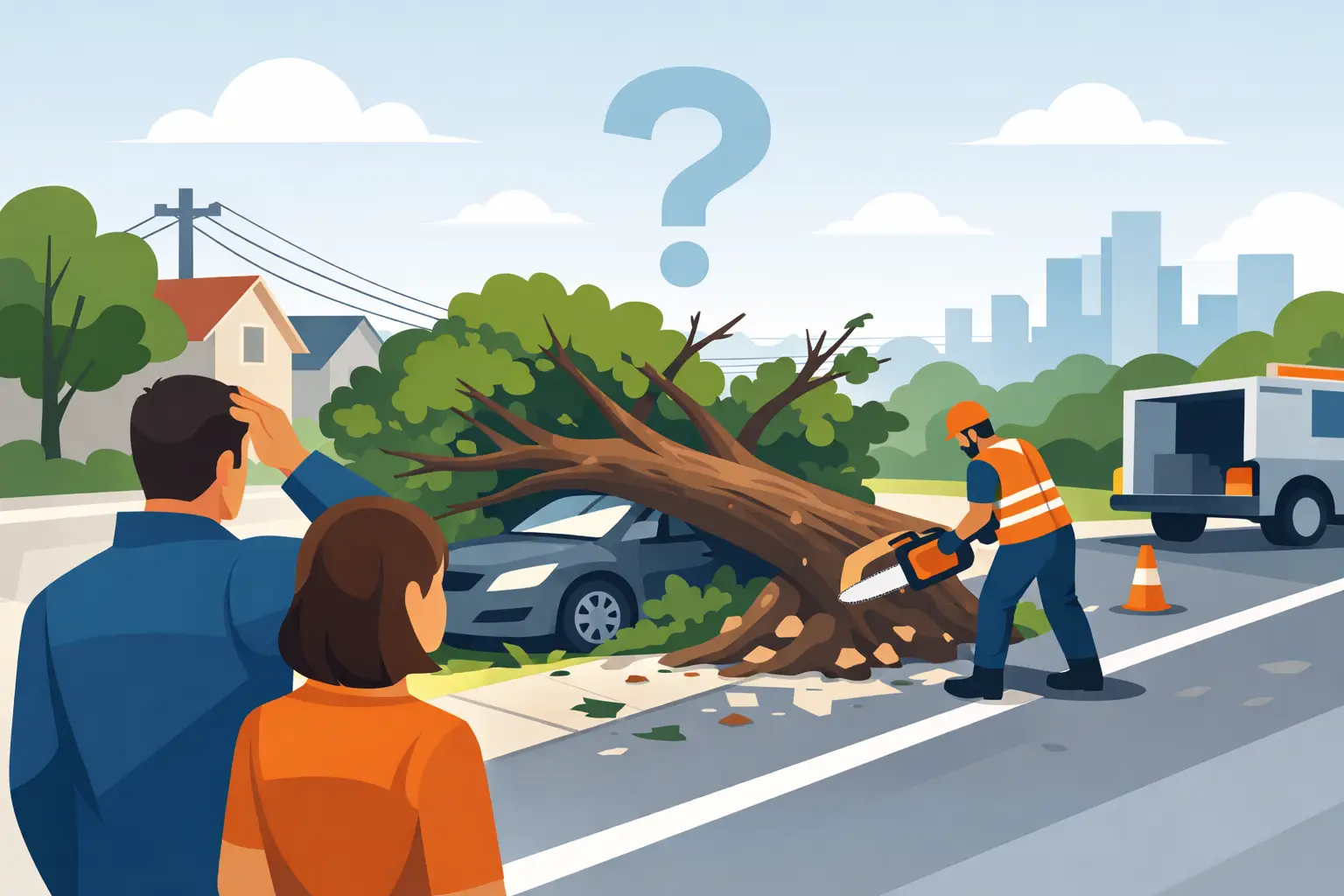
A tree comes down fast. One storm, one heavy limb, one rotten trunk you did not know was failing – and suddenly you are looking at a blocked driveway, roof damage, or a mess across two yards. When people ask who is responsible for fallen tree removal, the honest answer is usually this: it depends on where the tree started, where it landed, and whether anyone knew it was a hazard before it fell.
That uncertainty is what makes these situations stressful. Homeowners want the mess gone, property managers want the site made safe, and everyone wants to know who is paying. The good news is there are some common rules that usually point you in the right direction.
Who is responsible for fallen tree removal on private property?
In many cases, responsibility follows where the tree lands, not just where it grew. If your healthy tree falls during a storm and lands in your neighbor’s yard, your neighbor is often responsible for cleanup on their side through their own insurance or out-of-pocket payment. If the same tree crushes your fence or garage, that becomes your claim.
That surprises a lot of people, but storm damage is often treated as an act of nature when there was no clear warning that the tree was unsafe. Insurance companies usually look at whether the tree appeared healthy and whether the owner had reason to know it posed a problem.
If the tree was obviously dead, badly leaning, hollow, split, or dropping major limbs for a while, the situation can change. A property owner may be considered negligent if they ignored a known hazard and the tree later caused damage. In that case, the owner of the tree may be responsible for removal costs or related property damage.
The hard part is proof. If you told a neighbor months ago that their tree was dead but nothing was documented, that can turn into a dispute. Photos, written communication, and arborist assessments matter when responsibility is being questioned.
When the tree owner may be liable
A fallen tree does not automatically make the tree owner responsible. Liability usually comes down to notice and condition. If the owner knew, or reasonably should have known, that the tree was dangerous, they may be on the hook.
A few examples make this easier to see. If a storm takes down a solid, healthy oak with no visible defects, liability is less likely. If a dead ash tree that has been shedding limbs for two years falls on a neighboring garage, liability is much more likely. If a trunk was split after a previous storm and left standing without repair or removal, that can also point toward negligence.
This is where inspections and basic maintenance matter. A tree does not need to look perfect to be safe, but visible decline should not be ignored. Property owners are generally expected to act reasonably when there are signs of risk.
If your neighbor’s tree falls into your yard
This is one of the most common calls after a storm. The first question is usually whether you can cut it up and send the bill next door. Sometimes yes, often no.
If a neighbor’s tree fell into your yard because of weather and there was no known defect, you are often responsible for the portion on your property. That means cleanup, hauling, and any claim for damage to your house, shed, fence, or landscaping usually starts with your own insurance.
If the neighbor knew the tree was unsafe and failed to deal with it, then you may have a stronger case that they should pay. Even then, it is smart to go through insurance first. Insurers often work out reimbursement after the fact when there is evidence of negligence.
What you should not do is assume fault, start a property-line argument, or remove everything before documenting the scene. Take photos from multiple angles, note visible decay or break points, and save any messages you previously sent about the tree.
Who pays if a city tree falls?
If the fallen tree was on city property, a boulevard, a park strip, or another public area, the city or municipality may handle removal. But that does not always mean they pay for damage to your private property.
Public entities often have their own claims process, and there may be limits on liability unless the city had prior notice that the tree was hazardous. If a city-owned tree looked healthy and failed in a storm, the city may remove the tree from public space while your homeowner’s insurance handles your house or fence damage.
If the city had reports about a dead or dangerous tree and did not act, the situation may be different. As with neighbor disputes, documentation matters. If you are not sure whether the tree came from private or public land, check lot lines before making assumptions.
Insurance and fallen tree removal
Insurance is often part of the answer even when ownership seems clear. Most homeowner policies cover fallen tree damage when the tree hits a covered structure such as a house, garage, or fence. They may also help with removal if the tree blocks a driveway or an accessibility ramp.
Coverage is usually more limited when a tree falls in the yard and does not hit anything. A lot of homeowners are surprised by that. A large tree lying across the lawn can still be expensive to remove, but insurance may not help if there is no structural damage and no blocked access.
Deductibles matter too. If the damage is minor, paying out of pocket can sometimes make more sense than filing a claim. On the other hand, if the tree is tangled in a roofline, power lines, or multiple structures, the safest move is usually to secure the area, contact your insurer, and get a qualified tree crew involved quickly.
What about rental properties and HOAs?
For rental homes and small commercial sites, the property owner is usually responsible for tree maintenance and post-storm response, not the tenant. A lease may address reporting obligations, but hazard trees and emergency removal generally fall on the owner or manager.
With HOAs, it depends on whether the tree is in a common area or part of an individually owned lot. Common area trees are usually the association’s responsibility. Trees within a homeowner’s lot are often the homeowner’s responsibility. The problem is that HOA documents are not always clear, and storm situations do not wait for committee meetings.
In those cases, focus first on safety and documentation. Then sort out cost responsibility through the governing documents, insurer, or legal counsel if needed.
What to do right after a tree falls
The first priority is safety. Stay clear of downed power lines, broken limbs under tension, and any tree resting on a roof or vehicle. A fallen tree can shift without warning, and storm-damaged wood is not predictable.
Next, document the damage before cleanup starts. Take wide photos and close-ups, especially if decay, cavities, root failure, or prior damage is visible. If the tree crossed a property line, photograph the stump location and the direction of the fall.
Then contact the parties that need to know. That may be your insurance carrier, neighbor, property manager, HOA, or city. If the tree is creating an active hazard, get a professional tree service out to stabilize the site and remove the immediate risk. Safe removal matters just as much as getting the debris gone.
A good crew should be able to explain what needs to happen, protect the surrounding property, and leave the site cleaned up. That is especially important when the tree is on a structure, near utilities, or spread across multiple properties.
Why these cases are rarely as simple as they sound
People want a clean rule, but fallen tree responsibility has a lot of gray area. Ownership, tree condition, weather severity, prior warnings, and insurance language all affect the outcome. Two trees can fall in the same neighborhood during the same storm and end up being handled very differently.
That is why quick assumptions cause trouble. If you are dealing with a fallen tree in Plymouth or the West Metro, the best approach is practical: make the area safe, document everything, and get experienced help to remove the hazard without creating more damage. Companies like Xtreme Tree Service MN see this every storm season. Fast response and clear communication help a bad situation settle down before it gets worse.
If you are staring at a tree on a fence, roof, driveway, or shared property line, do not worry about solving every legal question before you act. Start with safety, get the site assessed, and let the facts guide who pays after the immediate risk is under control.