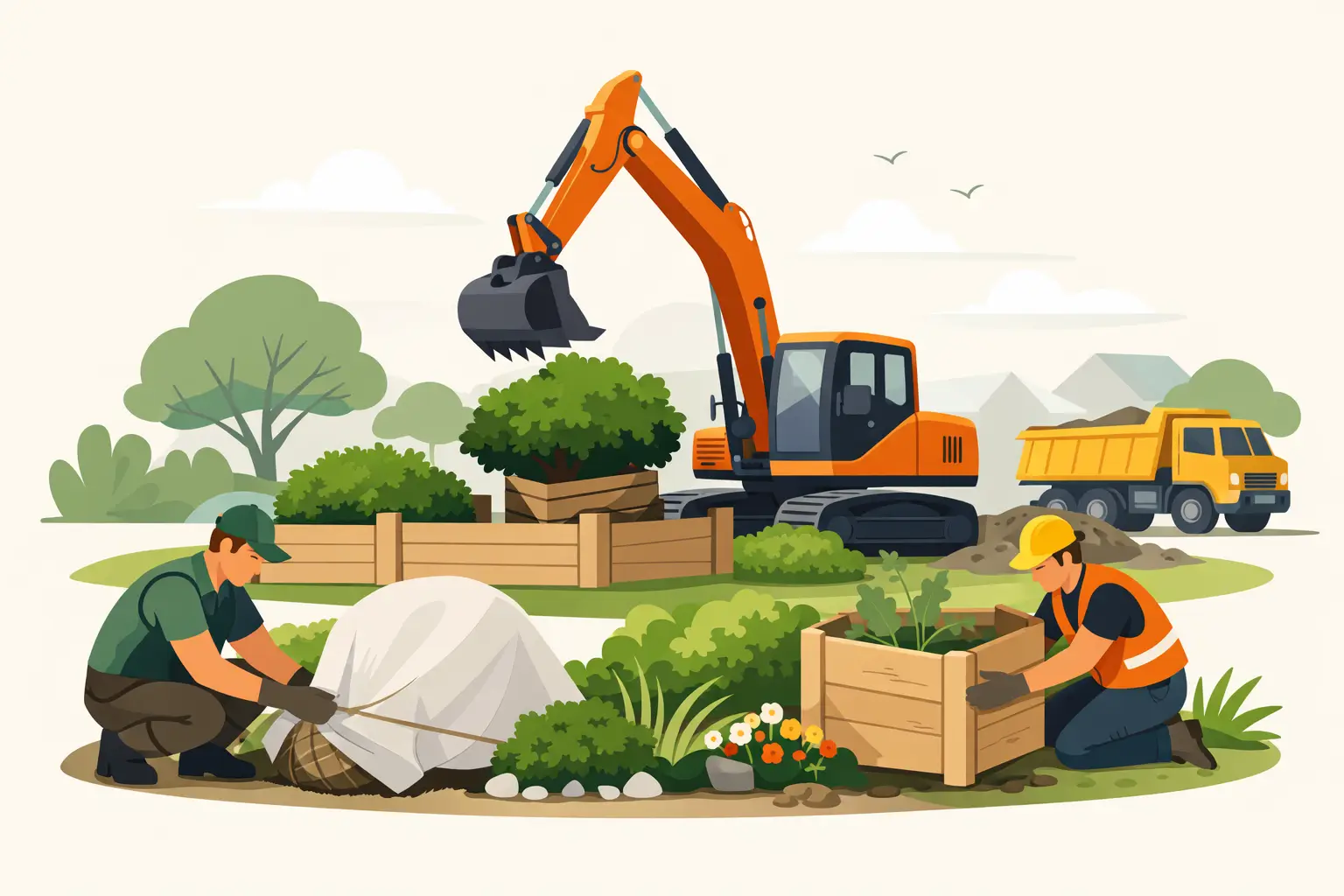
A tree can be unsafe, storm-damaged, or simply in the wrong place without the rest of the yard being expendable. Knowing how to protect landscaping during removal starts before the first cut. The goal is not just to get the tree down. It is to remove it safely while keeping lawn areas, garden beds, shrubs, hardscapes, and nearby structures in good shape.
For homeowners and property managers in Plymouth, Minnetonka, Maple Grove, and the West Metro, that often means working around mature landscaping in tight suburban lots. A careful plan makes a major difference.
Start With a Site Plan, Not a Chainsaw
Every removal should begin with a walk-through of the property. A qualified crew identifies the tree’s lean, canopy spread, decay, overhead utilities, nearby buildings, fences, patios, garden beds, and the most practical route for equipment. This is where landscaping protection begins.
A large open yard may allow for a more direct removal. A tree over a fenced backyard, ornamental beds, or a driveway may need to come down in smaller sections. That takes more time than dropping a whole tree, but it gives the crew control over where each piece lands.
Be clear about what matters most before work begins. Point out irrigation heads, low-voltage landscape lighting, newly planted trees, delicate shrubs, pavers, retaining walls, and areas that tend to stay wet. Some features are easy for a crew to spot. Others, such as shallow sprinkler lines or a buried drainage outlet, are not visible from the surface.
How to Protect Landscaping During Removal With Controlled Lowering
The biggest risk to a landscaped yard is not always the final trunk section. It is the repeated impact of branches, logs, and foot traffic during the job. Controlled rigging reduces that risk.
Rather than letting heavy limbs fall freely, a climber or lift operator can cut sections into manageable pieces and lower them with ropes. A ground crew guides and sets down material in a designated landing zone. This approach is especially useful when branches extend over gardens, roofs, decks, pools, or tightly planted yards.
Not every tree requires extensive rigging. A small tree with plenty of open space can often be removed efficiently with fewer controls. But when landscaping sits directly beneath the canopy, the safer method is usually to take smaller pieces and move them deliberately. The trade-off is a longer job, but it is often the right choice for protecting the property.
Crane-assisted removal may also make sense for very large, hazardous, or inaccessible trees. A crane can lift trunk and canopy sections up and over obstacles instead of dragging them through the yard. Whether that is necessary depends on tree size, location, access, and the condition of the tree.
Protect Lawn, Soil, and Root Zones From Equipment Damage
Tree work requires equipment, and equipment can leave marks when the ground is soft. Minnesota lawns are particularly vulnerable after heavy rain, spring thaw, or during periods when the soil is saturated. A heavy truck, loader, or stump grinder can create ruts, compact soil, and damage turf if access is not planned carefully.
A professional crew chooses the least disruptive path to the work area. When conditions call for it, ground protection mats can spread equipment weight across a wider surface. These mats are useful near lawns, driveways, and sensitive root zones, though they are not a guarantee against every mark in very wet ground.
It also helps to keep equipment out of the root zones of trees that will remain. Most feeder roots sit close to the surface and extend well beyond the trunk. Driving repeatedly over those areas can compact the soil and stress an otherwise healthy tree. A good access plan avoids unnecessary passes and keeps staging areas away from valuable plantings whenever possible.
Sometimes the best protection is timing. If the yard is saturated or a storm has left standing water, postponing non-emergency work can prevent avoidable lawn damage. Hazardous trees are different. When there is an immediate safety concern, the crew may need to proceed, but should explain the conditions and protection steps before work starts.
Set Up Clear Landing and Staging Areas
A removal crew needs a place to process branches, stack logs, and load debris. Without a defined staging area, material can end up spread across the yard, creating more traffic and more chances for damage.
The best staging spot is usually a durable, open area with direct access to the truck or chipper. A driveway can work well when it has enough room and the crew protects it from unnecessary impact. For larger jobs, a section of lawn may be the practical choice, especially if the alternative requires hauling material across gardens or over a patio.
The point is not to promise that the yard will never show signs of work. Tree removal is physical work, and a large or difficult tree can leave temporary impressions in turf. The point is to confine the impact to the smallest reasonable area, then complete a thorough cleanup.
Prepare Your Property Before the Crew Arrives
Homeowners can help protect landscaping by making access and sensitive areas easy to identify. Before the scheduled removal, move what can be moved and communicate what cannot.
- Relocate patio furniture, grills, toys, planters, and yard decorations from the work area.
- Mark irrigation heads, invisible fence lines, landscape lighting, and other shallow features that may be hard to see.
- Unlock gates and clear a path to the tree, especially in side yards or backyards.
- Keep pets indoors and make sure children stay out of the work zone.
- Let the crew know about septic components, drainage systems, recently seeded areas, and any concerns about access.
Do not try to prune branches or remove limbs yourself before the crew arrives. Partially cut limbs can create unstable conditions and change the removal plan. Leave that work to the professionals handling the job.
Protect Garden Beds, Shrubs, and Hardscapes
Garden beds close to the tree need extra attention. Crews may use plywood, tarps, or temporary barriers to shield low shrubs and keep small debris out of planting areas. These materials can help, but they cannot safely absorb the impact of a heavy log. That is why controlled lowering is more effective than simply covering plants.
For valuable shrubs directly below large limbs, temporary pruning or tying back flexible branches may be considered. This should be done carefully. Forcing shrubs flat or placing heavy covers on them for long periods can cause damage of its own.
Hardscapes deserve the same planning. Paver patios, retaining walls, decks, and decorative edging can crack or shift if heavy wood is dropped or repeatedly rolled across them. A crew should avoid using these surfaces as a landing zone and should protect them when equipment or foot traffic must pass nearby.
If a tree is growing into a fence, over a roofline, or through a dense planting bed, expect the work to be slower. That is not wasted time. It is the controlled approach that prevents one problem tree from becoming a larger property repair project.
Stump Grinding Needs Its Own Protection Plan
Removing the tree is only part of the job when the stump remains. Stump grinding creates wood chips and sends the grinder across the work area, so it should be planned with the same care as the removal.
Before grinding, identify nearby utilities, irrigation, edging, and underground features. The grinder needs access to the stump, and its cutting wheel can throw chips several feet. Nearby windows, vehicles, garden beds, and outdoor equipment should be protected or moved out of range.
Grinding depth depends on what comes next. If you plan to install sod, seed, or a new planting bed, the stump should usually be ground below grade and the area finished with soil. If you are planting a new tree in the same spot, do not place it directly in the old stump grindings. Fresh wood material changes how the soil holds moisture and nutrients. A new tree is usually better placed a short distance away in clean soil.
Cleanup Is Part of Property Protection
A job is not finished when the tree is on the ground. Branches, sawdust, chips, and small wood pieces can smother turf, clog landscape beds, or become a hazard on walkways. Thorough cleanup protects the appearance and function of the property.
The crew should remove debris, rake work areas, and make a final pass for stray limbs and wood. It is also reasonable to walk the property with the crew after a larger removal. Look at the access route, garden edges, driveway, fence lines, and the area around the stump. If a concern is identified early, it is easier to address.
At Xtreme Tree Service MN, careful site planning and clean follow-through are part of doing tree work the right way. When you request an estimate, show the crew the parts of your property you want protected most. A clear conversation before removal gives everyone the best chance of keeping the work safe, controlled, and respectful of the yard you have built.