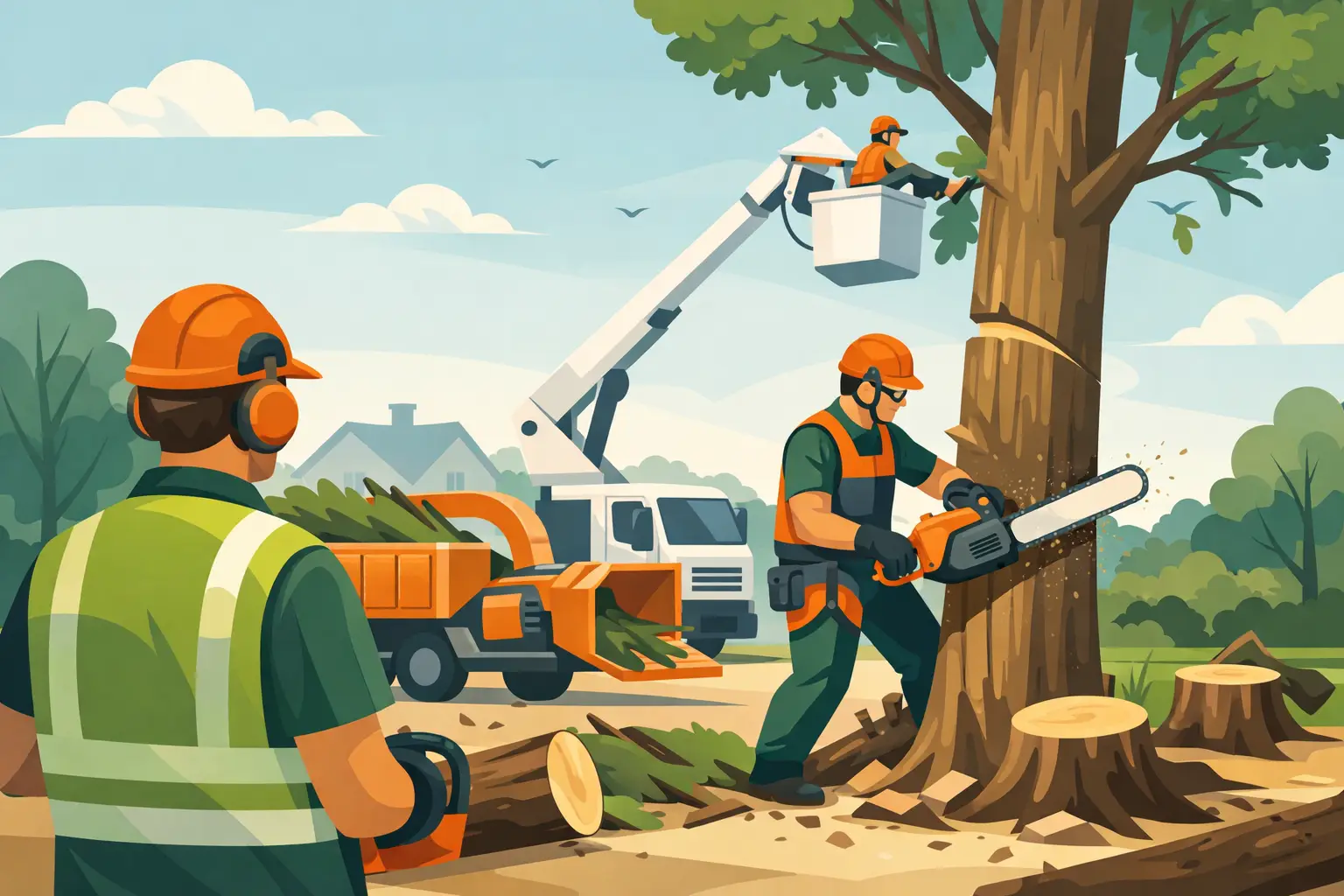
A leaning ash over the driveway usually gets your attention faster than any landscaping project. The same goes for a split trunk after a storm, roots pushing near hardscape, or a dead tree dropping limbs over the yard. When that happens, hiring a tree removal service is not just about getting rid of a tree. It is about protecting your home, vehicles, nearby structures, and the people using the property.
In Plymouth and across the West Metro, tree removal often comes down to timing. Wait too long, and a manageable job can turn into a more urgent and more expensive one. Act early, and the work is usually safer, cleaner, and easier to plan around.
When a tree removal service makes sense
Not every problem tree needs to come down. In many cases, trimming or pruning can reduce risk and improve the tree’s shape and health. But some trees have moved past that point. A dead tree, a tree with major trunk damage, or one that has lost large structural limbs can become a liability quickly.
You may also need removal when the tree is crowding the house, hanging over a garage, interfering with power lines, or blocking access to a yard or lot. Property managers often deal with another issue: trees that look stable from the street but show root damage, decay, or repeated limb failure over parking areas and walkways. In those situations, removal is often the practical choice.
Storm damage is its own category. A tree does not have to be fully down to be dangerous. A cracked stem, a hung-up limb, or a partially uprooted tree can shift without warning. That is where professional assessment matters. The right move is not always obvious from the ground.
What a professional tree removal service should do
A proper tree removal service starts before the first cut. The crew should look at the tree itself, but also at the full work zone. That includes rooflines, fences, sheds, landscaping, utility lines, access points, and where debris can be lowered or staged. On tight residential lots, planning is half the job.
Good communication matters here. Homeowners and property managers should know what is being removed, what equipment is needed, whether stump grinding is included, and what cleanup will look like afterward. Clear expectations prevent surprises.
Safe execution is the part most people notice, but site protection is just as important. Removing a tree near a home is not the same as dropping one in an open field. Sections may need to be climbed, rigged, and lowered in pieces. Lawns, garden beds, and driveways often need protection. If a company talks a lot about speed but very little about control, that is worth noticing.
Cleanup is another sign of professionalism. Once the tree is down, brush, logs, and smaller debris should not be left scattered around the property. A finished job should look finished.
How the tree removal process usually works
Most removals follow a straightforward process, though the details depend on the site. First comes the estimate and site review. That is when the crew identifies the safest removal method, access limitations, and any factors that may affect timing or equipment.
Next comes the removal itself. For smaller trees with clear space, the work can move quickly. For larger or hazard trees near structures, the crew may remove the canopy in sections, then bring down the trunk piece by piece. This slower approach often protects the property better and reduces risk.
After that, debris is hauled away or processed based on the scope of work. Some customers want all wood removed. Others may choose to keep firewood-sized sections if the species and condition make sense. Stump grinding is usually a separate step unless it has been included upfront.
The final stage is cleanup. That includes raking, blowing out the area, and leaving the site in good order. On residential properties, this is one of the biggest differences between a careful contractor and one that simply gets the tree on the ground and moves on.
What affects the cost of tree removal service
Tree removal pricing depends on risk, access, size, and complexity. Height matters, but it is not the only factor. A medium-sized tree hanging over a house can take more labor and planning than a larger tree standing alone in the back of an open lot.
Condition also affects price. Dead, brittle, storm-damaged, or split trees can require slower handling because they do not respond predictably during removal. Limited access can raise the cost too. If equipment cannot reach the work area easily, more of the job may need to be done by climbing, rigging, and hand-carrying debris.
Cleanup and additional services change the total as well. Stump grinding, hauling all wood, removing multiple trees in one visit, or coordinating around fences and landscaping can all affect the estimate. That does not mean the most expensive quote is automatically the best one. It does mean a low quote without clear detail may be missing part of the actual work.
Tree removal service vs. trimming
A lot of property owners ask the right question first: does this tree really need to be removed? Sometimes the answer is no. Selective pruning can reduce weight on overextended limbs, improve clearance over roofs and driveways, and remove deadwood before it becomes a bigger problem.
Other times, trimming only delays the issue. If the tree is declining badly, has major structural defects, or poses a repeated hazard, paying for pruning may not be the most cost-effective move. That is especially true when you already know the tree will need to come down within a short time.
This is where a straightforward estimate helps. You want to know whether pruning will genuinely improve safety and function, or whether removal is the cleaner long-term fix.
Why DIY removal is usually not worth the risk
Tree work can look simple from the ground. It rarely is. Trees carry weight in odd ways, especially when they are damaged, leaning, or growing close to structures. One cut in the wrong place can send a limb through a roof, across a fence line, or onto a vehicle.
There is also the issue of tension and compression in branches and trunks. Storm-damaged wood can bind, snap, or roll unexpectedly. Add ladders, saws, and overhead limbs, and the margin for error gets small fast.
For homeowners, the real cost of DIY is not just the rental equipment or the weekend spent cutting brush. It is the risk to people and property, and the chance that the job stalls halfway because the hardest part is still standing over the house.
Choosing the right tree removal service
The best company for the job is usually the one that makes the process clear from the start. You want responsive communication, a realistic timeline, and direct answers about how the work will be done. If the tree is near your home, ask how the crew plans to protect structures and surrounding landscape.
It also helps to look for a company that handles the full job, not just the cutting. Hauling, cleanup, and optional stump grinding matter. For property managers, reliability matters even more. Missed timelines or poor cleanup create problems with tenants, owners, and neighboring properties.
A local company that understands West Metro lots, mature neighborhood trees, and storm response can often spot issues faster and plan the work more efficiently. That practical experience counts. Xtreme Tree Service MN is built around that kind of work: safe removal, clear communication, and clean results.
A good removal job should leave more than empty space
The goal is not just to make a tree disappear. It is to make the property safer, easier to maintain, and ready for whatever comes next. Sometimes that means opening up a crowded yard. Sometimes it means removing a hazard before weather makes the decision for you.
If a tree on your property is showing clear signs of risk, getting a fast, no-pressure estimate is the simplest next step. A good crew will tell you what can be saved, what should come down, and how to handle the work without creating a bigger mess than the one you started with.