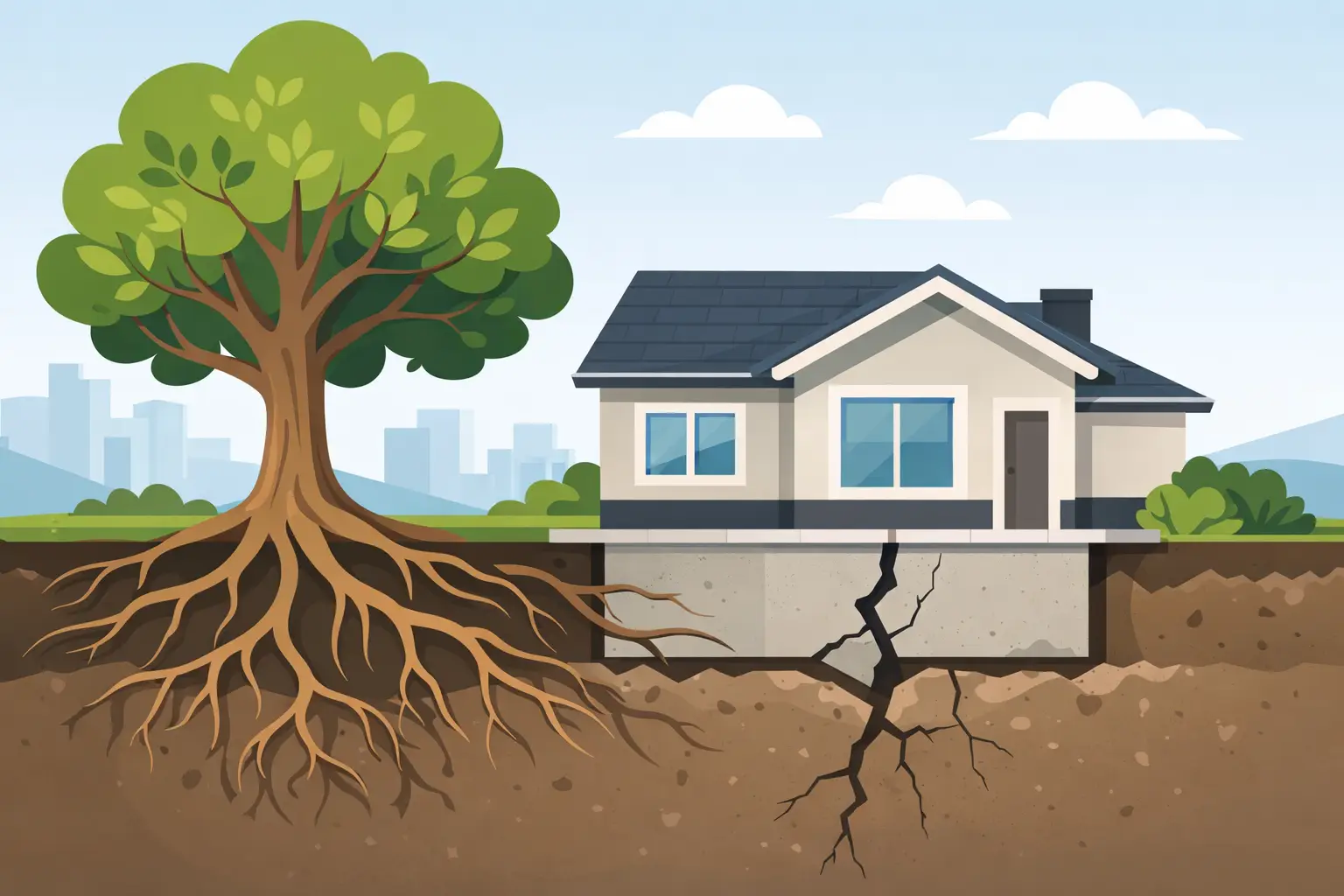
A mature tree can be one of the best parts of a Plymouth or Maple Grove property – until a crack appears near the basement wall or a sidewalk starts to lift. Can tree roots affect foundations? Yes, but usually not in the simple way homeowners picture. Roots do not normally punch through sound concrete like a wedge. More often, they take advantage of soil movement, existing cracks, drainage problems, or openings around utility lines.
That distinction matters. Removing a healthy tree without identifying the real cause can be expensive and may not solve the problem. On the other hand, ignoring a tree that is contributing to movement around a foundation can lead to bigger repair costs. A careful look at the tree, soil, drainage, and structure is the right place to start.
Can Tree Roots Affect Foundations Directly?
Tree roots need oxygen, moisture, and open spaces in the soil. They spread outward much farther than most people expect, often well beyond the canopy of the tree. Larger roots are usually concentrated in the upper 12 to 24 inches of soil, where conditions support growth.
A sound, properly built foundation is difficult for roots to damage directly. Roots are persistent, but they generally follow the path of least resistance. If there is an existing crack, a loose joint, a deteriorated footing, or a gap around a pipe, roots may grow into it. As they enlarge, they can widen the opening and make an existing problem worse.
The more common risk is indirect. A large tree can change moisture conditions in the soil near the home. In soils with a high clay content, dry periods can cause the soil to shrink as roots draw out water. When moisture returns, the soil can expand again. That repeated movement may affect slabs, walkways, patios, and in some cases foundation walls or footings.
Minnesota properties also deal with freeze-thaw cycles, heavy spring moisture, and occasional drainage issues. Those conditions can move soil on their own. A nearby tree may be part of the situation, but it is not always the main cause.
Signs Worth Checking Around Your Home
Not every crack means a tree root problem. Small hairline cracks in concrete are common, especially in older homes. The concern rises when changes are new, growing, or occurring alongside visible movement outdoors.
Watch for cracks that widen over time, doors or windows that begin sticking, uneven floors, or gaps where trim meets walls. Outside, look for a settled or lifted patio, a walkway that slopes toward the home, cracked retaining walls, or soil pulling away from the foundation during dry weather.
Roots can also create trouble with water and sewer lines. If a line has a damaged joint or small opening, fine roots can enter in search of moisture. Over time, they can create a blockage. Slow drains, recurring backups, or wet spots in the yard should be checked by a qualified plumbing professional rather than assumed to be a foundation issue.
A few clues can help put the risk in perspective:
- A large, mature tree is close to the home, especially if the trunk is within a few feet of the wall.
- Surface roots are lifting a driveway, sidewalk, patio, or landscape edging.
- Cracks or movement are more noticeable on the side of the home nearest the tree.
- Downspouts, grading, or sump discharge are sending water toward the foundation.
- The tree was recently removed and changes in soil moisture have followed.
None of these signs proves that roots are responsible. They do show that the property needs a closer assessment before anyone makes a major decision.
Tree Species, Size, and Distance All Matter
There is no single safe distance that applies to every tree and every house. Root spread depends on species, age, soil conditions, available water, and how the property was built. A young ornamental tree ten feet from a home is a different situation than a mature cottonwood, willow, silver maple, or elm at the same distance.
Fast-growing, water-seeking species tend to create more concern around pipes, shallow concrete, and wet areas. Larger trees also have larger root systems, although the roots may extend more broadly than deeply. A tree growing next to a foundation does not automatically need to come down, but it deserves attention if the structure is showing movement or the roots are already affecting hardscape.
Distance should be viewed alongside the tree’s condition. A declining, leaning, storm-damaged, or structurally weak tree near a home is a safety issue regardless of its roots. In that case, safe removal may protect the building from a much more immediate hazard.
Do Not Cut Major Roots Without a Plan
It can be tempting to cut exposed roots near a patio or foundation wall. That can create a different problem. Removing large roots may reduce the tree’s stability, especially if they are on the side facing the house. It can also leave the tree stressed and more vulnerable to pests, disease, and wind damage.
Root cutting is not a simple landscaping task. The size of the roots, their location, the species, and the overall health of the tree all matter. Cutting too close to the trunk can cause serious decline or increase the chance of failure in a storm.
If roots are lifting a sidewalk or patio, there may be options besides removal. Depending on the site, a contractor may be able to adjust or replace the affected concrete, improve grading, or use a root-management approach that does not compromise the tree. The best choice depends on the severity of the damage and the value of keeping the tree.
Start With Drainage and a Clear Diagnosis
Before blaming the tree, check how water moves around the property. Gutters should carry water away from the foundation, downspouts should discharge well away from the wall, and the soil should slope away from the house. Poor drainage can cause settlement, saturated soil, and basement moisture issues even when no tree is nearby.
If foundation cracks are growing, walls are bowing, or doors and windows are noticeably shifting, contact a qualified foundation professional or structural engineer. They can determine whether the movement is cosmetic, related to drainage, or serious enough to require repair.
For possible pipe intrusion, a plumber can inspect the line with a camera. This is far more useful than guessing from surface roots. If the concern is the tree itself – its location, stability, condition, or whether removal is practical – a professional tree crew can assess access, nearby structures, and the safest way to handle the work.
When Tree Removal Makes Sense
Removal may be the practical choice when a tree is clearly causing repeated hardscape damage, interfering with a compromised utility line, or posing a safety risk to the home. It may also make sense when a tree is in poor condition and major foundation repairs are planned nearby.
Still, removal is not always an instant foundation fix. Once a mature tree is gone, soil moisture can change again. In shrink-swell soils, that change should be considered as part of the overall property plan. Stump grinding can remove the visible stump and improve the area for landscaping, but it does not correct drainage or structural issues by itself.
For homes in the West Metro, the goal is to protect both the property and the people around it. Xtreme Tree Service MN can provide a straightforward assessment when a tree’s location or condition is a concern, with safe removal, careful site protection, and thorough cleanup when removal is the right call.
If you are seeing cracks, lifted concrete, or roots close to your home, take clear photos and note whether the changes are getting worse. Then get the right professionals involved before cutting roots or removing a tree. A measured decision can preserve a good tree when possible and address a real property risk before it becomes a larger repair.