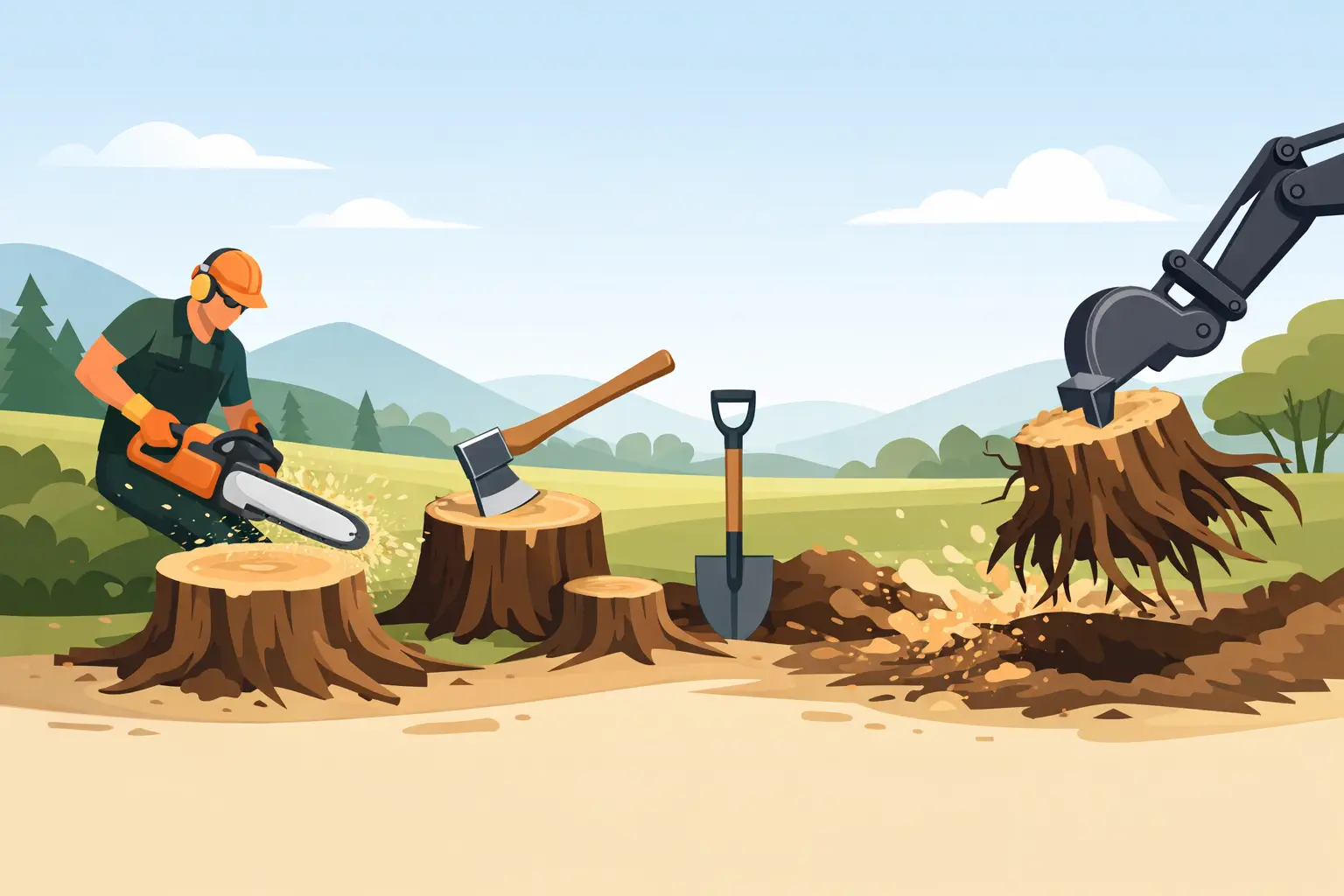
That stump usually becomes a problem faster than people expect. It gets in the way of mowing, attracts ants or fungi, creates a trip hazard, and keeps the yard from looking finished. If you are wondering about the best way to remove tree stumps, the short answer is that stump grinding is usually the safest, fastest, and most practical option for most residential properties.
That said, not every stump should be handled the same way. The size of the stump, the tree species, the location, and what sits nearby all matter. A stump in the middle of an open yard is one thing. A stump next to a fence, patio, utility area, or landscaped bed is another.
The best way to remove tree stumps for most properties
For most homeowners in Plymouth and the West Metro, stump grinding is the best balance of speed, cost, cleanup, and yard protection. A grinder removes the stump below grade by cutting it into wood chips, which leaves the area ready for soil, seed, or other finish work.
This method works well because it avoids the disruption that comes with full root excavation. In many cases, the visible stump is the real issue, not every root in the ground. Grinding takes care of the part that affects safety, appearance, and usable yard space without turning the whole area into a trenching project.
It is also the option that makes the most sense when you want the job done cleanly. A professional crew can control debris, protect nearby surfaces, and leave the area in a condition that is much easier to restore. That matters if the stump sits close to turf, irrigation, hardscaping, or planted beds.
Why stump grinding is usually the better choice
Homeowners often ask whether a stump should be ground down or completely dug out. Complete removal sounds more thorough, but it is not automatically better. In fact, it can create more damage than necessary.
Grinding is usually preferred because it is efficient and less invasive. It removes the stump to a practical depth while leaving most surrounding soil and roots undisturbed. That means less impact on lawns, less repair afterward, and a quicker path back to normal use of the space.
There is also a safety factor. Stumps are often surrounded by hidden roots, rocks, uneven ground, and buried lines or edging. Professional grinding equipment is designed for this kind of work, but it still takes planning and experience to do it safely. The goal is not just to remove the stump. The goal is to remove it without damaging the property around it.
When full stump removal makes sense
There are situations where grinding is not the right answer by itself. If you are planning excavation, foundation work, a new driveway, or a major hardscape installation, full removal may be necessary. The same is true if a large root mass is directly in the footprint of future construction.
Full removal means pulling the stump and major root flare out of the ground. It is more disruptive, usually more expensive, and often requires heavier equipment. You get a more complete extraction, but you also get a larger hole, more disturbed soil, and more restoration work.
For a simple lawn recovery or cleanup after tree removal, that level of disruption usually is not needed. For a building project, it may be. This is one of those cases where the best way to remove tree stumps depends on what comes next for the property.
DIY methods and where they fall short
There is no shortage of do-it-yourself advice on stump removal. People try digging, chains, trucks, chemical rotting agents, and burning. Some of these methods can work under the right conditions, but that does not make them the best option.
Digging out a small stump by hand may be realistic if the tree was young and the roots are limited. Once you get into mature trees, hardwood species, or stumps with broad root systems, the labor increases quickly. What looks like a weekend job can turn into repeated cutting, chopping, and hauling with a lot of frustration and not much progress.
Chemical stump removers are slow. They help accelerate decay, but they do not solve the immediate problem. If the stump is a hazard, an eyesore, or in the way of a project, waiting months for partial rot is rarely practical.
Burning is another method people ask about, but it often creates more risk than benefit. Local rules, weather conditions, nearby structures, and underground roots all make fire a poor fit in many neighborhoods. Even when it is technically allowed, it is hard to control and usually does not leave a clean result.
Using a truck and chain is the kind of idea that sounds simpler than it is. It can damage vehicles, tear up the yard, and create sudden movement if the stump breaks free unexpectedly. Around homes, fences, and utility areas, that risk is not worth it.
What affects the right stump removal method
Not all stumps come out the same way. Diameter matters, but so does root structure. A shallow-rooted ornamental tree is different from a large maple, oak, or cottonwood with a wider underground spread.
Location is just as important. A stump tucked against a garage or fence line needs a more controlled approach than one sitting out in open grass. If there are nearby pavers, retaining walls, utility boxes, or irrigation lines, equipment access and cutting depth need to be planned carefully.
Ground conditions also matter in Minnesota. Wet soil, freeze-thaw cycles, and compacted areas can affect machine access and site cleanup. In some yards, getting the equipment in and out without rutting the lawn is part of the job. That is why experienced crews pay attention not just to removal, but to setup, access, and cleanup.
What to expect from professional stump grinding
A professional stump grinding job should start with a clear look at the site. The crew needs to know the stump size, tree type if possible, access path, and what is near the work area. That helps set expectations on depth, debris control, and how the area will look after the stump is gone.
The actual grinding process is usually quick compared to manual removal. The machine works the stump down below grade, and the remaining grindings can either stay for backfill use or be removed, depending on the plan for the area. If the goal is grass, some homeowners choose to have excess chips cleared out and replaced with soil for a smoother finish.
Cleanup matters here. Good stump work is not just about grinding wood. It is about leaving the property safe, tidy, and ready for the next step. That is especially important for residential yards where appearance and usability matter right away.
Cost, speed, and long-term value
People naturally compare stump removal options based on price, but the cheapest path up front is not always the best value. A slow DIY method may cost less in cash, but it can cost more in time, yard damage, tool rental, and frustration.
Professional grinding is often the most cost-effective choice because it solves the problem quickly and with less collateral damage. It also reduces the chance of injuries and property damage that can come from makeshift removal attempts.
There is a long-term benefit too. Removing a stump improves curb appeal, makes mowing easier, and reduces one more obstacle in the yard. For property managers and homeowners planning to sell, that cleaner finish can make the outdoor space look maintained instead of unfinished.
When it is time to call a crew
If the stump is large, close to structures, surrounded by landscaping, or tied to a recent tree removal, it is usually time to bring in a professional. The same goes for any stump that is creating a safety issue or delaying another project.
A good local company should give you a straightforward assessment, explain what method fits the site, and tell you what the finished area will look like. That kind of communication matters as much as the equipment. You want the work done safely, but you also want clear expectations before the machine starts.
For most residential and light commercial properties, the best way to remove tree stumps is not the most aggressive option. It is the method that removes the hazard, protects the property, and leaves the site clean and usable. In most cases, that means professional stump grinding done with the right equipment and a careful plan.
If the stump has become one more thing in the way of using your yard the way you want, handling it sooner usually makes the rest of the property easier to maintain.