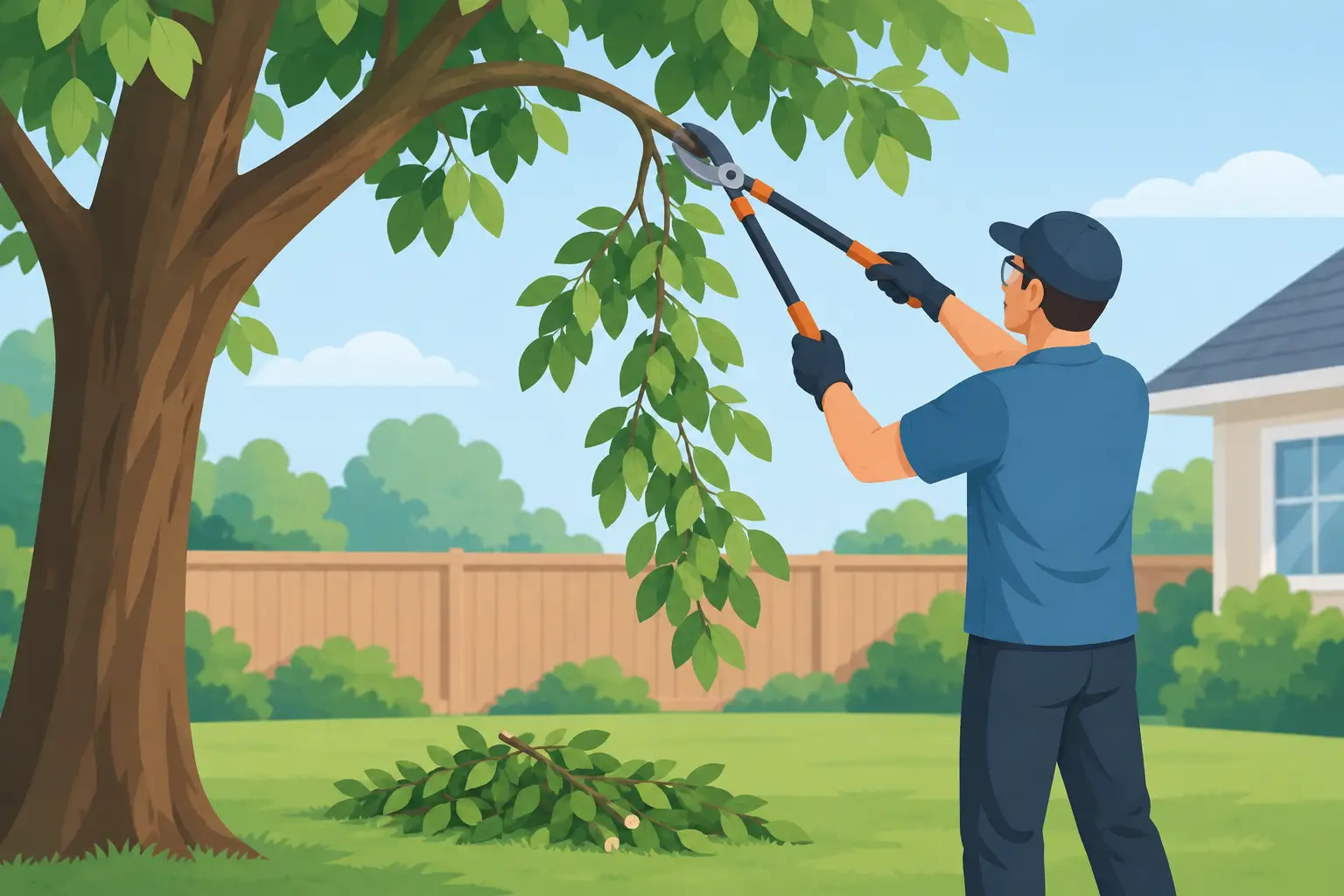
A hanging limb is not just an eyesore. It can drop without much warning, damage a roof or fence, block a driveway, or create a serious hazard over a walkway. If you need to remove hanging tree limbs, the safest next step depends on where the limb is caught, how large it is, and what sits below it.
For homeowners and property managers in Plymouth, Minnetonka, Maple Grove, and the West Metro, these problems often show up after wind, heavy wet snow, or ice. A branch that looks stable from the ground may be cracked, twisted under tension, or barely held in place by neighboring branches. That is why the job needs a careful assessment before anyone starts cutting.
When a Hanging Limb Needs Immediate Attention
Some hanging branches can wait for scheduled pruning. Others should be treated as an urgent safety issue. A large limb suspended over a driveway, front entry, deck, play area, parked vehicle, or public sidewalk deserves prompt attention. The same is true when a broken limb is resting on a roof, pressing against siding, or pulling down gutters.
Keep people, pets, and vehicles out of the drop zone. Do not stand beneath the limb to inspect it more closely. Wind can shift a damaged branch, and a small movement at the break can release a surprising amount of weight.
The risk goes up when the limb is split near the trunk or hanging from a high crotch. Branches with visible cracks, torn bark, or exposed wood can fail after the storm has passed. Freezing and thawing can also widen a crack over the next several days.
If a limb is touching or near a power line, stay clear and contact the utility company or emergency services as appropriate. Do not try to move branches away from electrical lines with a ladder, pole tool, rope, or equipment. Tree work around energized lines requires the right training and clearance procedures.
Why Hanging Limbs Are Risky to Remove Yourself
The challenge is not simply making a cut. It is controlling what happens after the cut.
A damaged limb may be under compression, tension, or both. When a saw releases that pressure, the branch can swing, roll, kick back, or fall in a direction that was not expected. A limb caught in another tree can also stay suspended after it is cut, then release later when the remaining wood shifts.
Ladders add another layer of risk. Cutting from a ladder while holding a saw leaves little room to react if the branch moves. The ground below may be slick from rain, snow, or storm debris, and the ladder can be struck by the very limb being removed.
There is also the question of property protection. A branch may be above a roof, air-conditioning unit, fence, garden bed, or neighboring property. Dropping it in one piece can cause more damage than the storm did. A professional crew can plan the work, lower sections in a controlled way when needed, and use the right equipment for access.
For small, fully detached twigs already lying on open ground, basic cleanup is usually manageable. Once a limb is overhead, partially attached, large enough to cause damage, or near a structure, it is time to bring in experienced help.
What to Do Before a Crew Arrives
You do not need to solve the problem before requesting an estimate or emergency response. A few simple steps can make the property safer and help the crew prepare.
First, mark off the area. Move cars, patio furniture, grills, and other items away from the likely drop zone if you can do so without walking under the limb. Keep children and pets away until the work is complete.
Next, take photos from a safe distance. A clear view of the damaged limb, the full tree, and nearby structures can help explain the situation when you call or text. Let the crew know if access is limited by a gate, locked backyard, narrow side yard, septic area, or landscaping that needs special protection.
Avoid pulling on the branch with a rope or trying to shake it loose. That can turn a controlled removal into an uncontrolled fall. It is also best not to park beneath the limb overnight, even if it appears to be caught securely.
If the weather is still active, such as high winds, lightning, or icy conditions, give the area more space. The immediate goal is preventing injury and additional damage, not getting the branch down as fast as possible at any cost.
How Professionals Remove Hanging Tree Limbs Safely
Safe tree work starts with a ground-level assessment. The crew looks at the size and condition of the limb, where it is attached, what it is resting on, and where it can safely come down. They also check the tree for additional cracks or storm damage that may not be obvious from a distance.
The removal method depends on the situation. A low limb over open lawn may be cut and directed into a clear landing area. A limb above a roof or landscape bed may need to be removed in smaller sections and lowered carefully. When the branch is high, tangled, or difficult to reach, the crew may use climbing equipment or specialized machinery to maintain control.
The work area matters as much as the limb itself. Good crews protect the lawn, hardscape, rooflines, and nearby plantings as conditions allow. They set a clear work zone, communicate where vehicles should be moved, and use a planned sequence rather than rushing into the first available cut.
Cleanup should be part of the job, not an afterthought. Once the hazard is down, the crew can cut debris into manageable pieces, haul it away, and rake up smaller branches and sawdust. If the break left a rough or damaged stub, proper pruning cuts can help the tree close the wound more effectively than a random flush cut or torn tear-out.
At Xtreme Tree Service MN, the focus is on safe removal, clear communication, and leaving the property clean when the work is done.
Should the Rest of the Tree Be Pruned or Removed?
A broken limb does not automatically mean the whole tree needs to come down. Many healthy trees recover well after proper storm-damage pruning. The decision depends on the extent of the break, the tree species, the amount of healthy canopy remaining, and whether the trunk or main structural limbs are damaged.
For example, a single failed branch on an otherwise healthy maple may call for corrective pruning and monitoring. A mature tree with a split trunk, multiple broken leaders, decay at the base, or repeated limb failures may pose a longer-term risk. In that case, removal may be the more practical choice, especially when the tree is close to a house, driveway, or neighboring property.
Property managers should also consider repeat exposure. If the same tree drops limbs over tenant parking, pedestrian routes, or shared outdoor areas, addressing the larger issue can reduce future disruption and liability. A straightforward assessment can help separate a one-time cleanup from a tree that needs more extensive work.
Preventing Future Hanging Limbs
Storm damage cannot be eliminated, but regular pruning can reduce the chance of major failures. Removing dead wood, reducing long overextended branches, and correcting weak branch structure before a storm puts the tree under stress can make a real difference.
Timing depends on the tree and the work needed. Dead or hazardous limbs can generally be addressed whenever conditions allow. Larger structural pruning is often planned around tree health, seasonal access, and weather. A crew can recommend work that fits the condition of the tree rather than cutting heavily just because a storm is coming.
Watch for warning signs between service visits: dead branches with no buds or leaves, mushroom growth near the base, deep cracks at branch unions, peeling bark, and branches that suddenly sag lower than usual. These signs do not always mean failure is imminent, but they are good reasons to have the tree checked.
A hanging limb is one problem worth handling before it becomes an emergency. Keep the area clear, avoid the temptation to work beneath it, and get a clear plan for safe removal and cleanup. A prompt estimate can give you a practical next step while protecting the people and property below.
Leave a Reply