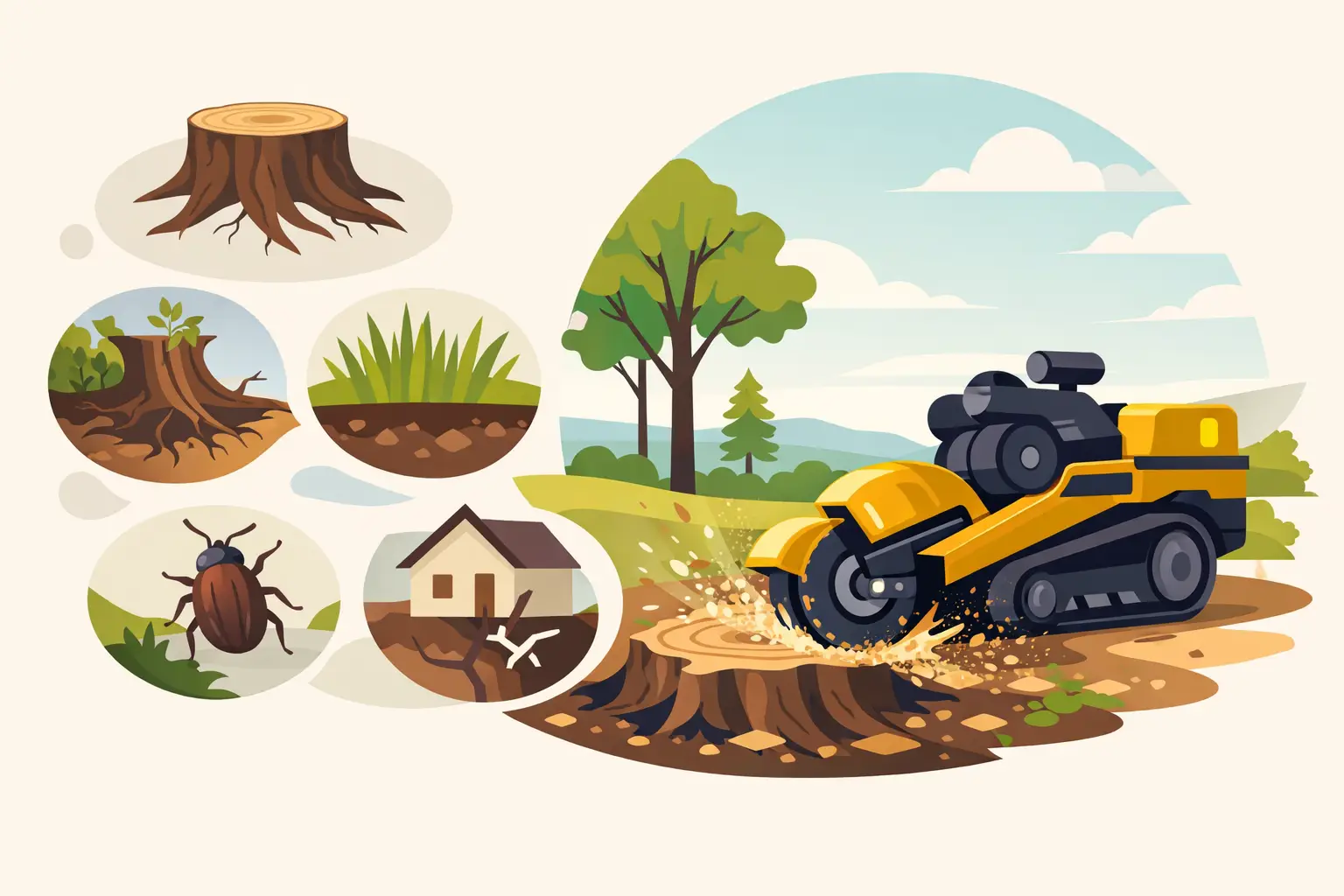
A tree can be gone by the end of the day, but the stump can keep creating problems for years. If you are asking, do I need stump grinding after removal, the short answer is no – but leaving it behind is not always the best choice for your yard, safety, or future plans.
For many homeowners in Plymouth and the West Metro, stump grinding is the practical final step after a tree comes down. It removes the visible obstacle, makes mowing safer, and gives you more options for landscaping. Still, there are situations where a stump can stay in place without causing much trouble. The right call depends on where it is, why the tree was removed, and how you plan to use the area.
What Stump Grinding Actually Does
Stump grinding uses a specialized machine to grind the remaining stump below ground level. The depth can vary based on the location and what comes next for the area, but the goal is to remove the portion that sticks up above the lawn and interferes with normal use.
Grinding does not remove every root from the yard. Most roots are left underground, where they slowly break down over time. That is usually not a concern. Trying to dig out an entire mature root system can tear up a large section of lawn, disturb nearby landscaping, and add unnecessary cost.
After grinding, there will be wood chips and a shallow area where the stump stood. A thorough crew can haul away excess debris or leave a reasonable amount of chips if you want them for mulch. The area can then be filled with topsoil and seeded, covered with mulch, or prepared for another landscaping project.
When Stump Grinding Is Usually Worth It
A stump is easy to ignore until it is in the way. If it sits in a high-use part of the property, grinding is usually the cleaner and safer option.
The stump is in the lawn or mowing path
A stump in the middle of a yard creates a permanent mowing obstacle. You either need to trim around it every week, or risk damaging mower blades and equipment. It can also become a tripping hazard for kids, guests, tenants, or lawn crews.
This matters even more on rental properties and commercial sites. A stump near a walkway, parking area, common lawn, or outdoor gathering space is a liability you do not need to keep around.
You want to replant, landscape, or build nearby
If you plan to install sod, expand a garden bed, put up a fence, add a patio, or use the space for play equipment, grinding gives you a usable starting point. It will not make the area perfectly level on its own, but it removes the above-ground barrier and makes site preparation much easier.
Keep in mind that planting a new tree directly in the same spot is not always ideal. The old root system, settling soil, and remaining wood material can affect the new tree’s early growth. A new planting location a few feet away is often the better choice.
The tree was removed because of disease or pests
Grinding is often recommended when the removed tree had a disease problem or serious pest activity. Not every tree disease remains active in a stump, so the details matter. But removing the stump can reduce habitat for insects, fungi, and decay organisms that may continue working through old wood.
If the tree was removed because of an insect issue, tell the tree service what was found. A qualified crew can explain whether grinding is advisable and whether nearby trees should be inspected.
The stump is producing shoots
Some species are persistent. After removal, the remaining stump and root system may send up new shoots around the base or across the yard. These shoots can keep coming back, especially with species known for aggressive regrowth.
Grinding reduces the stump material that supports this activity, although it does not guarantee that every root sucker will stop immediately. If regrowth is already showing up, taking care of the stump sooner is generally easier than waiting.
When You May Not Need Stump Grinding Right Away
There are cases where leaving a stump is reasonable. If it is deep in a wooded area, far from the lawn, and nowhere near a path or structure, it can be left to decay naturally. The same can be true for a large rural lot where appearance and access are not concerns.
Some homeowners also choose to keep a stump temporarily to spread out project costs. That is a practical decision, especially after an emergency removal or storm cleanup. Just remember that a stump will not disappear quickly. Depending on its size and species, natural decay can take many years.
Leaving it in place also means planning around it. It may become soft and unstable as it rots, attract insects, and remain difficult to mow around. If you know you will eventually want a smooth lawn or a new landscape bed, handling the grinding during or soon after removal is often more efficient.
Minnesota Weather Makes Timing Matter
Minnesota winters can affect when stump grinding is practical. Frozen ground, snow cover, and limited access can delay work in some situations. A stump can still be ground during colder weather when conditions allow, but crews need to assess access, ground conditions, and protection for surrounding turf.
Spring and fall are common times to schedule grinding because homeowners are preparing lawns and landscaping for the season ahead. Wet spring soil can be soft, though, so equipment access needs to be planned carefully to avoid unnecessary ruts. A professional crew should explain how it will protect the lawn, driveway, irrigation heads, and nearby plantings before work begins.
If a tree came down during a storm, the priority is safe removal and cleanup. Grinding can happen as part of that project or be scheduled after the ground and yard conditions are better suited for it.
What Affects the Cost of Stump Grinding?
Stump grinding is generally priced separately from tree removal because it uses different equipment and takes additional time. The biggest factors are stump diameter, species, location, and access.
A large hardwood stump takes more work than a small ornamental tree stump. A stump behind a fenced backyard, on a slope, or next to a deck may require smaller equipment and more careful setup. Surface roots, rocks, utility lines, landscaping borders, and irrigation can also affect the plan.
The best estimate should be clear about what is included. Ask whether the price covers grinding depth, cleanup of wood chips, hauling, and backfilling. If you want grass to grow in the area, ask whether you will need to add topsoil and seed after the work is complete.
Why Stump Removal Is Usually Not a DIY Job
Rental stump grinders are available, but they are heavy, powerful machines that require careful handling. The work can be especially risky when the stump is near a house, fence, utility line, driveway, or landscaping feature. Hidden rocks and metal can damage equipment or throw debris.
There is also the cleanup factor. Grinding a stump produces a surprising volume of wood chips, and the finished area still needs to be graded and restored. For most homeowners, professional grinding saves time and avoids damage to the lawn or nearby property.
Make the Decision Based on Your Yard’s Next Use
The question is less about whether a stump can remain and more about whether it fits your plans. If it is out of sight in a wooded corner, waiting may be fine. If it is in the lawn, near a walkway, or where you want to improve the property, grinding is usually the better long-term move.
A good tree service should give you a straightforward answer based on the stump’s location and the condition of your yard, not pressure you into work you do not need. Xtreme Tree Service MN can assess the site, explain the options clearly, and leave you with a cleaner space that is ready for whatever comes next.