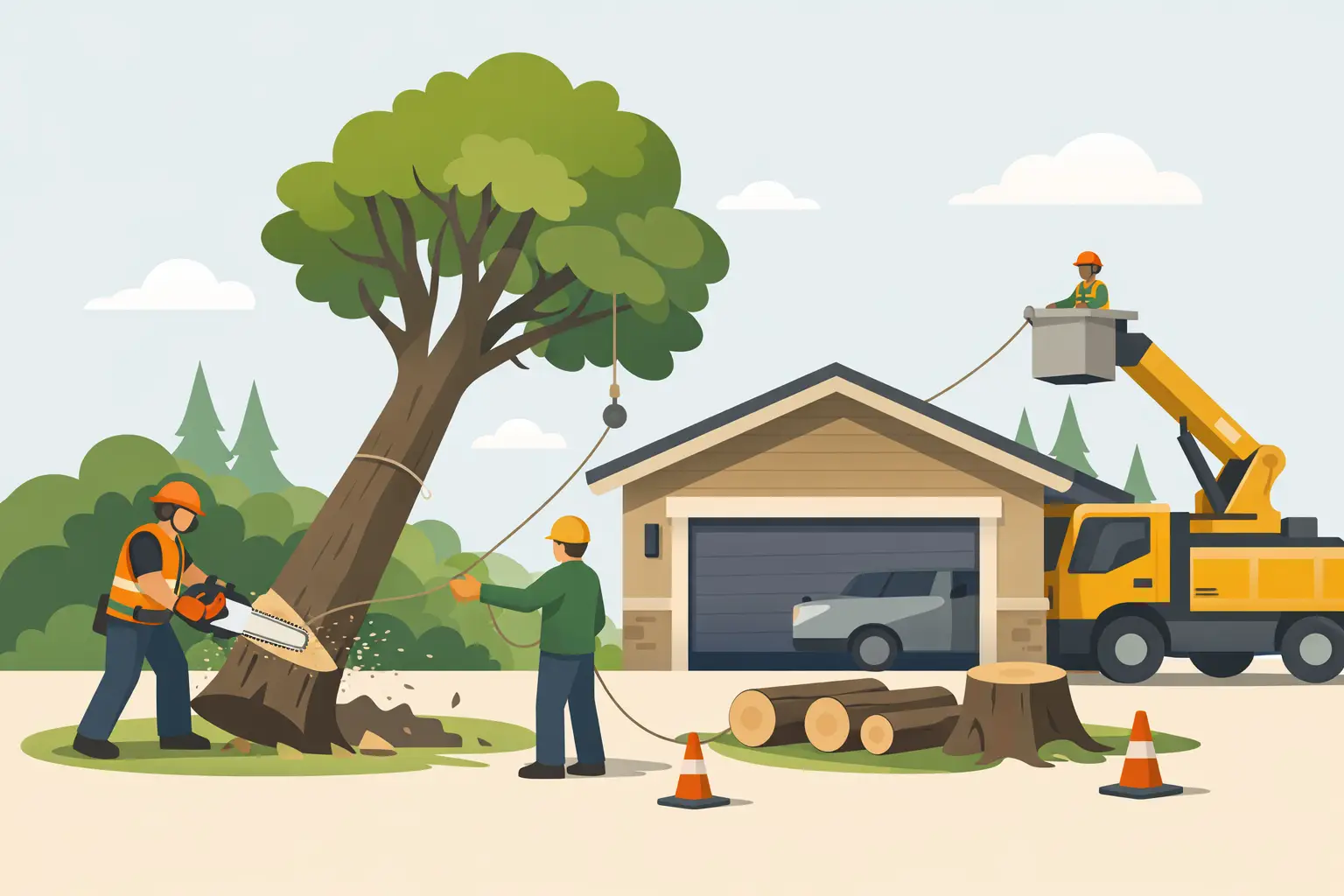
A tree does not have to be dead to put a garage at risk. A heavy limb over the roof, a trunk leaning toward the structure, or roots lifting the driveway can turn into costly damage after one strong Minnesota storm. Removing a tree near a garage requires more than cutting it down. The work needs a clear plan for controlling every section of the tree and protecting the building, vehicles, and surrounding property.
Why Garage-Area Tree Removal Needs Extra Care
Garages are often tight work areas. There may be a driveway, fence, utility lines, landscaping, neighboring homes, or vehicles close to the tree. Even a small tree can cause damage if a limb swings into siding, falls across the roof, or lands on a garage door.
The biggest concern is not always the trunk. Large limbs can extend far beyond the base of the tree and hang over the roofline. If those branches are dead, cracked, or carrying extra weight from ice and snow, they can fail without warning. A tree that appears healthy can still have weak branch unions, internal decay, or root problems that change how it responds during removal.
A professional crew looks at the full drop zone before work begins. That includes where each piece can be lowered, where equipment can be staged, and how the crew will keep debris away from the garage. The goal is controlled removal, not simply getting the tree on the ground.
Signs a Tree May Need to Come Down
A tree near your garage deserves a closer look when it starts leaning more than it used to, has major dead limbs over the roof, shows splitting or decay in the trunk, or has roots lifting pavement near the foundation. Fungal growth at the base, hollow areas, peeling bark, and fresh cracks after a storm can also point to structural weakness.
Not every concern means full removal is necessary. Selective pruning may be the right solution when the tree is healthy but has overextended limbs above the garage. Pruning can reduce weight, improve clearance, and remove deadwood without taking down a valuable mature tree.
Removal becomes the better option when the trunk is compromised, the root system is failing, or the tree cannot be safely maintained at its current location. A straight answer from an experienced tree professional can help you decide whether trimming will solve the problem or simply delay it.
Removing a Tree Near a Garage: The Safe Approach
The safest method depends on the tree’s size, condition, lean, and available space. A small tree in an open side yard may be removed in a few controlled cuts. A large oak or maple beside a garage usually needs to come down in sections.
The crew starts by checking access and identifying hazards. Vehicles should be moved from the driveway and garage, and the work area should be kept clear of people and pets. If power lines are involved, special precautions are required. Tree crews should not work within unsafe distances of energized lines. In some cases, the utility company must handle line clearance before any tree work can begin.
For a tree that cannot be safely felled in one direction, climbers or aerial equipment remove limbs and trunk sections from the top down. Each piece is cut to a manageable size and lowered or directed into a planned landing area. Rigging may be used to control larger limbs, especially when there is little room between the tree and the garage.
This sectional approach takes more time than dropping a tree in an open field, but it protects the property. It also gives the crew control when wind, branch weight, or hidden decay makes the tree unpredictable.
Protecting the Roof, Siding, and Driveway
A garage roof can be damaged by more than a direct hit. Dragging branches across shingles can scrape granules or damage gutters. Heavy wood dropped onto a driveway can crack concrete, while repeated equipment traffic can leave ruts in soft ground.
A careful removal plan accounts for these details. Crews choose landing zones away from structures, use controlled lowering when needed, and avoid placing heavy debris where it can damage pavement or landscaping. Plywood or ground mats may be useful when equipment needs to cross a lawn or work near vulnerable surfaces.
Homeowners can help by clearing the driveway, opening access gates, and moving outdoor furniture, planters, or decorative items from the work area. If the garage contains items that could be affected by vibration or dust, it is smart to secure them before the crew arrives.
Why DIY Tree Removal Is a Bad Bet Near a Structure
Cutting down a tree close to a garage is not a typical weekend project. The risk is not limited to a tree falling the wrong way. Limbs can twist, kick back, strike the ladder, or break unexpectedly under tension. A tree with internal decay may not hold the way it appears to from the ground.
Ladders and chainsaws are a particularly dangerous combination. Working overhead while trying to control a heavy limb leaves little room for error. Ropes can help in the right hands, but improper rigging can add force instead of reducing it. A branch that weighs a few hundred pounds can become far more dangerous when it swings or drops.
There is also the question of insurance and repair costs. A damaged garage door, roof, gutter system, vehicle, or neighboring fence can quickly cost more than professional removal. Hiring an insured tree service with the right equipment is often the practical choice when a structure is within the tree’s fall area.
Timing Tree Removal in the West Metro
Tree removal can be performed through much of the year, but conditions affect the job. Frozen ground in winter can help reduce lawn impact, while snow and ice may limit access or add weight to branches. Spring and summer offer easier visibility in some cases, but soft ground and active landscaping need additional protection.
After a storm, timing matters even more. A hanging limb or partially uprooted tree near a garage should be treated as a safety concern, not something to watch for another week. Avoid parking beneath it, keep people away from the area, and arrange an inspection as soon as possible.
If the tree is not an emergency, scheduling removal before it becomes one gives you more control. You can plan for driveway access, choose a time that works for tenants or neighbors, and address the stump afterward if it affects mowing, parking, or future landscaping.
Do Not Forget the Stump and Cleanup
Once the tree is down, the stump may still create problems near a garage. It can interfere with a driveway expansion, a new fence, drainage work, or landscaping plans. Leaving it in place is sometimes fine, especially if it is outside a usable area. But a stump near the garage can continue to send up shoots, attract insects as it decays, or become an obstacle when maintaining the property.
Stump grinding removes the visible stump below grade and leaves the area ready for soil, seed, or a new planting plan. The depth and cleanup needs depend on what will go in that location next. If you are planning concrete work or a new structure, mention that before grinding so the area can be prepared appropriately.
Cleanup should also be part of the job, not an afterthought. Branches, logs, sawdust, and debris should be removed or handled according to the plan you agreed on. A clean site makes it easier to see whether any follow-up work is needed and lets you use your driveway and garage right away.
For homeowners and property managers in Plymouth, Minnetonka, Maple Grove, and the surrounding West Metro, the right tree service brings a clear plan before the first cut. Xtreme Tree Service MN focuses on safe removal, protection for nearby structures, and thorough cleanup. When a tree is too close for comfort, acting before the next high wind is the best way to protect the garage and keep a manageable problem from becoming an expensive repair.