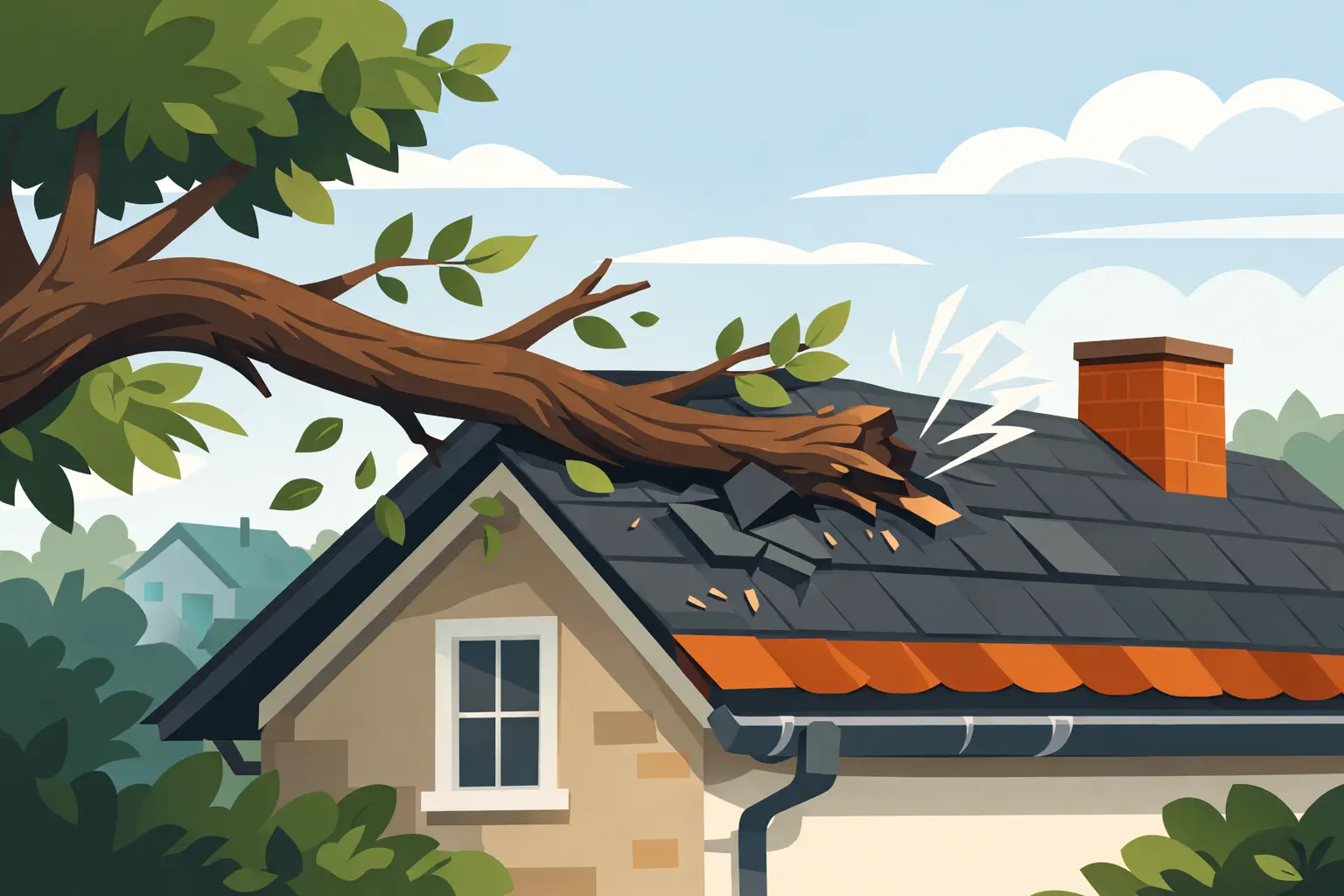
A branch does not need to fall through a roof to cause expensive trouble. Can overgrown branches damage a roof? Yes. In Plymouth and across the West Metro, trees that rub against shingles, hang over rooflines, or collect snow and ice above a home can create damage slowly or all at once during a storm.
The good news is that many roof and tree conflicts can be addressed before they become an emergency. A clear view of the roofline, proper pruning, and prompt attention after severe weather go a long way toward protecting the home, the yard, and the people below.
Can Overgrown Branches Damage a Roof?
Overgrown branches can damage a roof in several ways. The most obvious risk is a large limb breaking during high wind, heavy snow, or ice buildup. A falling limb can crack shingles, dent gutters, puncture decking, or damage flashing around chimneys and vents. Even a smaller branch can cause a costly leak if it lands in the wrong spot.
The less obvious problem is repeated contact. A limb that lightly scrapes the roof every time the wind picks up can wear away shingle granules and protective surface material. Over time, that friction shortens the life of the roofing material and can expose areas to moisture.
Branches hanging directly above the roof also drop leaves, seeds, twigs, and needles into gutters and valleys. Clogged gutters can send water where it does not belong, including behind fascia boards or under the roof edge. In shaded areas, trapped debris holds moisture and can encourage moss or algae growth. That does not always mean the roof is failing, but it is a condition worth correcting.
How Trees Create Roof Problems in Minnesota
Minnesota weather adds weight to the issue. Summer storms can move through quickly with strong winds that turn an already stressed branch into a falling hazard. Winter brings a different challenge: snow and ice add substantial weight to limbs, especially on mature trees with broad canopies or multiple weak leaders.
A branch may look sound from the ground but still have a crack, decay pocket, or poor attachment point. When it is loaded with wet snow, the branch can fail without much warning. If it is hanging over a roof, garage, driveway, or entry path, the consequences can be serious.
Tree species, age, and past pruning all matter. Fast-growing trees can put out long, heavy limbs that extend well beyond their structure. Older trees may develop deadwood or internal decay. Trees that were topped or poorly trimmed years ago often produce weak regrowth near old cuts. A professional evaluation helps separate a branch that needs routine pruning from one that presents a more immediate safety concern.
Contact Damage Is Not Always Easy to See
Roof damage from branches is often gradual. Homeowners may not notice it until they see loose shingle material in a gutter, a water stain on a ceiling, or a branch visibly pressing on the roof after a storm. By then, the underlying issue may have been present for several seasons.
Look for branches that rest on the roof, move against it in the wind, or hang close enough to strike it during a storm. Also watch for limbs crossing one another above the house. Rubbing branches can weaken each other, creating a break risk even before they reach the roof.
Warning Signs Around Your Roofline
A quick walk around the property can reveal a lot. Do not climb onto the roof or try to pull down a branch from a ladder. Looking up from a safe position is enough to spot many concerns.
Pay attention to these signs:
- Branches touching shingles, gutters, siding, or chimney flashing
- Dead, cracked, split, or hanging limbs above the home
- Heavy limbs extending over the roof, garage, deck, or driveway
- Gutters filling repeatedly with leaves, needles, twigs, or roof grit
- Broken branches or fresh bark damage after wind, snow, or ice
If you see a limb resting on a power line, stay clear and contact the utility company. Tree work near energized lines requires specific training and equipment. It is not a job for a homeowner with a saw, ladder, or rope.
How Much Clearance Should Branches Have?
There is no single clearance distance that fits every tree and every house. The right amount depends on branch size, species, growth rate, roof height, and how the tree moves in wind. In general, branches should not touch the roof or gutters, and larger limbs should be kept well back from the structure where practical.
The goal is not to strip every tree away from the home. Over-pruning can stress a tree, increase sun exposure on formerly shaded bark, and lead to weak shoots later. Good pruning removes the right branches while preserving the tree’s health and natural shape.
For a young ornamental tree, a light trim may provide enough clearance for several years. For a mature maple, oak, or cottonwood with large limbs over a roof, the work may require careful reduction cuts, selective removal of deadwood, or a bigger discussion about overall risk. The right answer depends on the condition of the tree, not just how close the nearest branch appears.
When Pruning Is Enough and When Removal Makes Sense
Pruning is usually the best choice when the tree is healthy and the issue is limited to a few overextended, dead, or poorly positioned branches. Proper trimming can reduce roof contact, improve clearance for gutters, and lower the chance of storm breakage without taking down a valuable shade tree.
Removal may be the safer option when a tree has major decay, a split trunk, severe lean toward the house, repeated large branch failures, or structural defects that cannot be corrected with pruning. A tree can look full and green while still having serious weakness inside the trunk or at a major union.
This is where an on-site assessment matters. The cheapest-looking fix is not always the safest one, and removal is not always necessary. A clear estimate should explain what work is recommended, why it is recommended, and what areas of the property need protection during the job.
Avoid DIY Roofline Tree Work
Trimming branches above a roof combines several risks at once: heights, unstable footing, falling limbs, nearby power lines, and the chance of damaging the home while trying to protect it. A branch can swing unexpectedly when cut, especially if it is under tension or tangled with other limbs.
Professional crews use controlled cutting methods, rigging when needed, and equipment sized for the job. Just as important, they plan where limbs will land and how to avoid damage to shingles, gutters, landscaping, fences, and nearby structures. Cleanup also matters. Leaves, branches, and sawdust left in gutters or around the yard can create another maintenance problem after the work is done.
A Practical Plan for Homeowners and Property Managers
Check trees near roofs at least twice a year, with an extra look after strong wind, ice, or heavy snow. From the ground, note any branches that have moved closer to the house, any new deadwood, and any debris building up in gutters.
Schedule pruning before a branch becomes an emergency whenever possible. If a storm has already broken a limb onto the roof or left one suspended above it, keep people away from the area and arrange emergency tree service promptly. Do not attempt to cut, drag, or climb around a damaged limb yourself.
For routine work or storm response, Xtreme Tree Service MN provides clear communication, safe tree trimming and removal, and thorough cleanup for homeowners and property managers in Plymouth and the surrounding West Metro communities. A timely look at the trees around your roof can prevent a small clearance issue from becoming a repair bill.