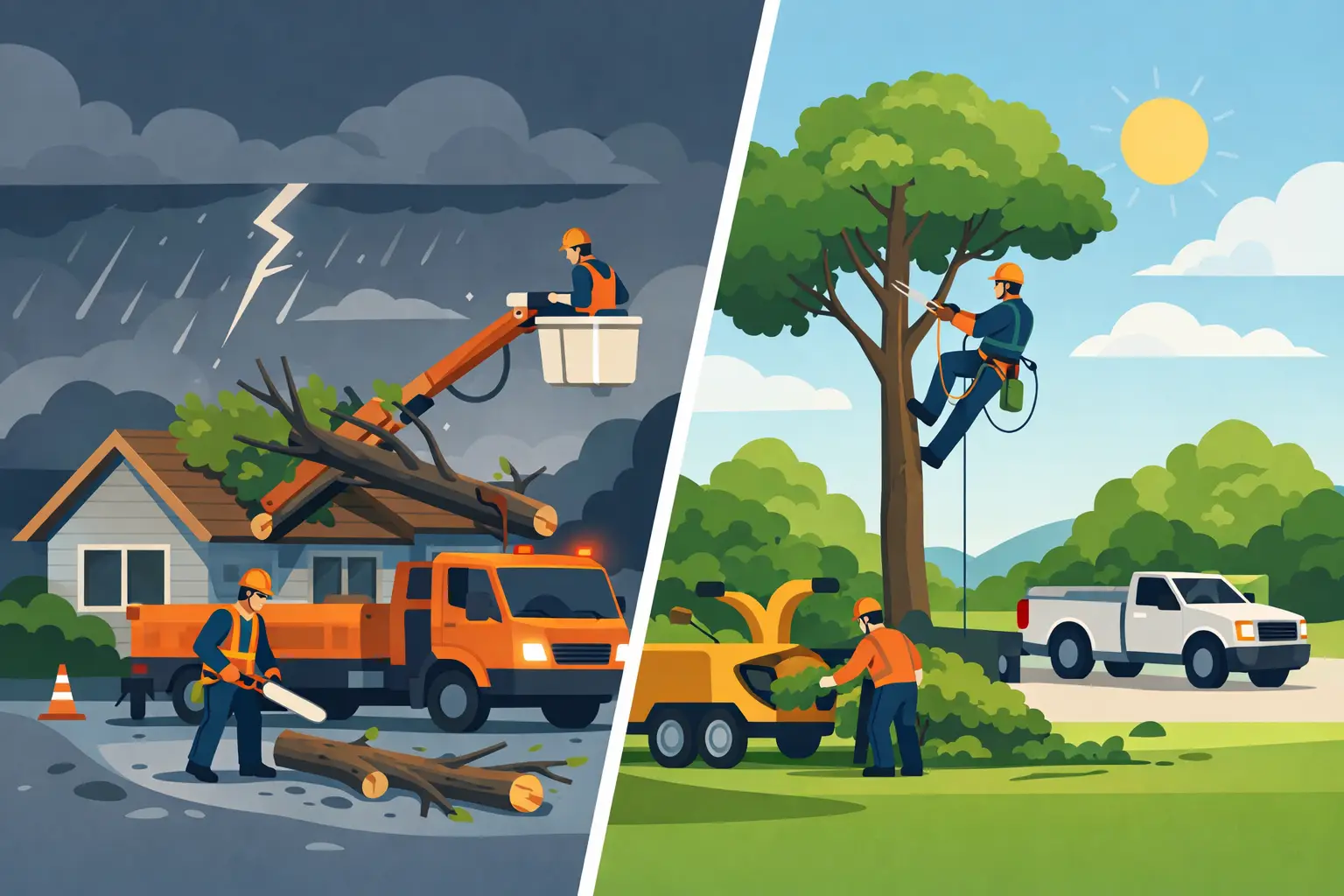
A large branch hanging over your roof after a Plymouth windstorm is not a problem to watch for a few days. A healthy-looking oak with low limbs over the driveway usually can wait for a planned visit. Knowing the difference between emergency tree service vs scheduled service helps you protect people, property, and your budget without treating every tree concern like a crisis.
The right choice comes down to immediate risk. Emergency work is for trees or limbs that could cause harm now. Scheduled service is for maintenance, planned removals, and non-urgent issues that benefit from time, clear planning, and favorable working conditions.
What Counts as an Emergency Tree Service?
Emergency tree service is meant to address a present hazard. The tree may be down, partly down, split, leaning into a structure, or blocking safe access to your home or business. In these situations, waiting can increase damage or leave people exposed to unnecessary risk.
After storms in the West Metro, emergency calls often involve broken limbs on roofs, uprooted trees across driveways, or branches tangled near utility lines. Heavy snow, ice, saturated soil, and strong wind can turn a previously stable tree into a fast-moving property problem.
A situation generally calls for urgent help when a tree or large limb has fallen on a structure, is actively leaning toward one, blocks a road or driveway, or has left a dangerous overhead hang-up. A cracked trunk, fresh root lifting, or major limb split can also be urgent when the tree is close to a house, garage, parked vehicles, or an area people use.
Not every storm-damaged branch requires emergency removal. A small limb on an open lawn may be inconvenient, but it is usually safe to handle through a scheduled cleanup. The key question is simple: could this cause injury or additional property damage before a crew can reasonably return for planned work?
Safety comes before cleanup
If a tree has contacted a power line, stay clear and contact the utility company right away. Do not touch the tree, the line, a fence, or standing water nearby. Even a branch that appears to be resting lightly on a line can be energized.
Keep children, pets, and visitors away from the work area. Avoid walking under hanging limbs or trying to pull a lodged branch down with a rope, ladder, or pickup. Storm-damaged wood can shift without warning, especially when it is loaded with snow, ice, or another branch.
Take photos from a safe distance if you may need them for an insurance claim. Then focus on securing the area and arranging professional help. Cutting, climbing, or moving a compromised tree without the right equipment creates a second emergency.
When Scheduled Tree Service Is the Better Choice
Scheduled tree service is the practical answer when the problem is real but not immediate. It gives you time to get a clear assessment, plan the work around your property, and choose the best approach for removal, trimming, stump grinding, or hauling.
Common scheduled projects include removing a dead tree that is still stable, thinning crowded branches, pruning limbs away from a roof, clearing space for a fence or landscaping project, and grinding an old stump. These jobs matter for safety and appearance, but they do not usually require a same-day response.
Planned work can also be more efficient. A crew has time to assess access, identify nearby structures and landscaping, determine where material can be lowered safely, and bring the right equipment for the job. That preparation is especially valuable on tight suburban lots in Plymouth, Minnetonka, and Maple Grove, where homes, fences, gardens, and neighboring properties may be close together.
Routine pruning prevents avoidable calls
Many emergency calls begin with issues that were visible well before a storm. Dead limbs, branches rubbing on a roof, weak forks in mature trees, and excessive canopy weight can all make storm damage more likely.
Routine pruning will not make a tree storm-proof. No one can guarantee that during a major wind or ice event. It can, however, remove obvious deadwood, reduce strain on selected limbs, improve clearance around structures, and help identify trees that need closer attention.
If you have noticed a branch getting lower each season or a tree developing decay near its base, a scheduled estimate is usually the right next step. Acting before a storm gives you more choices than reacting after one.
Emergency Tree Service vs Scheduled Service: The Main Differences
The biggest difference is timing, but timing affects everything else. Emergency work focuses first on controlling an active hazard. The crew may need to remove a limb from a roof, open a blocked driveway, or stabilize and dismantle a failed tree before further damage occurs.
Scheduled service focuses on planned property care. The work can be organized around access, weather, site protection, and your goals for the space. You may be deciding whether to save a tree with selective pruning, remove it completely, or add stump grinding so the area is ready for grass, a garden, or a new project.
Cost can vary as well. Emergency response may involve difficult access, unstable wood, urgent timing, or work performed after widespread storm damage. Scheduled work often allows for a more predictable scope because the crew can inspect the tree and site before setting a date. That does not mean scheduled service is always less expensive. A large, complex removal may require significant planning and equipment regardless of when it is done.
Weather also matters. Emergency crews work when conditions are safe enough to do so, but active storms, lightning, dangerous wind, and utility hazards can limit immediate tree work. A reputable company will not rush a crew into conditions that put workers, customers, or neighboring property at greater risk.
How to Decide Without Guessing
Start with the tree’s location and condition. A damaged limb high over an unused back corner is different from the same limb over a front entry or a child’s play area. A dead tree standing well away from structures may be scheduled. That same tree leaning toward a garage after heavy rain should be treated as urgent.
Consider these questions before you call:
- Has the tree or limb already fallen, split, or started leaning?
- Is it near a home, garage, vehicle, walkway, driveway, or occupied building?
- Are power lines involved or potentially involved?
- Is safe access blocked for residents, tenants, deliveries, or emergency vehicles?
- Could wind, snow, or more rain make the situation worse soon?
If the answer to any of these points is yes, explain the situation clearly when you contact a tree service. Photos can help if they can be taken safely, but never put yourself in a hazardous spot to get them.
For less urgent concerns, ask for a scheduled assessment. Clear communication about your goals matters. Let the crew know if you are concerned about roof clearance, shade, visibility, a new landscaping project, tenant access, or cleanup. A good plan protects the parts of the property you want to keep while completing the work that needs to be done.
What to Expect From a Professional Crew
Whether the job is urgent or planned, the basic standard should be the same: safe execution, clear expectations, and a clean site when the work is complete. The method may change based on the tree, access, and hazard level. Some trees can be removed in sections with controlled lowering. Others require careful directional felling where space allows.
Before work starts, make sure the crew understands property boundaries, access points, landscaping concerns, and any structures or features that need special care. Move vehicles out of the work area when possible, and keep gates unlocked if access has been arranged.
For homeowners and property managers, direct communication reduces stress when the job is already disruptive. Xtreme Tree Service MN provides straightforward estimates and practical guidance so you can make the call that fits the condition of the tree and the needs of the property.
A tree problem does not have to become a major loss to deserve attention. When the risk is immediate, keep clear and get help quickly. When it is not, schedule the work before the next storm decides the timing for you.