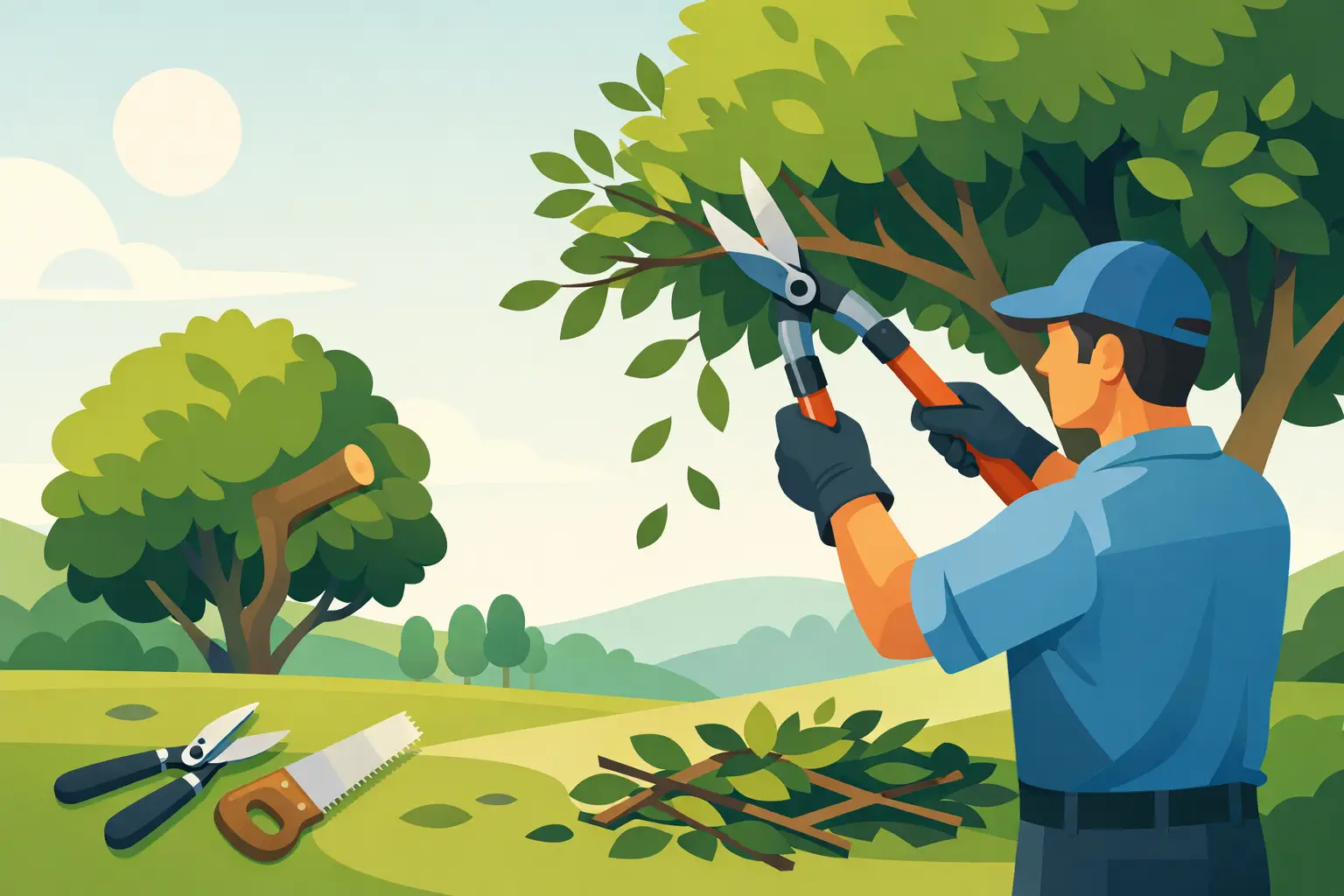
A tree usually tells you when pruning has gone wrong. You see stubs that never healed, heavy limbs cut back too far, or new growth shooting out in weak clusters after a bad trim. If you want to know how to prune trees properly, the goal is not just a cleaner look. It is safer structure, healthier growth, and fewer problems with roofs, driveways, power lines, and storm damage later on.
Good pruning is part plant care and part risk management. Around Plymouth and the West Metro, that matters. Snow load, wind, ice, and fast seasonal growth can turn a neglected branch into a property issue in a hurry. Done right, pruning helps a tree stay strong and keeps your yard safer and easier to manage.
Why proper pruning matters
Pruning is not the same as cutting branches until a tree looks smaller. A proper prune removes dead, damaged, diseased, or poorly attached limbs while protecting the tree’s natural form. It can improve clearance over a driveway, reduce branch weight, and help air and light move through the canopy.
It can also go wrong fast. Over-pruning stresses a tree. Topping creates weak regrowth and often makes the structure less stable, not more. Bad cuts can open the door to decay and insect issues. That is why the method matters as much as the result.
How to prune trees properly without harming them
The first rule is simple: prune with a reason. Every cut should solve a specific problem. Maybe a branch is dead. Maybe it is rubbing another limb. Maybe it is hanging too low over a sidewalk. If there is no clear reason to remove it, leave it alone.
The second rule is to respect the tree’s biology. Branches do not heal the way skin does. Trees seal off damage over time, and they do that best when cuts are made in the right spot. That means cutting just outside the branch collar, which is the slightly swollen area where the branch joins the trunk or a larger limb. Cut too close and you damage the tree’s defense zone. Leave a long stub and the tree has a harder time closing over the wound.
The third rule is moderation. In most cases, you should not remove more than about 20 to 25 percent of a healthy tree’s canopy in one season. For mature trees, less is often better. If a tree needs major correction, spreading the work out over time is usually the safer approach.
Start with the right branches
A practical pruning job usually follows a clear order. Remove dead, broken, and diseased wood first. Then look for crossing or rubbing branches, since repeated contact can strip bark and create weak points. After that, deal with poorly attached limbs, especially narrow branch unions that are more likely to split in storms.
Once those issues are handled, you can improve clearance and shape. Raise low limbs carefully if they interfere with mowing, walking, or parking. Thin selected interior branches if the canopy is overly dense. The key word is selected. You are not hollowing out the tree. You are making thoughtful cuts that improve structure.
Timing matters more than most people think
For many shade trees, late winter or early spring is the best time to prune. The branch structure is easier to see, the tree is still dormant, and new growth will follow soon after. This timing also tends to reduce stress on the tree.
That said, it depends on the species and the reason for pruning. Dead or hazardous limbs can be removed any time of year because safety comes first. Oaks are a special case in some areas because pruning during active periods can increase disease risk. Spring-flowering trees are often best pruned right after they bloom if you want to preserve next year’s flowers.
If you are unsure, that uncertainty is a sign to slow down. A tree can handle the right cut at the wrong time better than it can handle the wrong cut at any time, but timing still affects long-term health.
Use the right tools and keep them sharp
Clean work starts with clean tools. Hand pruners work for small twigs and stems. Loppers give you more leverage for medium branches. A pruning saw is better for larger limbs. Pole tools can help with reach, but they also make it easier to cut the wrong branch or lose control of the saw angle.
Sharp blades make smoother cuts, and smoother cuts are easier for a tree to seal. Dirty tools can spread disease between plants, so it makes sense to clean them, especially when working on diseased wood. You do not need a truck full of gear for light pruning, but you do need tools that match the branch size and let you work safely from the ground whenever possible.
Make clean cuts, not rushed ones
Small branches are straightforward. Cut just outside the branch collar and avoid crushing the bark. Larger limbs need more care because their weight can tear bark down the trunk if cut in one motion.
That is where the three-cut method comes in. Make a small undercut several inches out from the trunk. Then make a second cut a little farther out from the first to remove the bulk of the branch. Once the weight is gone, make the final cut just outside the branch collar. It takes a little more time, but it protects the trunk and leaves a much cleaner wound.
What you should not do is flush cut, leave long stubs, or paint the wound. Wound paint generally does not help and can sometimes trap moisture or interfere with the tree’s natural response.
Common pruning mistakes homeowners make
The biggest mistake is topping. People do it to reduce height fast, but it creates weak, fast regrowth and leaves large wounds behind. A topped tree often becomes more hazardous over time, not less.
Another common problem is over-thinning. Removing too much interior growth can expose limbs to sunscald and shift weight where you do not want it. Lion-tailing, where foliage is stripped from the inner part of branches and left only at the ends, is another issue. It looks tidy to some people, but it increases stress and can make limbs more likely to fail.
Then there is the simple mistake of pruning from a ladder with a saw while reaching too far. Tree work injuries often happen that way. If your feet are off the ground and the branch is large enough to swing, split, or fall unpredictably, the risk goes up quickly.
When DIY pruning makes sense – and when it does not
Homeowners can often handle light pruning on young trees, ornamentals, or small lower branches if they have the right tools and stay within reach from the ground. That kind of work can improve shape and remove obvious deadwood without much trouble.
Bigger trees are different. If branches are near a house, garage, fence, service line, or parked vehicles, one wrong cut can get expensive. If the tree is storm-damaged, decaying, or leaning, the structure may not respond the way it looks like it should. And if a limb requires climbing, rigging, or a chainsaw overhead, that is not routine yard work anymore.
That is when it makes sense to bring in a professional crew. A good pruning job is not just about cutting wood. It is about controlling where that wood goes, protecting nearby property, and leaving the site clean when the work is done. That practical side matters just as much as the tree biology.
What proper pruning should look like afterward
A well-pruned tree should not look butchered or stripped down. It should still look like the same tree, just healthier, cleaner, and better balanced. The canopy should have a natural shape. Major limbs should remain well distributed. Cuts should be hard to notice from a distance because the overall structure still makes sense.
You should also see the benefit around the property. Better clearance. Less branch interference over walks and driveways. Fewer obvious hazards. And after storms, a tree with stronger structure is often in better shape than one that was ignored or cut back carelessly.
For homeowners and property managers, that is really the point. Proper pruning supports appearance, safety, and long-term maintenance at the same time. If you are dealing with mature trees or higher-risk limbs in the West Metro, it is worth getting the work done carefully. Xtreme Tree Service MN sees firsthand how often small pruning issues turn into larger cleanup jobs after wind or heavy snow. A careful cut today can prevent a bigger problem later.
The best pruning plan is usually the one that solves the issue without taking more from the tree than necessary.