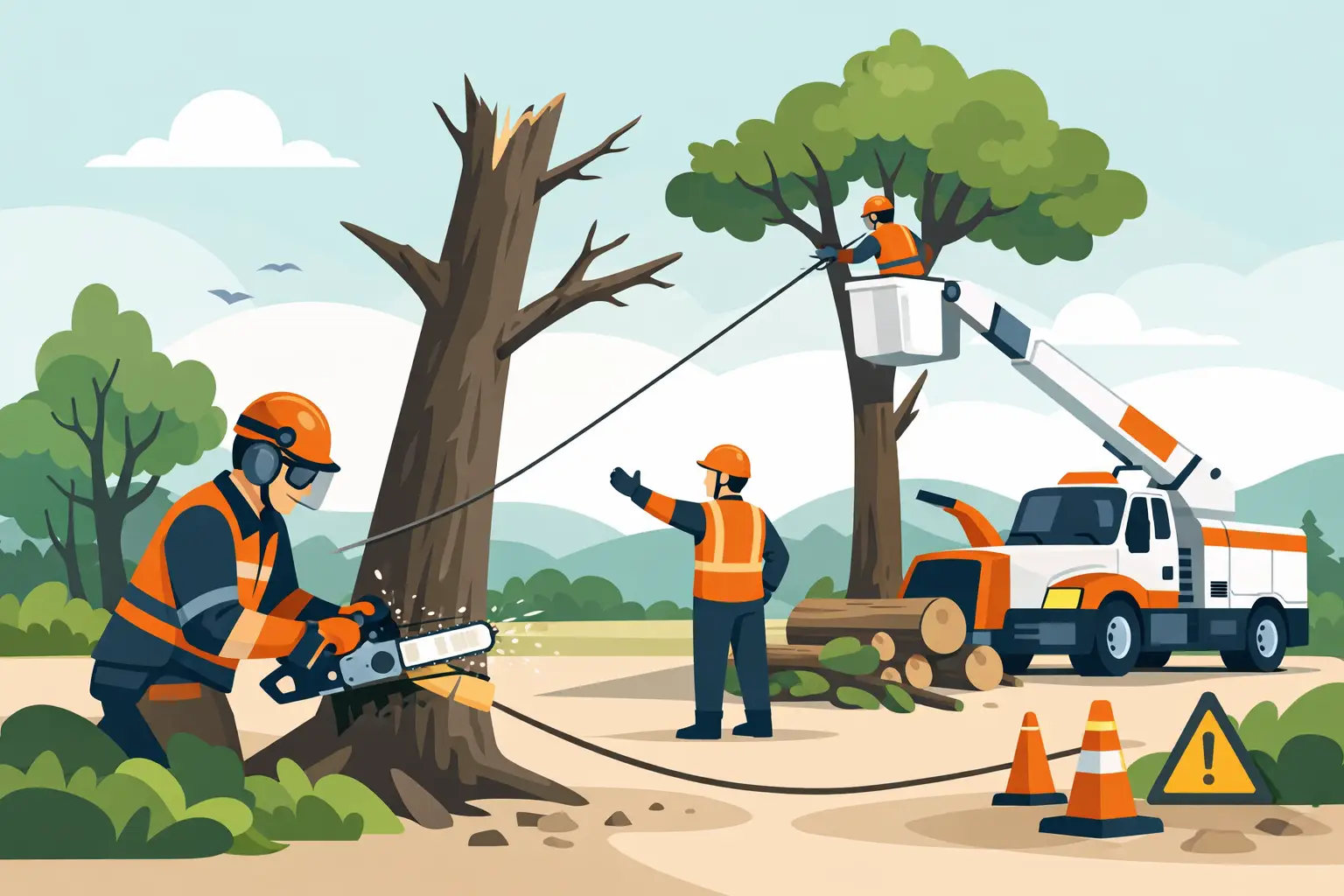
A tree can look stable right up until the day it drops a large limb over a driveway, leans harder after a storm, or starts splitting near the base. If you are searching for how to remove a hazardous tree, the first thing to know is simple: the danger usually comes from what you cannot fully see from the ground. Decay, root failure, storm damage, and hidden structural weakness can turn a routine yard issue into a property damage or injury risk fast.
For most homeowners and property managers, hazardous tree removal is not a DIY job. Cutting down a compromised tree is different from removing a healthy small ornamental tree in an open yard. Once a tree is dead, cracked, hollow, leaning, or hanging over a house, garage, fence, utility line, or neighboring property, the work becomes technical and high risk.
How to remove a hazardous tree without making the risk worse
The safest way to approach a hazardous tree is to start with an honest assessment of the threat level. A tree may need immediate removal if it has a major split in the trunk, exposed or heaving roots, large dead sections in the canopy, or a recent lean that was not there before. Fungal growth around the base, hollow areas, and bark falling off in large sections can also point to serious decline.
Location matters just as much as condition. A tree with defects in the back corner of a large lot is one thing. The same tree hanging over a roof, parked cars, sidewalk, or play area is another. Hazard is not only about whether the tree is failing. It is also about what it can hit if it does.
If the tree is near power lines, stop there and keep your distance. That work should not be handled by a homeowner. Utility line clearance and removals involving energized lines require specialized coordination and equipment.
The next step is planning the removal method. In a wide open space, a tree can sometimes be brought down in controlled sections or felled in one direction. In a tighter suburban yard, especially in Plymouth, Minnetonka, Maple Grove, and similar neighborhoods, removal is more often done piece by piece. Sections are cut, lowered, and managed carefully to protect the house, landscaping, fencing, and nearby structures.
That is where many DIY attempts go wrong. Homeowners often assume the tree will fall where expected, or that a few cuts with a chainsaw will solve the problem. Hazardous trees rarely behave predictably. Internal rot changes weight distribution. Cracks can open mid-cut. Limbs under tension can spring or twist. A tree that looks like it should fall one way may shift in another direction because of wind, decay, lean, or canopy imbalance.
What professionals look for before hazardous tree removal
A proper removal starts before any saw is running. The crew should assess tree condition, drop zones, access points, rigging needs, and obstacles on the property. They should also think through cleanup, because removal is only part of the job. A yard full of brush, logs, and sawdust is not a finished project.
Most hazardous removals involve a few practical questions. Can equipment get into the yard without damaging turf or hardscape? Does the tree need to be climbed, or can it be handled with a bucket truck? Will sections need to be rigged down over a roof or fence? Is stump grinding part of the plan, or does the stump stay for now?
These details affect time, cost, and safety. They also help set clear expectations before work begins, which matters when you are dealing with a tree that already feels urgent.
In some cases, removal is not the only option. A tree with one damaged lead or a few failed limbs may be made safer with pruning, weight reduction, or cabling, depending on species, structure, and overall health. But when the main trunk is compromised, roots are failing, or the tree is dead and brittle, removal is often the most responsible choice.
Signs a hazardous tree should come down soon
Some warning signs justify quick action, even if the tree is still standing. A fresh lean after heavy rain or wind is one of the biggest red flags because it may indicate root plate movement. Deep trunk cracks, hanging limbs, split stems, and large dead branches over occupied areas also deserve immediate attention.
Dead ash trees are a common example in Minnesota. Once they decline, they can become brittle and unstable, which changes how they need to be climbed and removed. Storm-damaged maples, cottonwoods, and mature oaks can also develop hidden failures that are not obvious from the driveway.
There is also the liability side. If a tree is clearly failing and damages a neighboring structure or injures someone, the cost can go far beyond removal. For property managers, delaying action on a known hazard can create avoidable exposure. For homeowners, it can turn a manageable job into an emergency call after the tree has already come down.
Why DIY hazardous tree removal is usually a bad bet
The issue is not only chainsaw skill. It is the full setup. Hazardous tree removal often requires rigging, climbing, controlled lowering, directional cutting, traffic awareness, and a clear understanding of compression and tension in damaged wood. Personal protective equipment helps, but it does not remove the risk of severe injury.
There is also the property protection side of the job. Safe removal is not just about getting the tree to the ground. It is about doing it without crushing a shed, tearing up a lawn with avoidable equipment damage, smashing landscape beds, or leaving debris piled across the yard.
A dependable tree crew should arrive with a plan, work methodically, and leave the site clean. That matters just as much as the removal itself. For many customers, peace of mind comes from knowing the crew will protect the property, communicate clearly, and finish the job instead of creating a second problem to deal with.
What to expect during the removal process
Once the tree is inspected and the plan is set, the crew will secure the work area and begin removing weight from the canopy. Limbs are typically taken first to reduce risk and create working room. After that, the trunk is removed in sections or, if conditions allow, dropped in a controlled direction.
The exact process depends on access and tree condition. A storm-split tree over a garage is handled very differently from a dead tree standing in an open side yard. That is why honest estimates matter. The safest method is not always the fastest method, and the fastest-looking option is not always the right one.
Cleanup should include brush hauling, log removal if requested, and a thorough pass over the job site. If the stump is left, the area should still be left tidy and safe. If stump grinding is included, the remaining wood chips should be addressed clearly so there are no surprises.
This is also where direct communication helps. Customers want to know when the crew is coming, what access they need, whether gates should be unlocked, and if vehicles should be moved. Straight answers and follow-through make the job easier from start to finish.
Choosing the right help for a hazardous tree
If you need help with how to remove a hazardous tree, look for a company that treats safety and cleanup as part of the same job. Ask how they plan to protect nearby structures, what removal method they expect to use, and what debris handling is included. A fast estimate is helpful, but clear scope matters just as much.
Local experience also counts. In established West Metro neighborhoods, crews often work around mature trees, tighter lot lines, fences, decks, and overhead obstacles. That kind of setting requires careful execution, not guesswork.
A company like Xtreme Tree Service MN understands what local homeowners and property managers need most: a safe removal plan, clear communication, and a clean site when the work is done. That practical approach is what keeps a stressful tree problem from turning into a bigger one.
If a tree on your property looks questionable, trust your instincts and get it checked before the next storm gives you the answer for free.