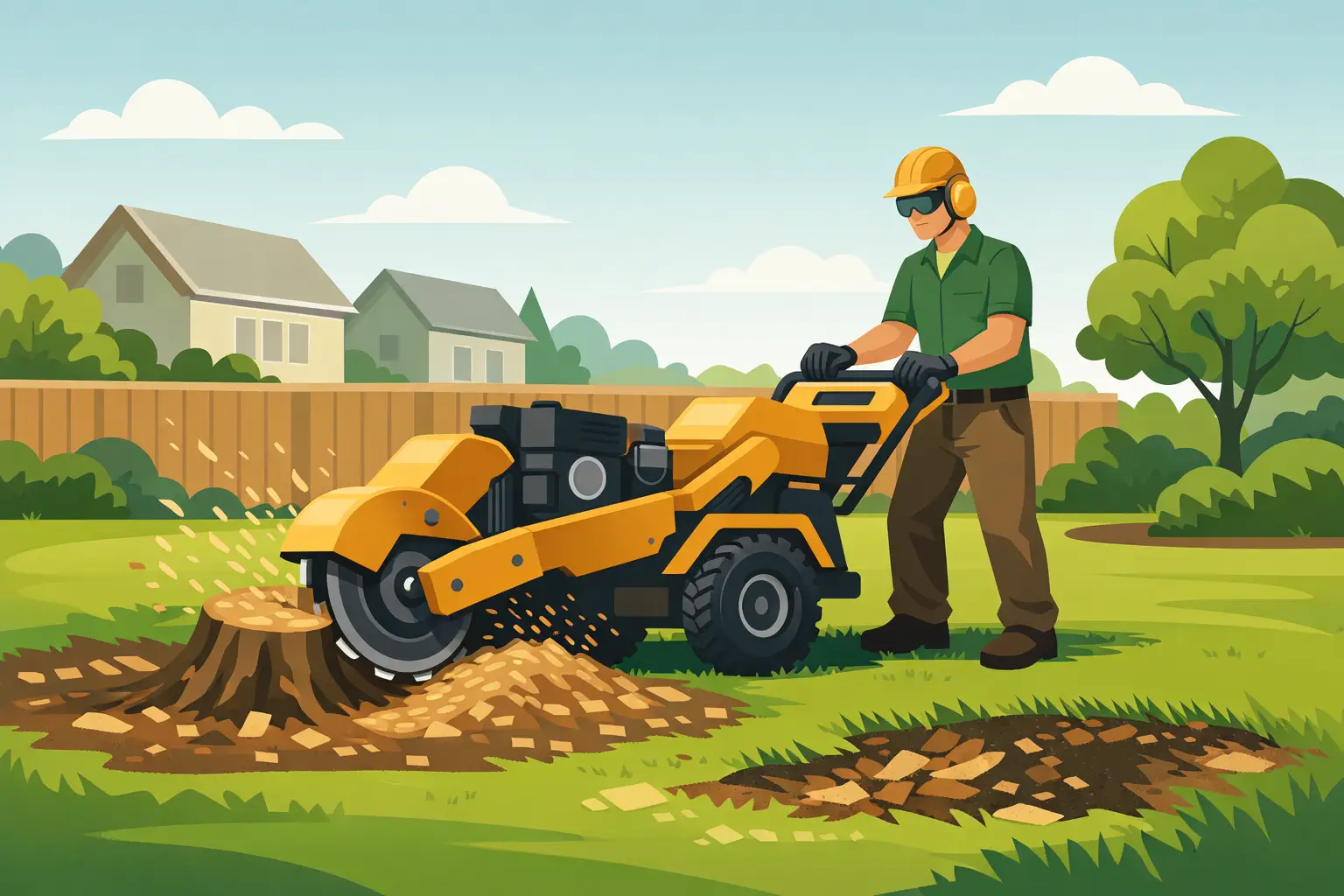
If you’re looking at an old stump in the middle of your lawn, it’s fair to ask: will stump grinding damage my yard? The honest answer is a little, but usually far less than leaving the stump in place or digging it out completely. A professional stump grinding job creates a controlled work area, removes the visible stump, and keeps the rest of the yard disturbance as limited as possible.
That matters for homeowners in Plymouth and across the West Metro, where yards often include established turf, edging, irrigation, garden beds, and tight access between homes. Most people are not worried about the stump itself as much as what happens around it. They want the stump gone without turning the lawn into a mess.
Will stump grinding damage my yard or just the area around the stump?
In most cases, stump grinding affects a small area around the stump, not the whole yard. The machine grinds the stump down below grade, and that process creates wood chips, some surface disturbance, and tire tracks if the ground is soft. That’s normal. What should not happen is widespread lawn damage, broken hardscape, or careless ruts across the property.
The main difference comes down to equipment, access, and how the crew handles the site. A smaller backyard stump with good access is usually straightforward. A stump tucked behind a fence, beside a retaining wall, or near a patio takes more care. The closer the stump is to landscaping and structures, the more important it is to have a crew that plans the approach before starting.
Stump grinding is also much less invasive than full stump removal with excavation. Excavation pulls out the root ball and disturbs a much larger section of soil. If your goal is to improve the look of the yard and reclaim usable space with minimal disruption, grinding is usually the better option.
What yard damage is actually normal?
A clean stump grinding job still leaves signs that work was done. The question is whether that disturbance is minor and expected or excessive and avoidable.
The most common impact is in the immediate stump area. Once the stump is ground down, you’re left with a shallow depression filled with mulch-like wood chips and some mixed soil. That area may settle over time and usually needs topsoil and seed if you want it to blend back into the lawn.
You may also see light tracking from the grinder or support equipment, especially after rain or in spring when Minnesota ground is softer. Good crews reduce that risk, but no one can promise zero impression marks in every condition. If the stump is in a fenced backyard or narrow side yard, moving equipment in and out can also flatten grass temporarily.
Debris is another concern people notice. Stump grinders throw chips, so nearby grass, beds, and hard surfaces often need cleanup afterward. With proper shielding and cleanup, this is manageable. Without it, the yard can look rough even if the actual damage is minor.
What can cause more serious lawn or landscape damage?
The biggest risk is not the grinding itself. It’s poor planning.
If heavy equipment is driven across wet turf, rutting becomes much more likely. If a stump sits near irrigation lines, low-voltage lighting, invisible dog fences, or shallow utility runs, those systems can be damaged if they are not identified ahead of time. The same goes for decorative edging, pavers, and garden borders near the stump.
Surface roots can also complicate the job. Some homeowners want every visible root gone, but chasing roots far beyond the stump can expand the disturbed area fast. In many cases, grinding the main stump and a limited flare root zone is enough. Going further may not be worth the extra yard impact unless there is a clear reason, like preparing for new construction or a hardscape project.
There is also a difference between visible damage and hidden damage. A lawn can look mostly fine right after the job, but compacted soil from repeated passes may show up later as thin grass or drainage issues. That’s why operator experience matters. A careful crew does not just focus on removing the stump. They think about the turf and soil they are driving over to get there.
How professionals protect your yard during stump grinding
A good stump grinding crew should be thinking about yard protection from the moment they pull up. That starts with choosing the right machine for the site. Bigger is not always better. In many residential settings, a machine sized for tight access and lower ground impact is the better choice.
Access paths should be picked with care, especially if the lawn is wet, slopes toward the house, or runs along a landscape bed. In some cases, the crew may use plywood or protective mats to spread weight and reduce rutting. They should also pay attention to chip direction so debris is not blasted into windows, siding, cars, or neighboring property.
Before grinding begins, nearby utilities and site features should be discussed. If you know where a sprinkler line, drain tile, or pet fence wire runs, say so. Clear communication helps avoid preventable problems. This is one reason local homeowners often prefer a company that handles estimates and field work with direct, practical communication rather than a vague handoff.
Cleanup is part of protecting the yard too. Once the stump is ground, the area should be left controlled and tidy, not scattered with chips across the lawn. At Xtreme Tree Service MN, that kind of thorough cleanup matters because the job is not really done when the stump disappears. It’s done when the property looks cared for again.
What your yard will look like right after the job
Right after stump grinding, the lawn will not look untouched. It should, however, look manageable.
Expect a patch where the stump was, usually filled with grindings. Depending on the stump size, this can be a small spot or a wider circle if the root flare was also ground down. The surrounding grass may look flattened, and there may be a light film of chips or dust nearby until cleanup is finished.
If the stump was large, some settling is common over the next few weeks or months as the wood material breaks down and the soil adjusts. That is not a sign of bad work by itself. It just means the area may need to be topped off if your goal is a level lawn.
For many homeowners, the short-term appearance is still a big improvement over a dead stump, exposed roots, and the mowing problems that come with them.
How to reduce yard damage before the crew arrives
There are a few simple steps that help the job go smoother. Mark irrigation heads if they are close to the stump. Move patio furniture, planters, or vehicles out of the work zone. If you have a fence gate with a tight opening, measure it ahead of time so there are no surprises on arrival.
It also helps to talk through your end goal. If you plan to seed grass, the crew may leave the grindings differently than if you are installing a garden bed, patio extension, or new tree. When everyone is clear on the next step for that part of the yard, the stump grinding can be tailored to fit.
Timing matters too. If your yard is saturated after heavy rain or spring thaw, waiting a little can reduce rutting and compaction. Fast service is important, but so is choosing a day when the ground can handle the equipment.
When stump grinding may not be the best fit
There are situations where grinding is not the perfect answer. If you need to build directly over the spot, install a foundation element, or completely remove major roots for excavation, full removal may make more sense. That process is more disruptive, but sometimes the project calls for it.
Grinding can also be limited if the stump is wrapped around rocks, metal, old fence posts, or other buried material. Those obstacles can slow the work and increase cleanup needs. A straightforward estimate should account for that rather than pretending every stump is the same.
For most residential yards, though, stump grinding is the practical middle ground. It removes the visible problem, improves safety and appearance, and avoids tearing up a large section of lawn.
So, will stump grinding damage my yard? If the job is done carelessly, it can. If it’s done right, the impact is usually limited to a small, repairable area around the stump. That’s the result most homeowners want – the stump gone, the property protected, and no bigger mess than necessary. If you’re planning stump work, the best next step is simple: ask how the crew will protect your lawn before they start.