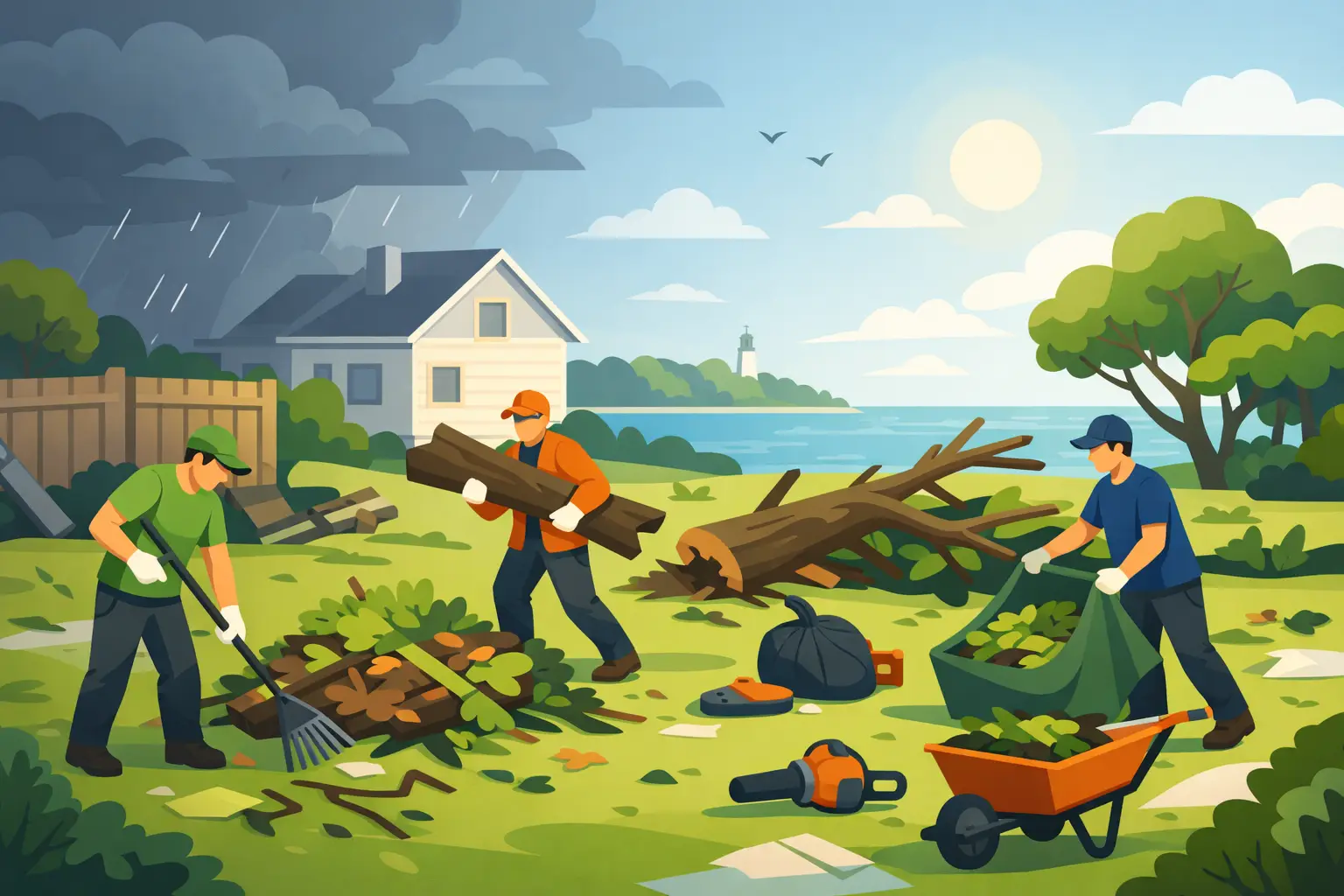
A storm can turn a normal yard into a safety problem in a matter of minutes. One minute a mature maple is standing over the driveway. The next, a heavy limb is hanging above a vehicle, blocking access, or resting on a fence. Proper storm cleanup starts with a simple rule: do not rush toward the damage just because the weather has passed.
For homeowners and property managers in Plymouth, Minnetonka, Maple Grove, and the West Metro, fallen branches and damaged trees are common after high winds, wet snow, ice, and severe summer storms. Some cleanup can wait. Some cannot. Knowing the difference helps protect people, buildings, and the rest of the landscape.
Start Storm Cleanup From a Safe Distance
Before stepping into the yard, look for immediate hazards from a safe location. Stay clear of downed utility lines, damaged service lines, leaning trees, split trunks, and limbs caught overhead. A branch that looks stable may be under tension, supported by another branch, or partially attached to a tree. It can shift without warning.
If a power line is down, sparking, or tangled in a tree, keep everyone away and contact the utility provider or emergency services. Do not touch the line, the tree, standing water nearby, a fence, or equipment that may be energized. Even experienced tree crews wait until the utility company confirms the area is safe to enter.
A tree leaning toward a home, garage, driveway, sidewalk, or neighboring property needs professional attention. The same is true when a large limb is suspended in the canopy. These are not good situations for a ladder, a chainsaw, or a pickup truck with a rope. The risk is not only the weight of the wood. It is the uncertainty of how that wood will move once cutting begins.
Decide What Can Wait and What Needs Fast Help
Not every fallen branch is an emergency. Small branches on open lawn can usually wait until conditions are dry and the area is clear. A limb that has landed harmlessly in a garden bed may be inconvenient, but it is different from a limb pressing on a roof or blocking a shared entrance.
Call for prompt storm cleanup when a tree or large branch has damaged a structure, is resting on a roof, blocks a driveway or access route, hangs over a high-use area, or has left the remaining tree unstable. Property managers should also address hazards near parking areas, walkways, dumpsters, entrances, and tenant access points quickly. A damaged tree can create a liability issue long after the rain stops.
There are cases where waiting is the safer choice. During active lightning, high winds, or icy conditions, crews may need to delay work until they can operate safely. That is not a lack of urgency. Controlled removal requires stable footing, clear visibility, and a plan for where the wood can go without causing more damage.
Signs a damaged tree may fail again
Look for fresh cracks in the trunk, a split where major limbs meet, exposed roots or lifted soil around the base, and a new lean that was not there before the storm. Bark may be torn away, but the more serious concern is structural damage beneath it.
A tree can remain standing after a storm and still be unsafe. In fact, partially failed trees often require more careful removal than trees that are already on the ground. The trunk, branches, and root system may all be carrying stress in unpredictable directions.
Take Photos Before Anything Is Moved
Once the area is safe, document the damage before cleanup begins. Take clear photos from several angles, including wide shots that show the tree, building, fence, vehicle, or landscape feature involved. If the storm affected multiple areas of the property, photograph each one.
This can help with insurance records and gives a tree service a clearer picture when you request an estimate. Photos do not replace an on-site assessment, especially with large or complex damage, but they can help explain the urgency and scope of the job.
Avoid climbing on a roof or moving branches off a damaged structure just to get better pictures. Take what you can safely capture from the ground. If there is a roof leak or visible structural damage, contact the appropriate restoration or roofing professional after the immediate tree hazard is controlled.
Keep DIY Work Limited to Low-Risk Debris
There is a place for homeowner cleanup, but it should be limited to small, loose debris in an open area. Twigs, leaves, and lightweight branches can be gathered after you have confirmed there are no overhead hazards. Wear gloves, sturdy footwear, and eye protection. Check the ground for broken glass, nails, damaged irrigation parts, and hidden limbs beneath leaves or snow.
Do not attempt to cut a branch that is bent, wedged, suspended, or attached to a damaged tree. Do not cut wood that is supporting another branch, pressing against a structure, or caught in a fence. A chainsaw can make a dangerous situation worse quickly, particularly when the wood is under compression or tension.
Dragging large limbs across a lawn can also damage turf, landscape edging, and underground systems. If you need to clear a path for safe access, move only what can be lifted and carried without strain. Leave the heavy wood, tangled brush, and elevated work to a properly equipped crew.
What Professional Storm Cleanup Should Include
A reliable storm response is more than cutting up what fell. The work begins with assessing hazards, access, nearby structures, utilities, and the condition of the remaining tree. From there, the crew can determine whether a limb can be safely removed, whether the tree can be pruned and retained, or whether full removal is the safer option.
Careful rigging and controlled cuts may be needed when branches are over roofs, fences, decks, or landscaped areas. Equipment choices depend on the site. A tight suburban yard may require a different approach than an open commercial lot. The goal is to remove damaged material without adding unnecessary damage to the property.
Thorough cleanup matters, too. A job should not leave behind brush piles, sawdust in the driveway, or scattered wood across the lawn. Ask what will happen to logs, branches, and debris before work begins. If stump grinding is needed after a tree removal, that can often be planned as part of the same project or scheduled separately based on access and ground conditions.
Xtreme Tree Service MN handles emergency tree damage with a safety-first approach, clear communication, and cleanup that leaves the site ready to use again.
Protect the Rest of the Tree After the Storm
Storm damage does not automatically mean a tree needs to come down. Healthy trees can often recover from the loss of smaller limbs, especially when damage is addressed with proper pruning. The key is removing broken branches cleanly without cutting too much healthy canopy or leaving torn stubs that invite decay.
Avoid topping a tree after a storm. Cutting back large sections of the crown may seem like a quick way to make it safer, but it can create weak regrowth and more maintenance problems later. Selective pruning is usually the better long-term choice when the tree has a sound trunk, stable roots, and enough healthy structure to recover.
On the other hand, a tree with a major trunk split, severe root damage, or repeated large failures may no longer be a good candidate for retention. An honest assessment should account for the tree’s condition, location, species, and the targets around it. A tree in the back corner of a large lot may present a different level of risk than the same tree beside a bedroom or parking area.
Plan Ahead for the Next Storm
The best time to reduce storm damage is before the forecast turns severe. Routine trimming can remove deadwood, reduce rubbing branches, and correct growth that extends too heavily over roofs, driveways, or service lines. It does not make a tree storm-proof, but it can reduce the amount of weak material available to fail.
Walk the property a few times each year, especially after winter and before the summer storm season. Watch for dead limbs, cracks, cavities, mushroom growth near the base, soil movement, and branches growing into structures. Property managers can make this part of regular site inspections so smaller issues do not become after-hours emergencies.
After a storm, give damaged trees the caution they deserve. A fast estimate, a clear plan, and safe removal of the real hazards can get your property back in order without turning one rough night into a bigger problem.