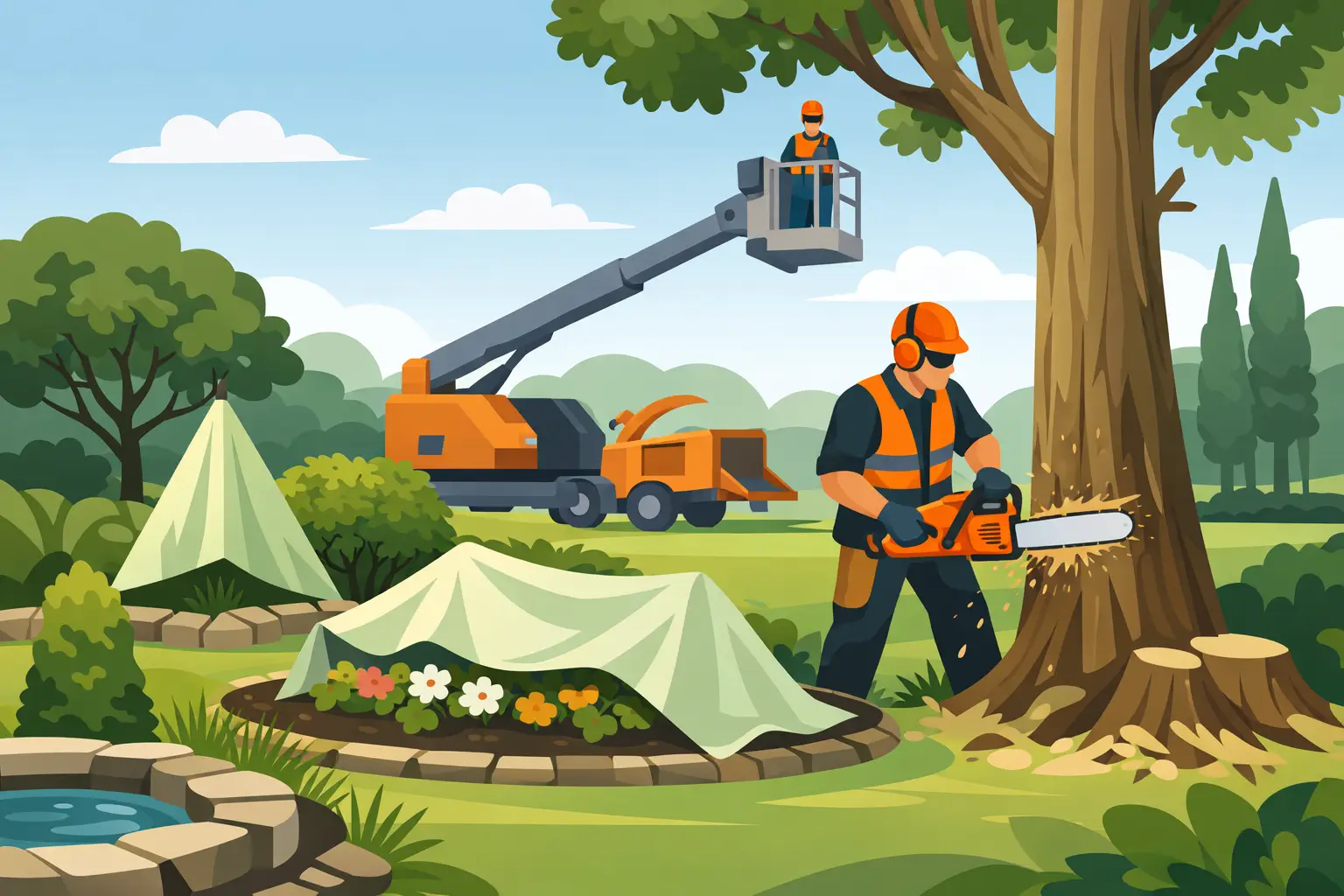
A failing tree can need to come down fast, but that does not mean your lawn, garden beds, patio, or fence should pay the price. To protect landscaping during tree removal, the work needs to be planned around the property before the first cut is made. The right crew looks beyond the tree itself and considers where every branch, log, piece of equipment, and worker will travel.
For homeowners and property managers in Plymouth, Minnetonka, Maple Grove, and the West Metro, that planning matters even more after heavy rain, spring thaw, or storm damage. Soft ground and tight suburban lots can turn a simple removal into a messy project without the right approach. A professional removal plan protects the parts of your property you want to keep while still getting the hazardous tree down safely.
Start With a Site Walk, Not a Saw
A good tree removal begins with a close look at the entire work area. The crew should identify the tree’s lean, weak limbs, overhead utility lines, nearby roofs, sheds, fences, driveways, gardens, and any features that cannot be moved. They should also ask about irrigation heads, invisible dog fences, septic components, landscape lighting, and buried lines that may sit along the access route.
This walkthrough determines whether the tree can be safely felled in one direction or needs to come down in manageable sections. On an open lot, a controlled whole-tree felling may be efficient and cause little disruption. In a backyard surrounded by gardens, neighboring fences, and structures, sectional removal is usually the safer choice. A climber or bucket truck removes limbs and trunk sections piece by piece, directing each section into a planned landing zone.
There is a trade-off. Sectional removal takes more time than dropping a tree in one piece, but it gives the crew far more control. That control is often what keeps a mature hydrangea bed, new sod, or a patio edge from being damaged.
Create Clear Drop Zones and Travel Paths
Every removal needs a protected area where branches and wood can land. A drop zone should be open, level when possible, and clear of outdoor furniture, grills, toys, planters, vehicles, and other movable items. Homeowners can help by clearing personal items before the crew arrives, but the crew should confirm that the area is truly safe for the work planned.
Just as important is the route from the tree to the truck, chipper, or wood-processing area. Dragging brush repeatedly across the same flower bed or newly seeded lawn will leave marks, even if no large branch falls there. A responsible crew chooses the shortest practical path and keeps traffic in a limited area rather than spreading it across the yard.
On smaller properties, equipment placement makes a major difference. Parking a chipper close to the work area can reduce how far brush needs to be moved. However, it should not block emergency access, damage a narrow driveway, or force crews across delicate turf. The best setup depends on the property, the size of the tree, and ground conditions that day.
Protect Lawn and Soil From Heavy Equipment
Tree work involves weight. Trucks, chippers, loaders, stump grinders, and removed wood can all compact soil or rut a wet lawn if access is not planned carefully. Compacted soil limits air and water movement around grass and plant roots, which can leave a lawn struggling long after the visible tracks are gone.
Ground protection mats can spread the weight of equipment and reduce damage along access paths. Plywood may help in limited situations, but purpose-built mats are generally more stable and better suited for repeated equipment traffic. In some yards, the best answer is to keep larger equipment on the driveway or street and move material by hand or with smaller tools.
Timing also matters. Minnesota soil is especially vulnerable during spring thaw and after extended rain. If a tree is an immediate hazard, it still needs prompt attention. The crew can adjust the method, use mats, reduce equipment traffic, or work from a different access point. If the tree is not urgent, waiting for firmer ground may be the most cost-effective way to reduce lawn repair later.
Keep Branches Away From Plants and Structures
Large limbs are not simply cut and allowed to fall wherever they land. In tight spaces, trained crews use ropes, rigging devices, and controlled lowering techniques to guide branches away from roofs, ornamental trees, gardens, fences, and hardscaping. This is especially useful when a branch extends over a house or hangs above landscaping that cannot be relocated.
Rigging must be matched to the tree and the load. A decayed trunk, poor attachment point, or strong wind can change the plan. Sometimes the safest option is to remove smaller pieces, even if that means more cuts and a longer job. Speed matters, but safe control matters more.
Shrubs and small perennials near the tree may benefit from temporary protection. Crews can use plywood barriers or carefully placed tarps to shield plants from light brush and sawdust. Tarps should not be used as an excuse to drop heavy limbs onto a garden bed. They are for minor debris control, not impact protection.
If there are prized plants directly under a removal area, point them out during the estimate. Some can be tied back, covered briefly, or moved by a landscaper before work begins. Others may be too close to protect fully, and an honest contractor should explain that risk upfront rather than make promises no crew can guarantee.
Plan for Wood, Brush, and Cleanup
The removal itself is only part of the job. Logs can be heavy enough to dent turf, crack edging, or damage pavers if they are rolled or dropped carelessly. Brush piles can smother grass if left in place for too long. Wood should be processed and moved with the same attention used during cutting.
Before work begins, decide what will happen to the material. Some homeowners want firewood left on site. Others want all wood, brush, and chips hauled away. If firewood is staying, choose a storage location that is accessible without crossing garden beds or soft ground. If wood is being hauled away, the crew should have a clear loading plan so it does not sit across the yard longer than necessary.
Thorough cleanup also protects the property. Sawdust, small twigs, and wood chips should be removed from lawns, beds, sidewalks, decks, and driveways. A final walk-through gives the homeowner or manager a chance to inspect gates, fences, turf, and landscaped areas while the crew is still on site. Minor issues are easier to address immediately than after the equipment has left.
Do Not Overlook the Stump
A removed tree can still leave a landscaping obstacle behind. Stump grinding is often the cleanest option, but it creates wood chips and involves a machine that needs access to the stump. Nearby sprinkler heads, edging, shallow roots from other trees, and buried utilities should be identified before grinding starts.
Grinding depth depends on what you plan to do with the area afterward. If you want to install sod, plant grass seed, add a garden bed, or rebuild a section of lawn, discuss that goal before the stump is ground. The crew can explain what level of grinding is appropriate and where the grindings will go. Leaving a large pile of chips in the planting area can create problems if it is not removed or managed properly.
Choose a Crew That Explains the Plan
No tree removal is completely risk-free, particularly around large trees, storm damage, utility lines, or limited access. What separates careful work from careless work is preparation, equipment, communication, and a willingness to adjust when site conditions call for it.
Before hiring a tree service, ask how they plan to access the tree, where branches will be lowered, how they will protect turf and gardens, and what cleanup includes. You should receive clear answers without pressure or vague assurances. If a crew cannot explain its plan before starting, that is a reason to pause.
At Xtreme Tree Service MN, property protection is part of safe removal, not an afterthought. A clear estimate and a quick look at access, landscaping, and cleanup expectations can prevent avoidable damage before the job begins.
A tree may be the problem that brings a crew to your property, but your yard is the part you live with afterward. Give the removal plan the same attention you give the tree, and you will be in a much better position to protect the landscape you have worked hard to maintain.