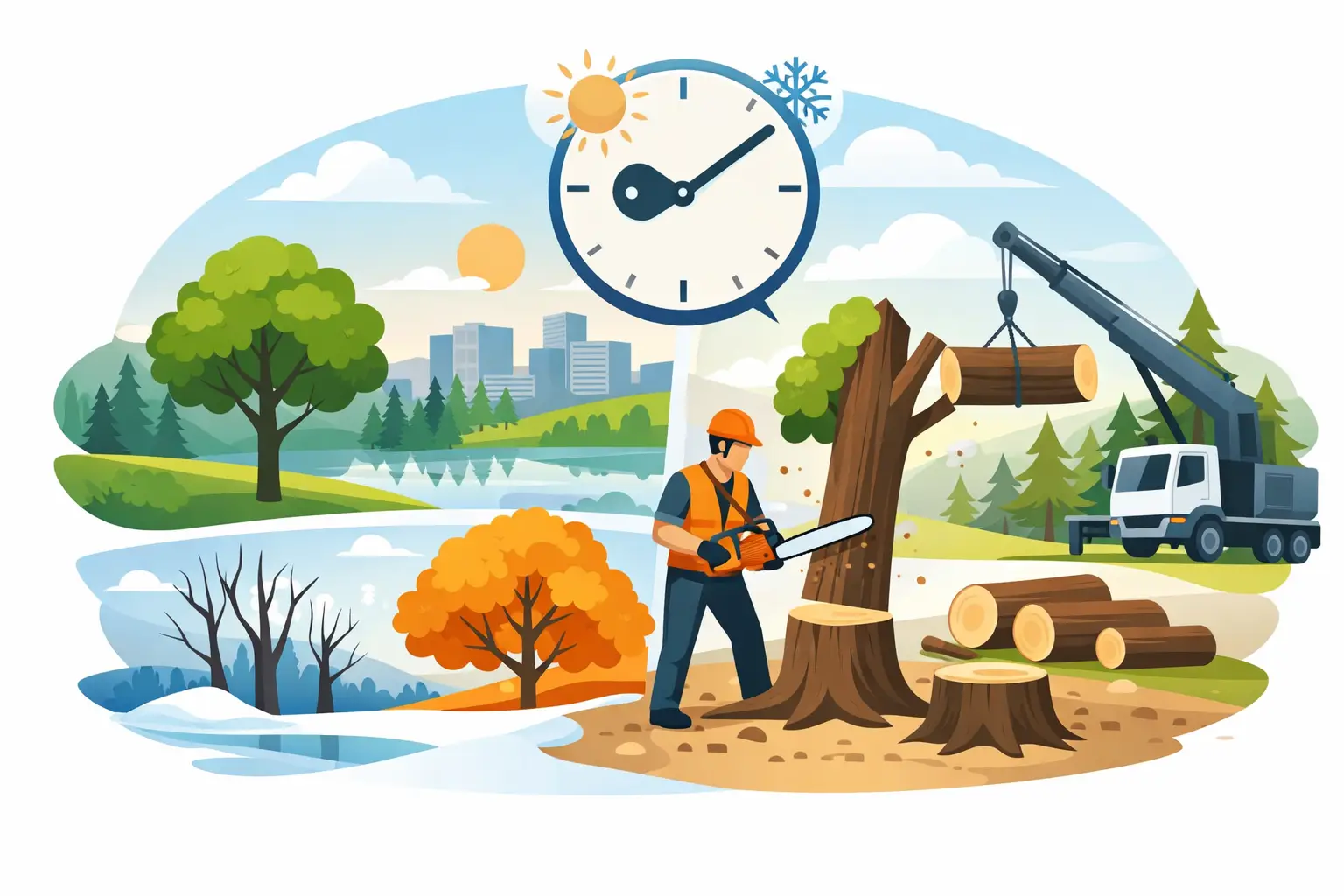
A tree can look stable for years, then one heavy snow, one windstorm, or one spreading crack changes the timeline fast. The best time for tree removal depends on the tree’s condition, the season, and what sits nearby – your house, garage, fence, driveway, or utility lines. For homeowners and property managers in Plymouth and the West Metro, timing matters because it affects safety, access, cost, and how smoothly the job gets done.
When is the best time for tree removal?
In most cases, late fall through winter is the best time for tree removal. Trees are dormant, leaves are down, and frozen ground can help reduce wear on lawns and landscaping. Crews often have clearer visibility of the tree’s structure, which helps with safe planning and efficient removal.
That said, the right answer is not always winter. A dead ash near a house should not wait just because spring is around the corner. A storm-split maple over a driveway should not sit for weeks because you hope for a better seasonal window. The best time is usually the safest reasonable time, not just the most convenient month on the calendar.
Why winter is often the best time for tree removal
Winter works well for a lot of removals in Minnesota because conditions are more predictable. Without full leaf cover, it is easier to spot weak unions, dead limbs, and the lean of the trunk. That helps crews plan rigging, cutting sequence, and drop zones with less guesswork.
Frozen ground is another advantage. If a tree sits near a yard you want to protect, cold weather can limit rutting and soil disturbance. This matters on residential properties where people care about keeping lawns, edging, and planting beds in good shape.
There can also be fewer scheduling bottlenecks for non-emergency work compared with peak storm season. If you already know a tree needs to come down, planning ahead for winter can make the process calmer and more straightforward.
Still, winter is not automatically perfect. Deep snow can affect access, and severe cold can slow some site conditions. If a tree is in a tight backyard with limited equipment access, timing may depend more on the property layout than the month.
Spring and summer removals can still make sense
Spring and summer are often busy because problems become more obvious. Trees leaf out unevenly, dead sections stand out, and homeowners notice limbs rubbing roofs, hanging over driveways, or shading out large areas. In these cases, removal during the growing season can be the right move.
There are practical reasons to schedule work in warmer months. If you are already doing landscaping, replacing a tree, repairing grading, or preparing a property for sale, summer timing may fit the rest of the project better. For light commercial sites or rental properties, it may also be easier to coordinate work when grounds crews and tenants are already active.
The trade-off is that full foliage adds weight and wind resistance. That can make removals more complex, especially in tight spaces. Soft ground can also mean more attention to protecting turf and access routes. A professional crew can work around those issues, but they do affect planning.
Fall is a strong window for planned removal
Fall is a solid time to remove a tree before winter storms and snow load make a weak tree worse. Homeowners often spot problems more clearly as leaves thin out. If a tree has dead sections, fungal growth, visible cracking, or root lift, fall gives you a chance to handle it before conditions get harsher.
This season also works well if the goal is prevention. A tree that has become too close to a roofline, is crowding another mature tree, or has started dropping large limbs is often better addressed before it turns into an emergency call.
For many properties, fall offers a good balance between access and visibility. The ground is not always frozen yet, but crews can often still protect surrounding areas with proper setup and planning.
The best time for tree removal is immediately when a tree is hazardous
Sometimes the season stops mattering. If a tree is dead, split, uprooting, storm-damaged, or leaning toward a structure, the best time for tree removal is now. Waiting for ideal weather or a preferred month can increase the risk to people and property.
A few warning signs call for prompt action: fresh cracks in the trunk, large hanging limbs, exposed roots with new leaning, hollow sections, mushrooms at the base, and branch loss after a storm. Trees damaged by emerald ash borer are another common issue in Minnesota. Once ash becomes brittle, it can become more dangerous to climb and dismantle, so earlier removal is usually safer and simpler than waiting.
This is especially true near houses, garages, sidewalks, parking areas, and neighboring property lines. A damaged tree in an open field is one thing. A damaged tree over a bedroom, driveway, or play area is another.
How tree species and condition affect timing
Not all trees age or fail the same way. Some species hold together longer after they die, while others become brittle quickly. Ash is a good example. Dead ash trees can become hazardous fast, which changes the timing from optional to urgent.
Large silver maples, cottonwoods, and boxelders can also create timing issues because they often develop weak branch unions or internal decay as they mature. A tree may still be standing upright but no longer be reliable. In those cases, a visible problem is only part of the story.
Condition matters more than appearance from the street. A tree with a full canopy can still have decay in the trunk or root flare. Another tree may look rough but remain structurally manageable for a short time. That is why an on-site assessment matters. Good timing starts with knowing whether the tree is declining, dead, damaged, or simply in the wrong place.
Property access matters more than most people expect
The best season on paper may not be the best season for your yard. A tree in a front yard with open access is very different from a tree behind a fence, above a shed, or boxed in by patios and landscaping. Equipment needs, drop space, and cleanup routes all affect how and when removal should happen.
For example, frozen winter ground may be ideal for a backyard removal where lawn protection is a priority. But if snowpack blocks access to gates or narrow paths, another season may be easier. In a small lot with neighboring homes close by, the safest schedule may come down to weather, crew availability, and crane or rigging needs rather than dormancy alone.
This is where clear communication matters. A straightforward estimate should cover access, protection of surrounding areas, and what the cleanup will look like when the job is done.
Removal timing and stump work are not always the same decision
Tree removal and stump grinding often happen together, but they do not have to. If a hazardous tree needs to come down right away, stump work can sometimes wait for a better weather window or a larger landscape plan.
That flexibility helps when the urgent issue is overhead risk, not the stump itself. It also gives property owners a way to deal with the most serious safety concern first and handle the finish work when conditions are right.
At the same time, if the stump sits in a mowing path, near a sidewalk, or where replanting is planned, it may make sense to do everything in one visit. The right timing depends on use of the space, budget, and site conditions.
What homeowners in Plymouth and the West Metro should keep in mind
In this part of Minnesota, weather shifts quickly. Heavy snow, saturated spring soil, summer storms, and fall wind all put different pressure on trees. That means there is no one-size-fits-all month for every removal.
If the tree is stable and the job is planned, late fall and winter are often the cleanest and most efficient times to schedule. If the tree is damaged or clearly declining, faster action is the better choice. Safety around homes, garages, driveways, and neighboring properties should lead the decision.
A dependable crew will not push a season just to fit a sales line. They will look at the tree, the access, the targets nearby, and the cleanup plan, then tell you what makes the most sense. That practical approach is what homeowners usually want anyway – clear expectations, safe removal, and a clean site when the work is finished.
If you are looking at a tree and wondering whether to wait until winter or handle it now, start with the risk, not the calendar. The right time is the point when removing it protects your property before the problem gets more expensive or more dangerous.