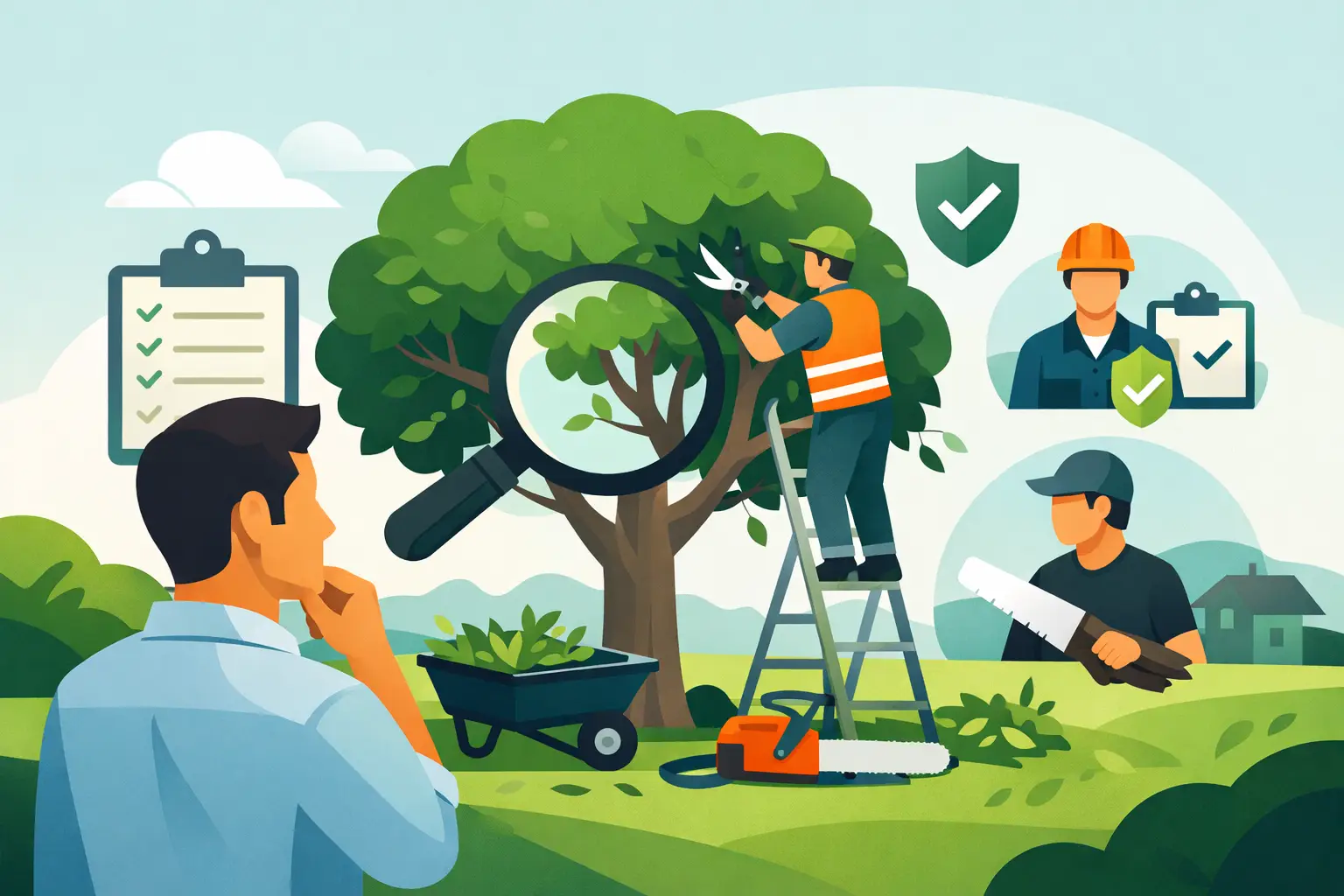
A branch hanging over your roof, scraping a window, or shading a driveway is not a job to hand to the first name that appears in a search. Poor pruning can leave a tree stressed, unstable, or permanently misshapen. Knowing how to choose a tree pruning service helps you protect the tree, your property, and the people who use it.
For homeowners and property managers in Plymouth, Minnetonka, Maple Grove, and the West Metro, the right crew should make the process simple. You should get a clear estimate, direct answers, safe work practices, and a clean yard when the job is finished.
Start With the Work Your Tree Actually Needs
“Tree trimming” and “tree pruning” are often used interchangeably, but the purpose matters. Pruning is selective work done to improve a tree’s health, structure, clearance, or safety. It may involve removing deadwood, reducing an overextended limb, opening crowded branches, or lifting low branches away from a walkway or roofline.
A good contractor will ask questions before recommending a solution. Is the concern a dead limb? Branches over a home? Poor clearance for vehicles? Storm damage? A tree growing too close to utility lines? The answer determines whether the tree needs light maintenance, corrective pruning, major reduction work, or removal instead.
Be cautious if someone recommends taking off a large percentage of the canopy without explaining why. Heavy cutting can create weak regrowth, sun damage, and long-term decline. There are times when substantial pruning is necessary, especially after storm damage or when a limb creates a clear hazard, but the reason and expected result should be clear.
Choose a Tree Pruning Service That Puts Safety First
Tree work has real risk. Crews may be working near houses, fences, decks, vehicles, power lines, landscaping, and neighboring property. The lowest estimate is not a good value if the company cuts corners on equipment, planning, or protection.
Ask whether the company is insured for tree work and whether its crew is covered while working on your property. A professional company should be able to answer directly and provide documentation when requested. This is especially important for larger trees, climbing work, jobs near structures, and commercial properties where liability exposure can be higher.
You should also ask how the crew plans to protect the work area. Depending on the job, that may mean setting drop zones, using ropes to control limbs, protecting turf from equipment, placing mats where needed, or coordinating access around tenants and parked vehicles. Every property is different, but a crew should have a plan before the saw starts.
Be Careful Around Power Lines
Branches near energized electrical lines are a separate category of risk. Do not assume any tree crew can handle that work. Ask directly how the company approaches trees near utilities and whether the utility company needs to be involved.
Never accept vague assurances such as “we’ll just be careful.” The correct approach depends on the line, the clearance, the equipment available, and who is authorized to do the work. When electricity is involved, caution is not optional.
Look for a Clear, Written Scope of Work
A good estimate does more than give you a price. It tells you what the crew plans to do and lets you compare proposals fairly. If one estimate says “trim tree” and another describes specific limbs, clearance goals, debris removal, and haul-away, the second one gives you a much better picture of what you are buying.
Before scheduling, make sure you understand whether the estimate covers deadwood removal, crown thinning, branch reduction, lifting branches off a structure, brush hauling, wood disposal, and cleanup. If you want logs left for firewood or chips left on-site, discuss that before the job begins.
For a large or complicated tree, it is reasonable to ask the contractor to walk the property with you. Point out the branches that concern you, but stay open to their recommendation. The most visible branch is not always the one that needs attention first. A trained eye may spot weak branch unions, decay, rubbing limbs, or poor structure higher in the canopy.
Ask How They Will Prune, Not Just What They Will Cut
Proper pruning is selective. It respects the natural form of the tree and avoids unnecessary wounds. The goal is not to make every tree look perfectly symmetrical or cut it back as far as possible.
Ask the contractor how they will handle oversized limbs, crowded growth, and height reduction. Their answer should be understandable, even if they use some arborist terms. You do not need a technical lecture. You do need confidence that they have a reason for each cut.
Avoid companies that promote topping as routine maintenance. Topping means cutting large upright sections or major limbs back to stubs. It can make a tree look smaller quickly, but it often leads to weak shoots, decay, and a tree that becomes harder to manage later. If a tree has outgrown its location, careful reduction pruning may help in some cases. In others, removal and replacement may be the safer long-term decision.
Consider Timing and Tree Species
Not every tree should be pruned at the same time of year. In Minnesota, weather, tree species, disease concerns, and the reason for pruning all affect timing.
For example, oak pruning is often scheduled outside the periods when oak wilt transmission is a greater concern. Damaged or hazardous limbs may need immediate attention regardless of season, but routine maintenance can usually be planned around the tree’s needs. Spring-flowering trees may also lose part of their seasonal display if pruned at the wrong time.
A reliable tree service will not force every job into one calendar window. They should explain whether your work is urgent, whether it can wait, and what timing makes sense for the tree and your property.
Compare Value, Not Just the Lowest Price
Tree pruning estimates can vary for legitimate reasons. Access may be tight. Branches may extend over a roof or fence. The crew may need to climb, use specialized equipment, control each cut with rigging, or remove debris from a difficult backyard. A larger price can reflect more labor, safer methods, proper disposal, and better property protection.
When comparing estimates, look at the whole package: scope of work, insurance, equipment, cleanup, scheduling, communication, and the company’s willingness to answer questions. A quote that is dramatically lower than the others deserves a closer look. It may leave out hauling, cleanup, stump work, or the extra labor required to safely manage the job.
The cheapest option can become expensive if branches damage a roof, ruts are left in the yard, or the tree is cut in a way that creates future problems. A fair price should match the difficulty of the work and the level of care required.
Pay Attention to Communication Before the Job
The estimate process often tells you what working with a company will be like. Are calls, texts, or emails returned in a reasonable time? Does the person explain the work without pressure? Are changes to the plan or schedule communicated clearly?
This matters even more after a storm. Storm-damaged trees can create urgent hazards, but urgency should not mean confusion. A dependable contractor will explain what can be handled immediately, what may require follow-up work, and how the site will be secured.
For property managers, clear communication also means coordinating access, tenant notices, parking restrictions, and cleanup expectations. A crew that arrives prepared helps keep a routine maintenance project from becoming a disruption.
Confirm Cleanup and Final Walk-Through
Tree pruning should not leave you with a yard full of brush, sawdust piles, and damaged turf. Confirm what cleanup includes before work begins. Most homeowners expect branches and brush to be hauled away, but it is still worth putting that expectation in the estimate.
After the work is complete, take a few minutes to walk the site. Check that the requested clearance was addressed, gates and access areas are secure, and the crew removed the debris they agreed to haul. If something does not match the scope of work, raise the question promptly while the details are fresh.
A professional crew should leave the property safer and easier to maintain than when they arrived. Xtreme Tree Service MN approaches pruning with that same practical standard: clear expectations, safe execution, and thorough cleanup.
The right tree pruning service will not rush you into a decision or bury the details in a vague quote. Ask direct questions, expect direct answers, and choose the crew that shows care for both your trees and the property around them.