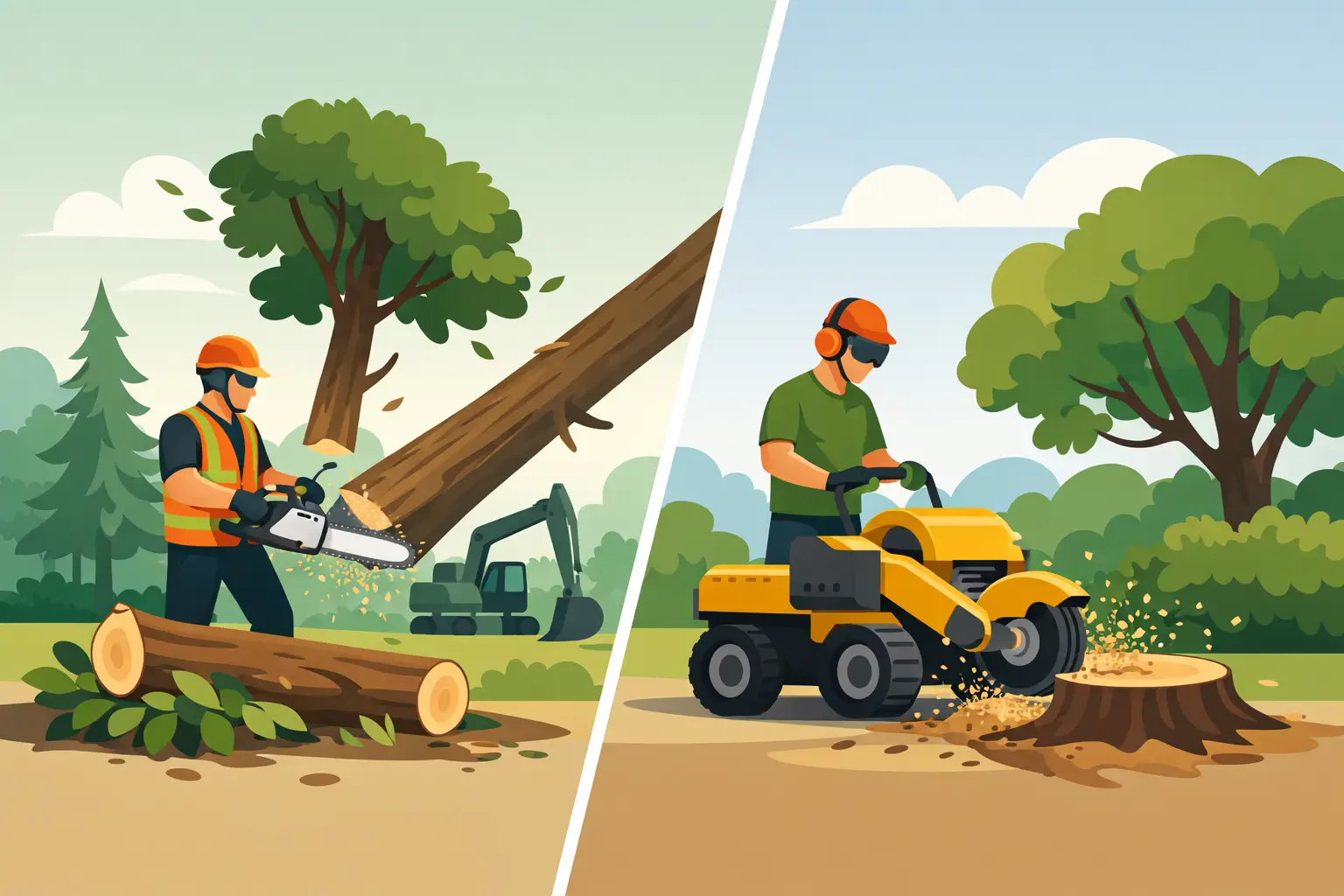
A mature ash leaning toward a garage, a storm-damaged maple in the driveway, and an old stump in the middle of the lawn are different problems. That is why tree removal vs stump grinding is not always an either-or decision. Tree removal addresses the standing tree and the safety risks around it. Stump grinding handles what remains at ground level after the tree is gone.
For homeowners and property managers in Plymouth and across the West Metro, knowing the difference helps avoid surprises in the estimate, plan the work in the right order, and get the yard back into usable condition.
Tree Removal vs Stump Grinding: The Main Difference
Tree removal means taking down a living, dead, damaged, or unwanted tree. Depending on its size and location, the work may involve climbing, rigging sections down, using equipment, or carefully lowering limbs around homes, fences, landscaping, power lines, and neighboring properties. The trunk is cut down and processed, and debris can be hauled away as part of the job.
Stump grinding is a separate service that uses a specialized machine to grind the remaining stump below the surrounding soil level. It removes the visible stump and much of the root crown, leaving wood chips and a shallow area that can be filled with soil and reseeded.
The key point is simple: removing a tree does not automatically mean removing its stump. Some removal projects stop after the trunk is cut close to the ground. Others include stump grinding in the same visit or schedule it shortly afterward. Always ask what is included before work begins.
When Tree Removal Is the Right First Step
If the tree is still standing, removal comes first. Grinding a stump cannot fix a leaning trunk, dead branches over a roof, root damage near a foundation, or a tree weakened by storm damage.
Removal is often the right call when a tree is dead, declining, structurally unsound, or growing too close to a home or other structure. It may also be necessary when a tree blocks a driveway, crowds a building, interferes with a planned addition, or has sustained major storm damage.
In Minnesota, weather can speed up the decision. Heavy snow, ice, and strong summer storms can turn a compromised tree into an urgent property issue. A split trunk or hanging limb may not look dramatic from the ground, but it can fail without much warning. Professional removal is designed to control that risk while protecting the surrounding property.
A healthy tree should not be removed without a reason. Mature trees provide shade, privacy, and curb appeal. But when the location, condition, or risk outweighs those benefits, safe removal is usually more practical than waiting for the problem to worsen.
What a removal estimate should clarify
A clear estimate should explain whether it covers the full tree, brush and limb hauling, trunk wood removal, cleanup, and stump grinding. Firewood-sized logs, wood chips, and access limitations can affect the scope of work.
It should also account for the tree’s location. A tree in an open backyard is different from one wedged between a deck, fence, shed, and utility line. The goal is not just to get the tree down. It is to get it down safely and leave the site clean.
When Stump Grinding Is All You Need
Stump grinding is the right service when the tree has already been removed and the remaining stump is the problem. Old stumps can make mowing difficult, take up valuable yard space, attract insects, and become a tripping hazard for children, guests, tenants, or maintenance crews.
Grinding is especially useful when you want to restore a lawn, expand a garden bed, install a fence, create room for landscaping, or prepare an area for a patio or play space. It also improves the appearance of a front yard where an old stump has become an eyesore.
The stump grinder typically works several inches below grade. The depth depends on the site and the plan for the area. If you are installing hardscape, building a structure, or planting in the same location, mention that before the job is scheduled. Those projects may require deeper grinding, additional root work, or excavation beyond standard stump grinding.
Grinding does not pull every root from the yard. Large roots farther from the stump normally remain underground and break down over time. In many cases, that is the least disruptive approach. Full root removal can disturb more soil, damage nearby landscaping, and add unnecessary cost.
Why Many Properties Need Both Services
For most standing-tree projects, removal followed by stump grinding delivers the cleanest finished result. The tree is safely taken down first, then the stump is ground so the area can be repaired and used again.
That sequence makes sense for a dead tree in a front yard, a tree removed for a landscape renovation, or a storm-damaged tree that cannot remain in place. It also prevents a common frustration: paying for a removal, then realizing the leftover stump still affects mowing, parking, planting, or future construction.
There are times to leave the stump temporarily. If the area will be excavated soon for a larger project, it may be more efficient to coordinate the stump work with that project. If the ground is saturated, access is limited, or the homeowner needs time to decide on landscaping, grinding can be scheduled later.
The decision depends on your plans for the space, not just what looks better on the day the tree comes down.
Cost Factors to Consider
Tree removal and stump grinding are priced differently because they require different equipment, labor, and site preparation. The size, condition, and location of the tree are major factors in removal pricing. A tall dead tree near a house requires more planning and controlled cutting than a small ornamental tree in an open area.
For stump grinding, diameter is only part of the picture. Surface roots, slope, gates, fences, buried obstacles, and access for the grinder can all affect the work. Several small stumps may be more efficient to handle during one visit than scheduling separate appointments.
The lowest estimate is not always the best value if it leaves debris behind, excludes needed hauling, or does not address the stump. Clear communication up front helps you compare scopes fairly. Ask whether cleanup includes raking the work area, removing brush, hauling logs, and managing the grindings.
What Happens After a Stump Is Ground
Once the stump is ground, the remaining wood chips can be left on site, hauled away, or used as mulch where appropriate. Most homeowners choose to remove excess grindings from the lawn area, add topsoil, and seed or sod the spot.
Avoid planting a new tree directly in the same location right away. The remaining roots, compacted soil, and decomposing wood can make establishment harder. A new tree generally does better when planted several feet away, with enough space for future roots and canopy growth.
If you are repairing lawn, expect some settling as the remaining material underground breaks down. Adding soil and checking the area over the next season can help keep the surface level. For commercial properties or rental homes, this is also a good time to address uneven ground that could create a trip hazard.
Safety and Planning Around the Work Area
Before removal or grinding begins, clear vehicles, lawn furniture, grills, decorations, and children’s toys from the work zone. Let the crew know about irrigation heads, invisible pet fences, septic components, private utilities, and any other buried features near the stump.
Public utility lines should be located before grinding or excavation work. If a tree is near overhead electrical lines, do not attempt to trim or remove it yourself. The risk is too high, especially after a storm when lines may be damaged or hidden in branches.
Access matters as well. A narrow side gate, soft lawn, steep slope, or fenced backyard may affect what equipment can reach the site. A professional crew can review those details during the estimate and explain the safest, most efficient approach.
For homeowners who want the tree gone and the yard ready to use, it often makes sense to schedule removal and stump grinding together. For everyone else, a straightforward estimate should make it clear what can be done now, what can wait, and what will leave the property in the best condition when the work is finished.