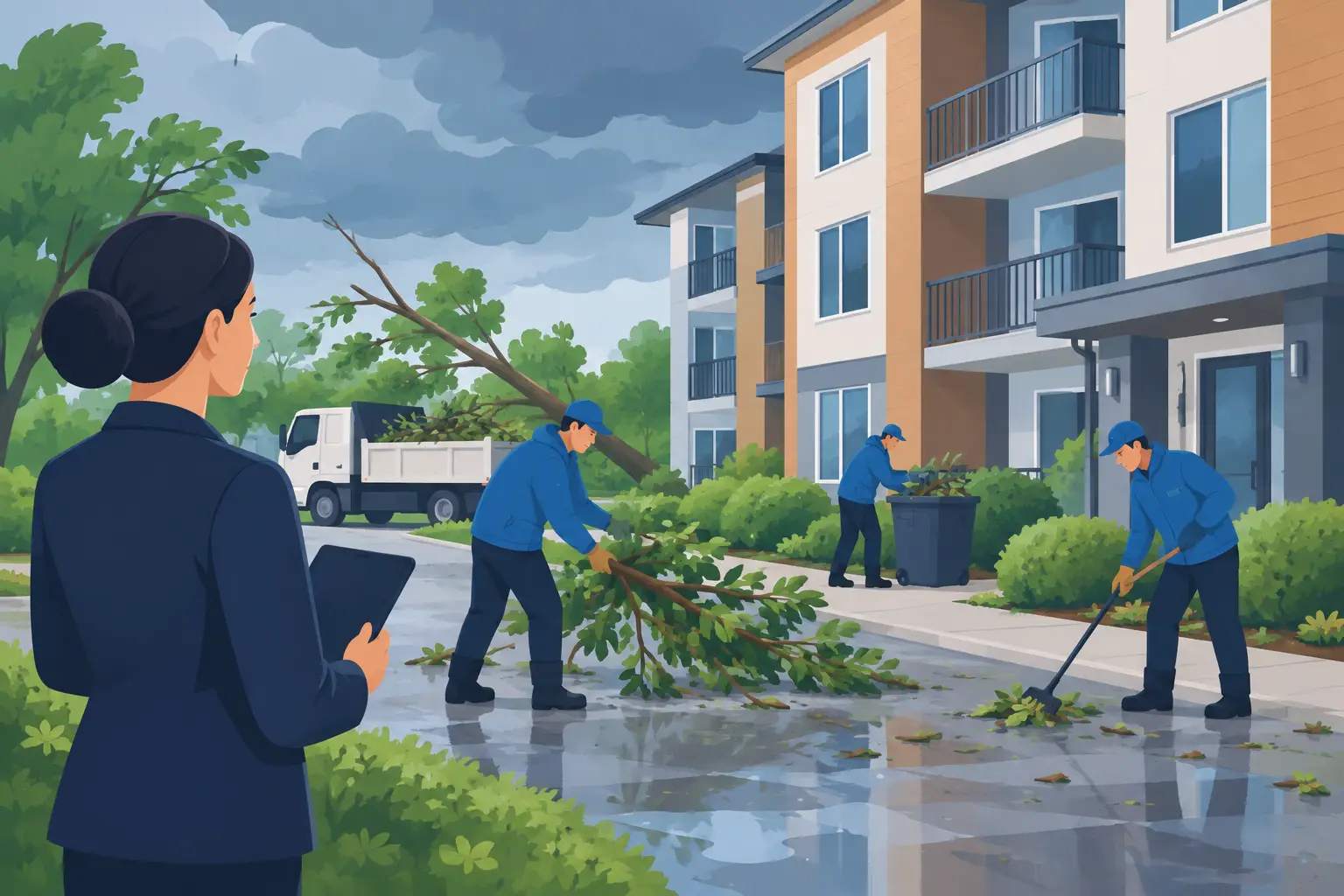
A 70-foot maple falls across the rear parking area of a 24-unit apartment building after a heavy windstorm. Two vehicles are boxed in, a large limb is resting on a fence, and smaller branches cover the walkway to the dumpsters. This apartment storm cleanup example shows what a well-managed response looks like when resident safety, property access, and clear communication all matter at once.
For apartment owners and property managers in Plymouth, Minnetonka, Maple Grove, and the West Metro, storm cleanup is not just a hauling job. A downed tree can create trip hazards, block emergency access, damage cars, put pressure on a roof, or leave tenants unsure whether it is safe to come and go. The right response starts with control of the site, then moves through careful removal and thorough cleanup.
Apartment Storm Cleanup Example: The First Call
In this example, the property manager notices the damage shortly after daylight. The storm has passed, but the tree is still under tension and one broken section is hanging over a row of parked cars. The manager’s first move is not to send maintenance staff out with chainsaws. It is to keep people away from the hazard.
The manager cones off the affected parking spaces, closes the nearby sidewalk, and sends tenants a short update: avoid the rear lot until further notice and use the east entrance if possible. If a line is down or there is any question about electrical equipment, the utility company and emergency services take priority. No tree crew should begin cutting near a potentially energized line until the area has been made safe.
When calling a storm damage crew, the useful details are simple: the property address, whether a tree is on a structure or vehicle, whether access is blocked, and whether there are visible wires nearby. Photos can help a crew plan, but they do not replace an on-site assessment. Storm-damaged trees often look stable from one angle and remain under significant pressure from another.
What the Crew Checks Before Cutting
Once on site, the crew walks the work area with the manager before equipment is unloaded. The goal is to identify hazards and set expectations before the first cut. In this case, the crew finds that the maple’s main trunk is on the ground, but a heavy upper section is caught in neighboring branches. Cutting the wrong piece first could cause it to swing into vehicles or drop onto the fence.
The crew also checks for access routes, underground utility markers where equipment may travel, landscaping features, parked vehicles, and places where residents could enter the work zone. At an apartment property, the job site is active even after a storm. People may be leaving for work, walking dogs, or returning home without knowing a removal is underway.
The manager arranges for vehicle owners to move cars from the adjacent row. This adds a little time at the start, but it reduces the chance of damage and gives the crew room to work safely. That is a worthwhile trade-off. Rushing a storm cleanup can make a bad situation more expensive.
Tenant communication keeps the job moving
The best tenant notice is brief and specific. It should say which areas are closed, where residents should park or walk, and when the crew expects to reopen the area. It should not promise an exact finish time before the crew has assessed the tree.
In this example, the manager sends a second update after the crew is on site: the rear lot will remain closed until early afternoon, and the dumpster walkway will reopen once debris is cleared. That message prevents residents from walking through a restricted area and cuts down on repeated calls to the office.
Safe Removal Comes Before Fast Removal
The crew begins by removing small branches and brush from the walkway, but only after confirming they are not supporting the larger damaged section. Next, they use controlled cuts and rigging to lower the suspended limbs away from vehicles and the fence. The trunk is then cut into manageable sections and moved to the chipper or hauling area.
This order matters. On a storm job, branches can be bent, twisted, or trapped beneath other material. Stored tension can release without warning. A professional crew reads the tree’s weight, lean, and contact points before deciding where to cut. The safest approach is not always the quickest-looking one, especially around buildings, cars, and tenant traffic.
Equipment choices depend on the site. A tree in an open back lot may be handled with a chipper, loader, and truck. A tree wedged between a building and parking stalls may require more hand work, rigging, or a lift. If turf is soft from rain, a crew may use protective mats or adjust the access route to avoid rutting the lawn. There is no one-size-fits-all setup, but there should always be a clear plan for protecting the property.
Cleanup Is More Than Removing the Tree
By midafternoon, the fallen maple is off the parking area. That is only part of the job. A proper apartment storm cleanup includes hauling logs and brush, chipping smaller material, raking up scattered debris, and checking walking surfaces for twigs, sawdust, and uneven ground.
In this example, the crew removes debris from the dumpster path, parking stalls, and grass beside the fence. They sweep the paved areas and make sure no sharp branch stubs remain where residents or landscaping crews could be hurt. The damaged fence section is photographed and left accessible for the manager’s repair contractor. The crew does not cover up a problem or leave a pile of wood for staff to deal with later unless that has been requested in advance.
The manager then walks the site with the crew lead. Together, they confirm that the rear lot can reopen, the sidewalk is clear, and no remaining hanging limbs are visible in the affected trees. They also discuss one nearby oak with a partially cracked limb that did not fall during the storm. Addressing that limb now may prevent another emergency call after the next round of wind.
When cleanup needs a second visit
Not every storm cleanup can be completed in one trip. If utility clearance is needed, if a crane is required, or if weather makes the site unsafe, the crew may need to stabilize the area and return later. A responsible plan explains what has been completed, what remains, and how the property will be protected in the meantime.
For property managers, that documentation is useful for maintenance records, owner updates, and insurance conversations. Photos before and after the work, along with a clear description of the damage and removal steps, help show that the property was addressed promptly and responsibly.
A Better Standard for Storm Response
The main lesson from this apartment storm cleanup example is simple: get the site under control first, then remove the tree with a plan, then leave the property clean and usable. Quick service matters, but safe decisions, resident communication, and careful cleanup are what turn an emergency response into a job done right.
When storm damage affects an apartment property, do not ask onsite staff to take risks with unstable trees. Get an experienced crew involved, keep residents informed, and make sure the final walk-through covers more than the biggest pieces of debris. A clear, safe property is the result everyone needs after the storm.