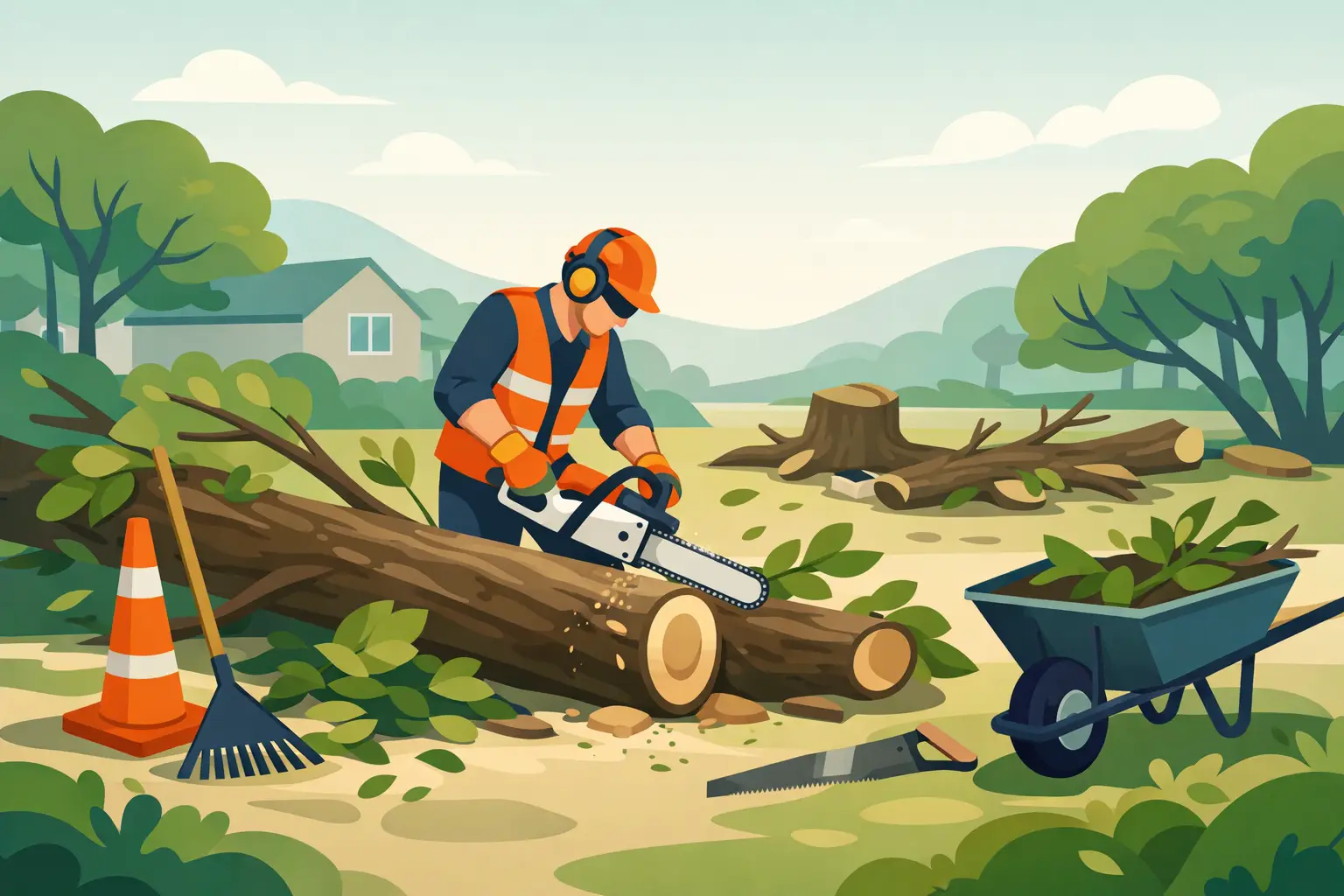
A fallen tree can turn a normal day into a property emergency fast. If you are figuring out how to handle fallen tree cleanup, the first priority is not cutting or dragging anything – it is making sure no one gets hurt and the damage does not get worse.
In Plymouth and across the West Metro, fallen trees often come after storms, heavy snow, ice, or high winds. Sometimes the whole tree comes down. Other times, a large section splits off and lands across a yard, fence, driveway, or roof. In either case, cleanup is rarely as simple as grabbing a chainsaw and getting to work.
How to Handle Fallen Tree Cleanup Without Making It Worse
The biggest mistake property owners make is treating a fallen tree like yard waste. A downed tree may still be under tension, partially attached, or resting on structures in a way that shifts weight without warning. One wrong cut can cause the trunk or limbs to roll, snap back, or drop suddenly.
Start by looking at the situation from a safe distance. If the tree is touching a house, garage, fence, vehicle, or power line, keep people away from the area. The same goes for trees blocking streets, sidewalks, or shared access points. Property damage is one issue. Personal injury is the bigger one.
If power lines are involved or even nearby, stop there. Assume every line is energized. Do not approach the tree, do not try to move branches, and do not use metal tools anywhere close to it. Utility hazards change the job immediately from cleanup to emergency response.
If the tree is down in an open yard with no structural contact, there is still some judgment involved. Smaller limbs and light debris may be safe to gather once the area is stable. Large trunks, uprooted trees, split stems, and suspended branches are a different category. Those jobs usually need professional equipment and a crew that knows how to remove weight in the right order.
What to Check Before Any Cleanup Starts
Before anyone cuts, lifts, or hauls, take a minute to assess the site. This step saves time and can prevent extra damage.
Look at where the tree landed and what it is supporting. A trunk across a fence might be holding part of the fence up. A limb on a roof may have damaged shingles or decking, even if the hole is not obvious from the ground. An uprooted tree can also disturb nearby sidewalks, irrigation lines, retaining walls, and underground utilities.
You should also check the base of the tree. If the root plate lifted out of the ground, that often means the remaining soil is unstable. That matters if the tree is partly down or leaning and still connected. Wet ground and storm-soaked lawns can make access tricky for cleanup equipment too.
Photos are worth taking before work begins. They help with insurance documentation and give you a clear record of the original condition of the property. Keep shots wide enough to show the full scene and close enough to show specific impact points.
When You Can Handle Cleanup Yourself
There are cases where limited cleanup is reasonable. If the fallen material is small, fully on the ground, not tangled with other limbs, and nowhere near structures or wires, a homeowner or property manager may be able to handle basic debris removal.
That usually means picking up smaller branches, stacking brush, or clearing light material from a lawn or driveway. Even then, gloves, eye protection, sturdy boots, and careful footing matter. Storm debris often hides sharp splinters, twisted limbs, and unstable ground.
The line is pretty simple. If you need a ladder, a chainsaw, a tractor, or a guess about where the wood will move after a cut, the risk goes up fast. At that point, the safer decision is usually to bring in a crew that handles fallen tree work regularly.
When to Call a Professional for Fallen Tree Cleanup
Professional help is the right call when the tree is large, hung up in another tree, resting on a structure, close to utility lines, or blocking access to the property. It is also the better option when the tree broke apart under storm pressure and there is no obvious safe cutting sequence from the ground.
A good cleanup crew does more than cut wood into smaller pieces. They plan the removal, protect surrounding property, control where weight shifts, and clean the site when the work is done. That matters on residential lots where homes, sheds, landscaping, patios, and neighboring fences are often close to the work area.
For property managers, speed and communication matter just as much as the removal itself. Tenants, residents, and neighboring owners want to know the hazard is being addressed, the site is being secured, and the debris will be cleared without dragging the job out.
In storm situations, there is also a difference between urgent and immediate danger. A tree through a roof or across a driveway entrance needs fast response. A large limb down in the back corner of a yard may still need professional removal, but the timeline can be more flexible. Knowing that difference helps you prioritize the call.
How Pros Approach Fallen Tree Cleanup
Safe cleanup follows a sequence. First comes hazard assessment. Then access, weight distribution, controlled cutting, debris removal, and final cleanup. That order matters because cutting first without a plan can create a second problem.
For example, if a trunk is lying across a fence and partially supported by branches, cutting the wrong section first can send the heavier end crashing down. If a broken limb is still suspended in the canopy, removing brush below it without addressing the overhead hazard puts workers and property at risk.
Professional crews also think about ground protection. Heavy wood can rut lawns, damage plant beds, and scrape hardscapes if it is dragged carelessly. On tighter suburban lots, cleanup often requires deliberate rigging, sectioning, and hauling rather than brute force.
That is part of what customers are paying for – not just removal, but controlled removal with less collateral damage.
How to Handle Fallen Tree Cleanup After a Storm
Storm cleanup comes with extra complications because the tree you see may not be the only issue. Nearby trees may be cracked, split, or leaning. Limbs can be broken and still hanging overhead. Saturated soil can weaken roots that have not failed yet.
That is why storm cleanup should include a quick look at the surrounding trees, not just the one already down. It is common to remove the obvious debris and miss a damaged limb over a driveway or play area. The site looks better, but the risk is still there.
This is also where experience helps with insurance conversations. You do not need a complicated report to get started, but you do need clear documentation, a scope of work, and a realistic understanding of what is cleanup versus what is repair. Tree crews remove the debris and make the area safer. Roof, siding, fence, or landscape repairs are separate issues that may need other contractors.
Cleanup, Hauling, and What “Done” Should Look Like
Many property owners think only about getting the tree off the house or out of the yard. But cleanup quality matters too. Once the main hazard is removed, the site should not be left with scattered brush, sawdust piles, torn-up turf, or half-buried wood chunks.
A thorough job usually includes cutting and removing the main debris, hauling brush and logs if requested, and leaving the property in usable condition. If the stump or root ball remains, that should be clearly discussed up front. A downed tree cleanup does not always mean stump grinding is part of the same visit.
Clear expectations help here. Some customers want all wood hauled away. Others want larger pieces left for firewood if the species and condition make sense. Neither approach is wrong, but it should be decided before the crew starts cutting and loading.
For a company like Xtreme Tree Service MN, the cleanup side of the job is part of the service, not an afterthought. That is especially important in neighborhoods where a messy site affects curb appeal, tenant satisfaction, and overall safety.
Common Mistakes to Avoid
A few mistakes show up again and again. One is starting cleanup before checking for electrical hazards. Another is assuming a tree that is fully down is fully stable. A third is underestimating how much weight even a moderate-sized limb carries when it is bent, pinned, or twisted.
There is also the temptation to save money by doing partial work yourself and calling a pro for the hard part. Sometimes that works. Sometimes it removes the easy stabilizing material and leaves the most dangerous sections in a worse position. If the tree is complex, it is usually better to leave the whole setup untouched until it can be assessed properly.
Fallen tree cleanup is one of those jobs where the safest plan is often the most efficient one too. Handle the light debris if it is clearly safe, document the damage, keep people out of the area, and bring in professional help when the weight, height, or location of the tree raises the stakes. A clean yard matters, but a controlled cleanup matters more.