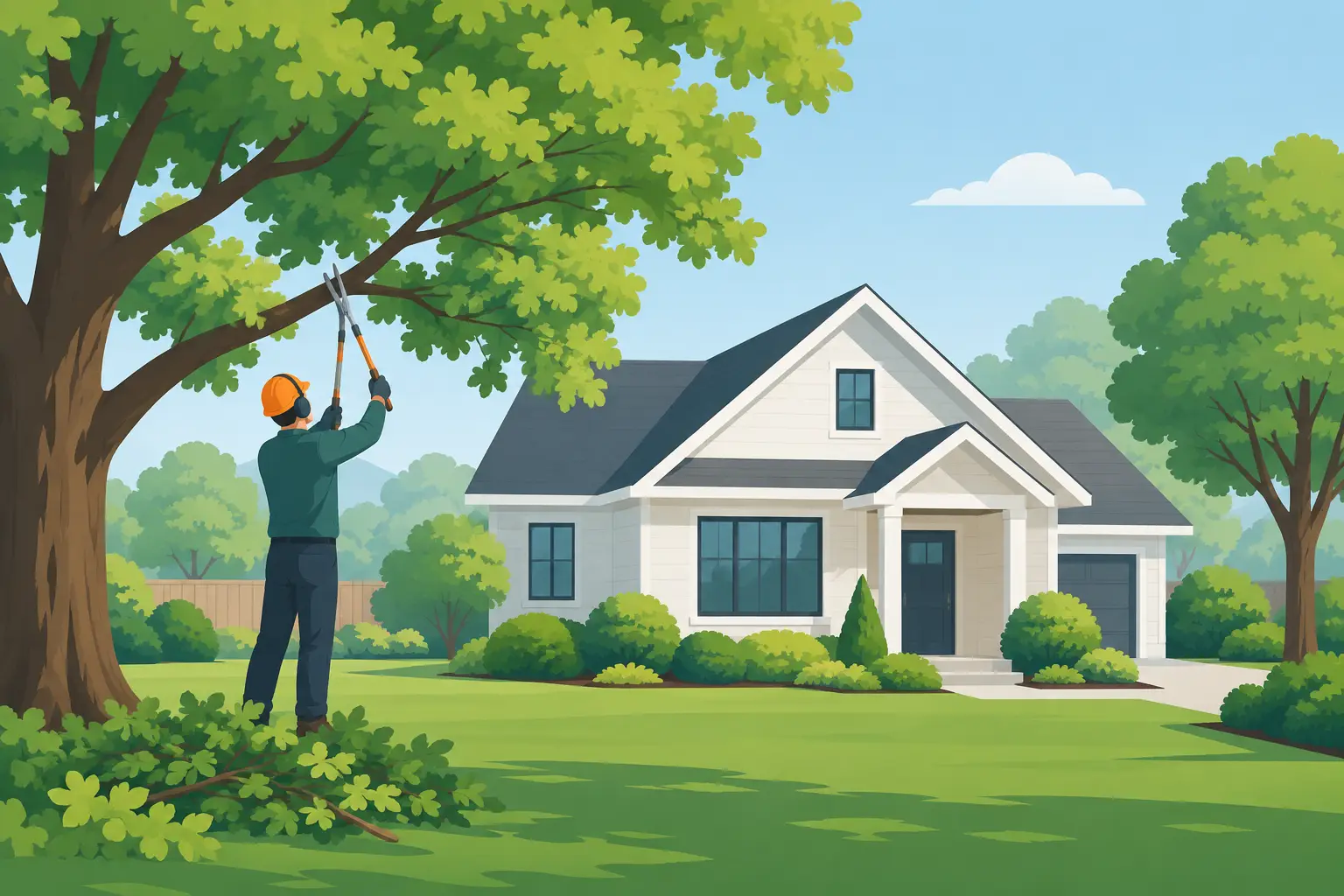
A mature tree can make a Plymouth yard feel established and comfortable. But when limbs start reaching over the roof, blocking driveway sightlines, rubbing the house, or hanging low over a patio, the canopy needs attention. To manage tree canopy growth well, the goal is not to make the tree look smaller overnight. It is to guide growth, reduce risk, and keep the tree structurally sound.
For homeowners and property managers, timing and technique matter. A poor cut can create weak regrowth, invite decay, or leave a tree less able to handle Minnesota wind, ice, and heavy snow. Planned pruning gives you better control without turning a healthy tree into a future removal problem.
What Tree Canopy Management Actually Means
Tree canopy management is the selective trimming of branches to improve clearance, balance, safety, and tree health. It may involve removing dead limbs, shortening branches that are growing toward a structure, lifting low branches over a walkway, or thinning crowded areas so wind can move through the crown.
It is different from simply cutting back every branch that seems too long. Trees respond to pruning cuts. When too much live growth is removed at once, a tree may send up fast-growing shoots that are weakly attached. That can make the canopy denser and harder to manage within a few seasons.
A good plan considers the tree species, age, location, condition, and the reason for trimming. An oak near a roof needs a different approach than a fast-growing silver maple over a parking area. The right amount of pruning depends on what the tree can safely lose and what needs to be protected below it.
Start With the Problems You Can See From the Ground
Walk around the property and look up from several angles. You do not need to climb or inspect every branch yourself. The point is to identify obvious conflicts before they become expensive ones.
Pay attention to branches touching siding, gutters, chimneys, and rooflines. Limbs that scrape a roof in the wind can damage shingles over time. Branches overhanging a garage, play area, deck, or parking space may need reduction if they are heavy, dead, or poorly supported.
Also look at clearance. A low canopy can block a driveway view, interfere with snow removal, shade out grass, or force people to duck under branches along a sidewalk. For commercial properties and rentals, low limbs can become a liability issue when they obstruct entrances, parking areas, or pedestrian routes.
Deadwood is another priority. Dead branches can remain in a tree for years, then fall during a storm or on a calm day without much warning. Broken, hanging, split, or visibly decayed limbs deserve prompt attention, especially if they are over a target such as a home, vehicle, fence, or neighbor’s yard.
How to Manage Tree Canopy Growth Without Over-Pruning
The best canopy work is usually selective. Rather than cutting every outer branch back to the same line, a tree care crew removes or reduces specific limbs to solve specific problems.
Reduce, do not top
Topping means cutting large upright limbs or the main leaders back to blunt stubs. It may make a tree look shorter for a short time, but it often triggers dense, fast regrowth. Those new shoots are usually weaker than the original branch structure and can fail later.
Crown reduction is different. A branch is shortened back to a healthy side branch that is large enough to take over as the new growing point. Done correctly, reduction can pull growth away from a roof or utility area while maintaining a more natural shape.
Remove dead, damaged, and crossing branches first
This work improves safety and gives a clearer view of the canopy structure. Branches that cross and rub can create wounds that lead to decay. Limbs with cracks, old storm damage, or poor attachments may also be candidates for removal or reduction.
Not every imperfect branch needs to come out. A professional assessment helps separate normal tree character from a real structural concern.
Thin only where it helps
Selective thinning can reduce crowding and improve light penetration in parts of the canopy. It can also reduce the sail effect of heavy foliage in some situations. Still, thinning should be limited. Removing too much interior growth exposes bark to sun, changes how the tree handles wind, and can leave it stressed.
As a general rule, a healthy mature tree should not lose a large portion of its live canopy in one visit. If major size reduction is needed, staged pruning over multiple seasons is often safer for the tree and more manageable for the property owner.
Use Clearance Goals That Fit the Property
Canopy management works best when there is a clear reason for each cut. Near a house, the goal may be to create reasonable space between branches and the roof so limbs do not rub during wind or snow loading. Along a driveway, the goal may be vehicle clearance and a better view when backing out.
Over a lawn or garden, more light may be the priority. Over a patio, the focus may be removing deadwood and raising a few low limbs without stripping away the shade that makes the space usable. Around a rental or light commercial property, access, lighting, signs, and safe walking routes may carry more weight.
Utility lines require extra caution. Never attempt to trim branches near energized lines yourself. Contact the utility provider or a qualified tree professional who understands the required clearance and safety procedures. Tree work near power lines is not a place for ladders, pole saws, or guesswork.
Minnesota Timing Makes a Difference
In the West Metro, dormant-season pruning is often a practical time for larger structural work. With leaves down, the branch layout is easier to see, crews can move more cleanly through the yard, and pruning may be less stressful for many trees. Frozen ground can also help reduce lawn damage in some situations.
That said, there is no single pruning month for every tree. Oaks deserve special care because fresh cuts can attract pests associated with oak wilt during higher-risk periods. Elm pruning also has timing considerations due to Dutch elm disease. Flowering trees, fruit trees, evergreens, and storm-damaged trees each call for a different approach.
Emergency work should not wait for the ideal season. A cracked limb over a roof or a tree damaged by wind can require immediate removal or stabilization. In those cases, safety comes first, and corrective pruning can follow when conditions allow.
Signs the Canopy May Need Professional Attention
Some issues are easy to see. Others are hidden high in the crown or at the point where major limbs connect. Call for an assessment if you notice a large branch extending over the home, limbs repeatedly hitting the roof, a split trunk, mushrooms or decay near the base, fresh cracks, hanging branches after a storm, or a canopy that suddenly looks thin on one side.
You should also pay attention to rapid changes. A tree that leafs out poorly, develops many small shoots along the trunk, or loses large limbs after ordinary weather may be under stress. Pruning may be part of the solution, but it is not always the whole answer. Sometimes the safer recommendation is removal, particularly when decay or structural weakness cannot be corrected.
Protect the Yard While the Work Is Done
Good canopy work includes more than making clean cuts. The job should account for the area below the tree. That means planning drop zones, protecting nearby landscaping when possible, managing equipment access, and removing brush and wood when the work is finished.
For tight suburban lots, this planning matters. A crew may need to lower branches in sections instead of dropping them, especially near homes, fences, gardens, sheds, or neighboring property. The fastest approach is not always the safest one.
Before an estimate, point out underground sprinklers, invisible fences, septic components, newly planted beds, and any areas where equipment should not travel. Clear communication helps prevent surprises and lets the crew plan the work around your property.
Keep Canopy Growth on a Practical Schedule
Tree care is easier when it is planned before branches become a problem. Fast-growing maples, boxelders, willows, and some ornamental trees may need more frequent attention than slower-growing oaks or conifers. Young trees benefit from early structural pruning because small corrections can prevent large problems later.
For mature trees, periodic inspections are often more useful than automatic heavy trimming. Check after major storms, before winter, and whenever branches begin to conflict with the home or usable areas of the yard. A consistent approach keeps the canopy manageable and avoids the need for drastic cuts.
Xtreme Tree Service MN can help homeowners and property managers assess overgrowth, remove hazardous limbs, and leave the site clean when the work is done. A clear plan now can protect the shade you value while keeping the roof, driveway, and people below it safer for the seasons ahead.