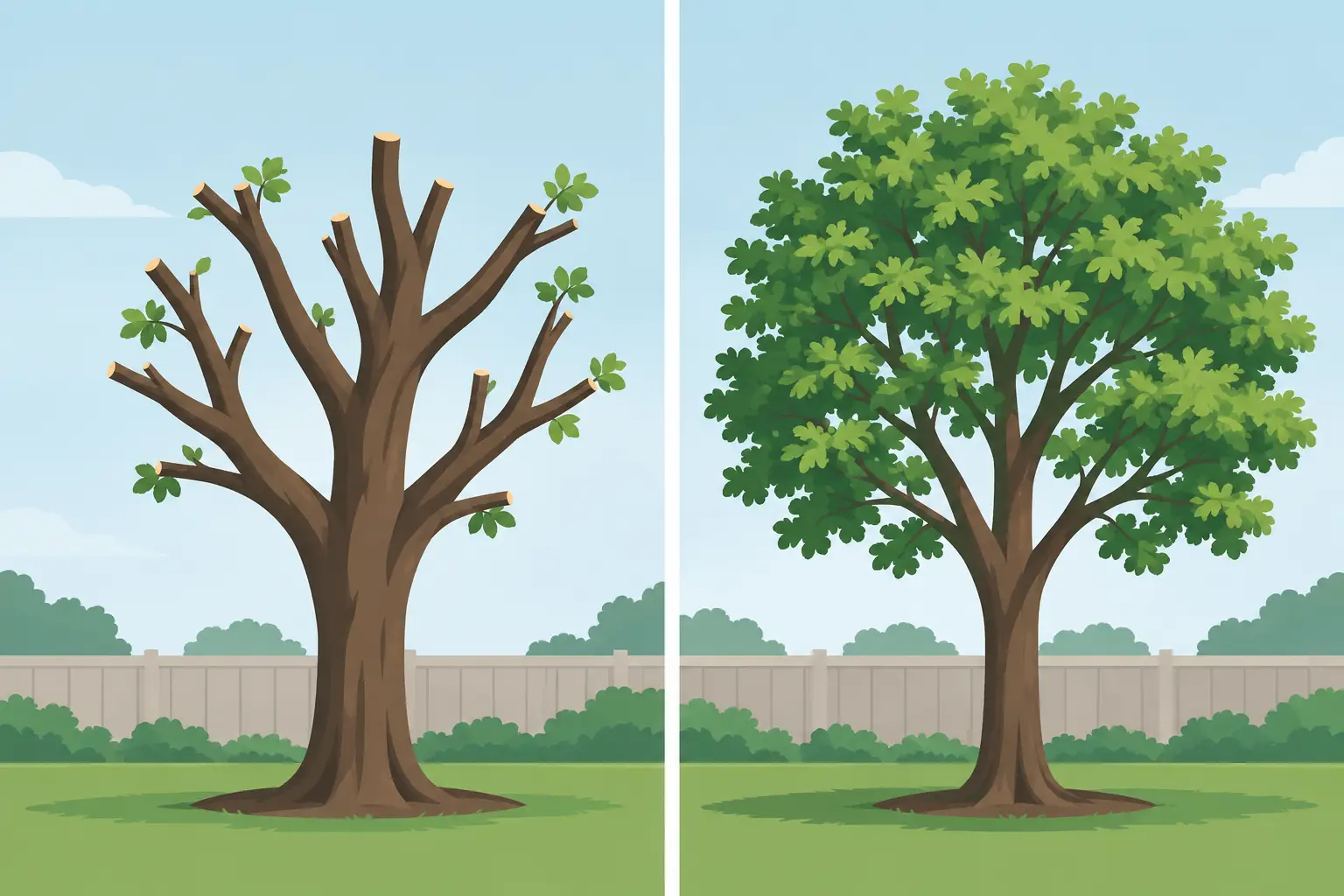
A mature maple can shade a patio for decades, then look like a row of stumps after one aggressive afternoon of cutting. That is the real difference in tree topping versus proper pruning. Both may be described as “trimming” by a homeowner, but the cuts, the results, and the risks are completely different.
For Plymouth, Minnetonka, Maple Grove, and other West Metro properties, this matters because mature trees sit close to homes, driveways, power lines, fences, and landscaped yards. A tree that is cut incorrectly can become less stable, more prone to decay, and harder to manage after a storm.
What tree topping means
Tree topping is the practice of cutting back large upright branches or the main leader to stubs or to branches too small to take over the work of the removed limb. It is sometimes called heading, stubbing, or drastic reduction. The goal is usually understandable: a tree feels too tall, too wide, or too close to a roof.
The problem is that topping does not reduce a tree in a controlled, healthy way. It removes a large amount of leaf canopy at once. Leaves make the energy a tree needs to grow, defend wounds, and respond to stress. When much of that canopy disappears, the tree has to react quickly.
A topped tree often sends up fast-growing shoots near the cuts. From the ground, that can look like a successful fix. Within a few years, though, those shoots can become long, heavy limbs attached to wood that may not be as strong as a naturally developed branch union. The tree can end up taller, denser, and more hazardous than before.
Topping also leaves large wounds that may not close well. In Minnesota, where trees deal with winter cold, wet springs, summer heat, and windstorms, those wounds can become entry points for decay organisms. Not every topped tree fails, but the practice adds stress and can shorten the useful life of a valuable landscape tree.
Tree topping versus proper pruning: the practical difference
Proper pruning works with the tree’s natural structure instead of cutting against it. A trained crew identifies which branches create a real concern – dead limbs, rubbing branches, weak attachments, low clearance, roof contact, storm damage, or excessive weight at the end of a limb – and removes or reduces them with deliberate cuts.
The main difference is where the cut ends. Proper reduction pruning brings a limb back to a healthy lateral branch that is large enough to assume the role of the removed section. This keeps the remaining branch structure functional and gives the tree a better chance to respond normally.
A correct pruning cut also respects the branch collar, the slightly swollen area where a branch joins the trunk or a larger limb. Cutting too close damages natural protective tissue. Leaving a long stub makes it harder for the tree to close the wound. Good pruning is not about making the most cuts. It is about making the right cuts in the right places.
For many residential trees, proper pruning may include crown cleaning, selective thinning, clearance pruning, and weight reduction. The work should improve safety and access without stripping the tree of its shape or removing so much live growth that it is pushed into stress.
When a tree is simply too large
There are times when a homeowner asks for topping because the tree has outgrown its location. That concern is valid. A large tree over a roof, garage, sidewalk, or neighboring property needs an honest assessment.
But pruning cannot solve every size problem. If the tree is the wrong species for the space, has major decay, is leaning toward a target, or requires repeated drastic cutting just to stay clear of a structure, removal may be the safer long-term choice. Repeated topping is rarely a sound maintenance plan.
A professional assessment should consider the tree’s species, condition, branch structure, location, and the targets beneath it. A young ornamental tree may respond well to corrective pruning. An aging cottonwood with internal decay may call for removal instead. The right answer depends on the tree, not on a one-size-fits-all rule.
Why topped trees can become a property risk
The risk from topping is not only cosmetic. It can affect how a tree performs during severe weather. Rapid regrowth tends to be more crowded and may have weaker connections than limbs that developed gradually. Snow, ice, and high winds put extra load on those attachments.
Topping can also expose branches and trunks that were once shaded by the canopy. Sudden sun exposure can damage bark on certain species. The tree may then put energy into emergency regrowth rather than normal root health and defense.
There is also the appearance issue. A topped tree can lose its natural form and take years to fill in, if it recovers well at all. For property managers, that affects curb appeal and can lead to repeat maintenance costs. For homeowners, it can turn a simple clearance concern into a recurring problem.
When proper pruning makes sense
Proper pruning is useful when there is a clear purpose for the work. Removing dead or broken branches reduces obvious hazards. Raising lower limbs can improve clearance over a driveway, walkway, or lawn. Selective reduction can keep limbs from contacting a roof or hanging over a service line.
Pruning can also improve a young tree’s structure. Early correction of competing leaders, crossing branches, and poorly placed limbs can prevent more expensive problems later. This is especially worthwhile for trees planted near patios, sidewalks, and homes.
Timing matters, but safety comes first. Dead, cracked, storm-damaged, or hanging branches should be addressed when they pose a concern. For routine work, the best timing depends on the species and the reason for pruning. Some trees are better pruned during dormancy, while others need special consideration because of disease pressure or spring sap flow.
A good plan avoids removing too much live canopy in one visit. There are exceptions, particularly after storm damage or when a failing limb must come down, but routine work should not leave a healthy tree looking stripped bare.
Warning signs to address before the next storm
Walk your property after heavy wind, wet snow, or a major rain. Look for dead limbs, fresh cracks, hanging branches, bark splitting at a branch union, mushrooms near the base, or a tree that has suddenly started leaning. These signs do not always mean immediate failure, but they deserve a closer look.
Pay special attention to branches over roofs, parking areas, play spaces, and driveways. A branch that is merely inconvenient over open lawn may be a serious concern over a vehicle or entryway. If a limb is tangled in or near a utility line, keep clear and contact the utility provider or a qualified tree professional. That is not a DIY job.
Choose a clear plan, not the quickest-looking cut
Before approving tree work, ask what branches will be removed, why they are being removed, and how the work will affect the tree’s structure. Straight answers are a good sign. The plan should also account for nearby homes, landscaping, fences, and cleanup when the job is complete.
Xtreme Tree Service MN approaches pruning with the same practical focus used on removals and storm cleanup: protect the property, handle the immediate risk, and leave the site clean. If a tree needs reduction, the goal is controlled cuts that make sense for its health and location. If it cannot be safely maintained, it is better to discuss removal directly than keep cutting it back harder each year.
A healthy, well-pruned tree is not supposed to look dramatically changed from the street. It should look like itself – with safer clearance, less deadwood, and a structure that is better prepared for the next Minnesota storm.