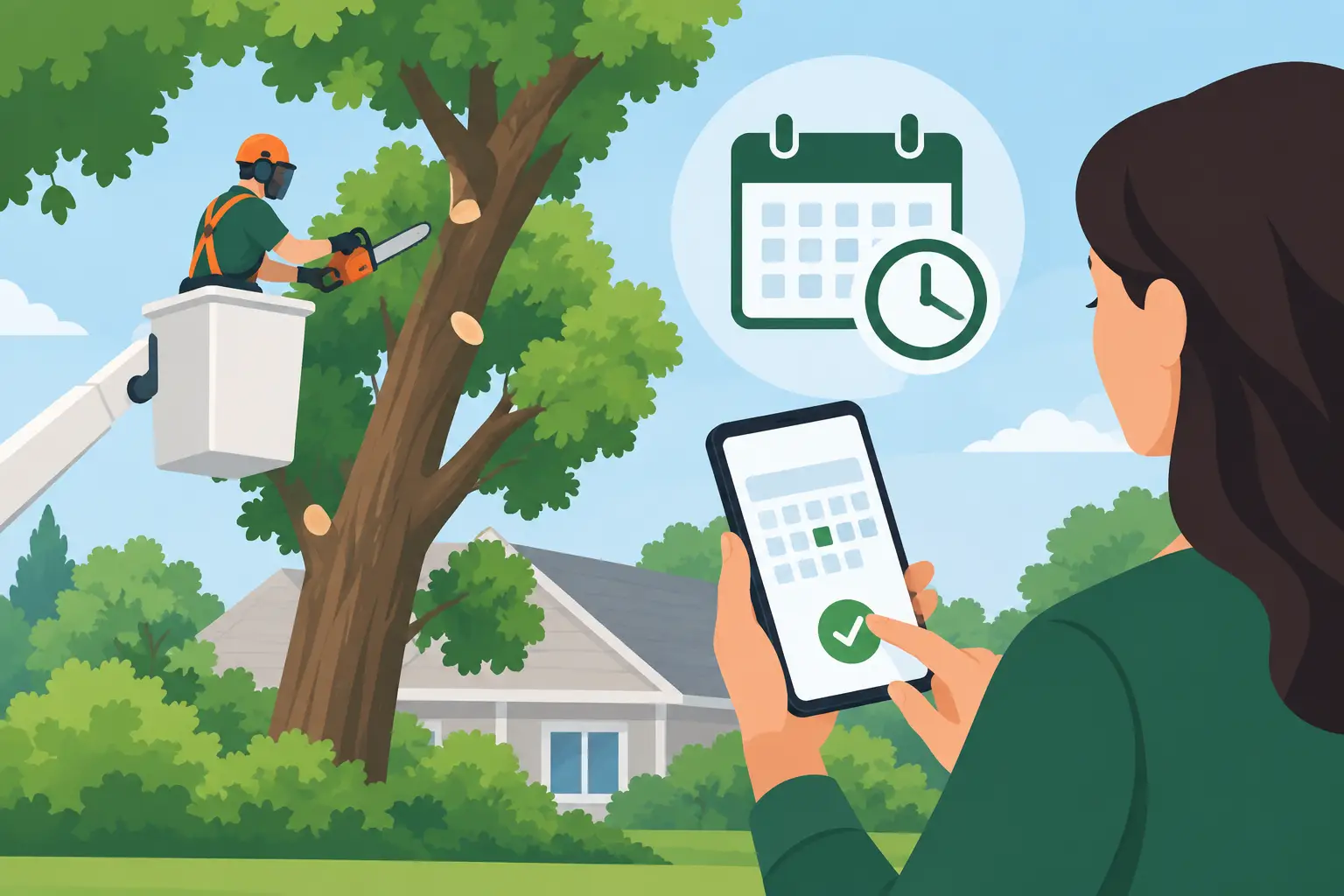
A heavy limb over the driveway, a dead ash near the house, or storm debris across the yard is not a project to leave on the calendar indefinitely. Knowing how to schedule tree service starts with identifying the work, sharing the right details, and making sure the crew can access the area safely.
For homeowners and property managers in Plymouth and the West Metro, a good scheduling process should feel straightforward. You should know what work is being done, what needs to happen before the crew arrives, and how the property will be left when the job is complete.
Start by Deciding What Kind of Tree Work You Need
The type of service affects timing, equipment, crew size, and cost. You do not need to know every arborist term before calling, but a clear description helps the estimate move faster.
Tree removal is usually needed when a tree is dead, severely damaged, leaning toward a structure, crowding a building, or creating a clear safety concern. If a tree is still healthy but has branches hanging over a roof, driveway, sidewalk, or neighboring property, trimming or pruning may be the better fit. A stump left after an old removal can be scheduled for grinding, especially if it interferes with mowing, landscaping, fencing, or a future planting plan.
Storm damage is different from routine maintenance. A split trunk, hanging limb, uprooted tree, or branch resting on a structure needs prompt professional attention. Keep people and pets away from the area. If branches are touching power lines or a line is down, contact the utility company or emergency services first. Tree crews should not be asked to handle energized utility lines.
When you contact a tree company, explain what you see in plain terms. Mention the tree’s location, its approximate size, and anything it could damage if it falls. A crew can ask follow-up questions and determine whether an on-site inspection is needed.
How to Schedule Tree Service With the Right Details
A few useful details at the first call, text, or email can prevent delays. Start with your address and preferred contact method. Then describe the work: removal, trimming, stump grinding, hauling, or storm cleanup. If you manage multiple properties, identify which location needs service and whether there are access rules or tenant notices to consider.
Photos are often helpful, particularly for visible storm damage, limbs over a roof, trees close to a house, or a stump in an open yard. Take photos from a safe distance and include the ground area around the tree when possible. The crew needs to understand not only the tree but also the available working space.
Be ready to mention practical conditions such as a fenced yard, locked gate, narrow side access, steep slope, nearby shed, garden beds, pool, power lines, or parked vehicles. These details do not automatically make a job difficult, but they affect how the work is planned. A tree that looks simple from the street may require careful rigging or a different equipment setup once the crew sees what is below it.
For a routine job, ask for a clear estimate that identifies the scope of work. It should state whether brush, logs, and debris will be hauled away, whether the stump is included, and what cleanup is expected. Removal and stump grinding are commonly quoted as separate services because they require different equipment and work time.
At Xtreme Tree Service MN, customers can request a fast, no-pressure estimate by call, text, or email. The goal is to give you a clear plan before the work begins, not leave you guessing about the next step.
Choose the Timing Based on Risk and Access
The earliest available date is not always the only factor. A hazardous tree should be handled as soon as conditions allow, while routine pruning may be scheduled around your landscaping, construction work, tenant access, or upcoming events.
Weather matters in Minnesota. High winds, lightning, icy conditions, and saturated ground can make tree work unsafe or can limit where heavy equipment can travel. A reputable company may need to reschedule for safety, even after a date has been set. That is frustrating when you want the job finished, but rushing a crew into unsafe conditions can put people, your home, and your lawn at greater risk.
Season can also influence your priorities. Many property owners schedule pruning before branches become a problem over driveways and roofs. Others plan removal before a remodeling project, new fence, landscaping installation, or home sale. Emergency work after a major storm may take precedence over non-urgent jobs, so it helps to schedule preventive maintenance before the next severe-weather season whenever possible.
If your concern is not urgent, give the company a few acceptable date ranges rather than one narrow opening. Flexibility can make it easier to match the right crew and equipment to your project.
Confirm Permits, Property Lines, and Utility Concerns
Most residential tree work can move forward without much paperwork, but it depends on the city, the property, and the tree’s location. Some communities have rules for protected trees, boulevard trees, or work near public right-of-way areas. If the tree is close to a property line, do not assume a neighbor’s tree can be removed simply because branches extend over your yard.
Ask the tree service whether permits may be needed and who will handle them. The answer depends on the scope of work and local requirements. If you are part of a homeowners association, check whether there are exterior-work restrictions or notice requirements before setting a final date.
Underground utilities are another planning issue. Stump grinding, fence-line work, and equipment access near buried lines may require utility locating before the job. Tell the company about irrigation, invisible pet fences, landscape lighting, septic components, or other private lines you know about. Public utility locating does not always identify privately installed systems.
For trees near overhead electrical service, describe the situation accurately. Do not trim branches yourself near lines and do not use a ladder or pole saw in that area. The proper approach depends on line clearance, voltage, and who owns the line.
Prepare the Property Before the Crew Arrives
Once the work is scheduled, a small amount of preparation helps the job stay efficient and protects your belongings. Move vehicles from the driveway and away from the planned drop zone. Clear patio furniture, toys, grills, planters, and loose items from the work area. If access is through a gate, make sure it is unlocked and wide enough for the agreed equipment.
Keep children and pets indoors or well away from the work zone. Tree work involves falling material, ropes, chippers, saws, and moving equipment. Even a careful crew needs room to work without people walking through the area.
If there are delicate gardens, sprinkler heads, decorative boulders, or other features near the tree, point them out before work begins. Crews take steps to protect homes, landscaping, and nearby structures, but clear communication is the best way to avoid surprises. It is also smart to let close neighbors know when work will take place, especially if trucks, noise, or temporary street access could affect them.
Know What to Expect on Service Day
A professional crew should confirm the scope before cutting begins. This is the time to review which trees or branches are included, whether wood will remain on site, where equipment will be positioned, and any areas that need extra protection.
Tree removal is controlled work, not simply cutting and hoping the tree lands in an open spot. Depending on the location, sections may be lowered by rope, carried out by hand, or processed with equipment. That careful approach can take longer than a homeowner expects, especially around homes, garages, fences, and landscaped yards. It is usually the right trade-off.
After the cutting is complete, ask what cleanup includes. A thorough job site cleanup generally means hauling brush and wood as agreed, raking or blowing smaller debris from work areas, and checking the driveway and surrounding yard. Stump grinding leaves mulch-like grindings and a shallow depression that may need topsoil and seed if you want to restore lawn right away.
Before the crew leaves, walk the property if you can. Confirm that the agreed work is complete and ask any questions about remaining trees, fresh pruning cuts, stump restoration, or future maintenance. Clear expectations at the end of the job are just as useful as clear planning at the start.
A tree problem rarely becomes easier by waiting for the perfect moment. If a limb is growing over the house, a stump is in the way, or a damaged tree is raising concerns, gather a few photos, describe the access, and request an estimate while the work can still be planned safely.