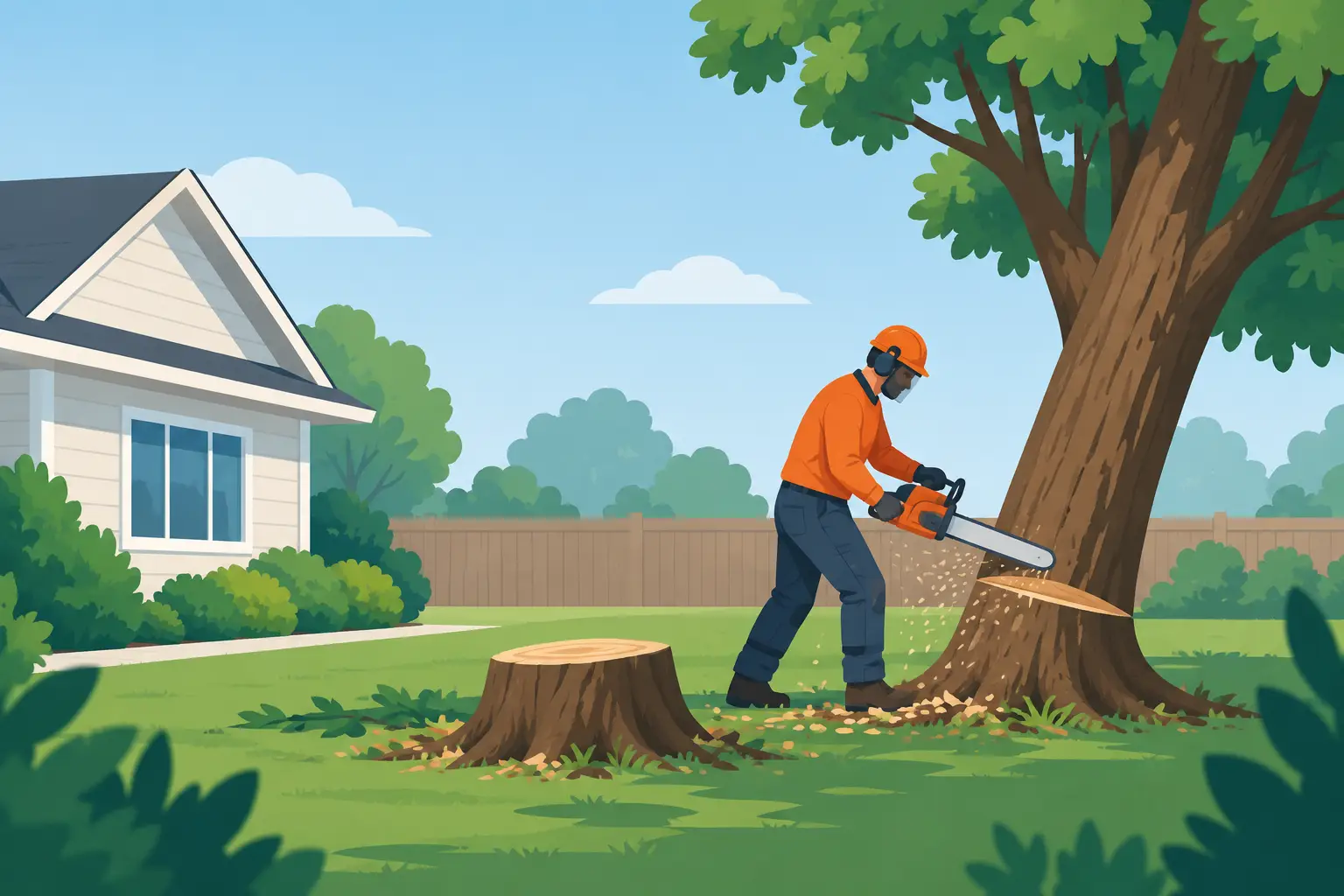
A large tree can add shade, privacy, and curb appeal for decades. But when it begins leaning toward the house, dropping heavy limbs, or showing signs of decay, keeping it can become the more expensive choice. The best reasons to remove a tree usually come down to safety, property protection, and the tree’s long-term condition.
For homeowners and property managers in Plymouth, Minnetonka, Maple Grove, and the West Metro, the right decision is not always obvious from the ground. A tree may look healthy while decay is developing inside the trunk, or it may look rough after a storm but still be structurally sound. A professional assessment helps separate a tree that needs attention from one that can be safely pruned and monitored.
When Tree Removal Is the Safer Choice
Tree removal should not be the first answer to every problem. Pruning, cabling, treatment, or routine maintenance can often extend the life of a good tree. Removal becomes the practical choice when the risk of leaving it in place is greater than the benefit it provides.
The tree is dead or clearly declining
A dead tree does not become safer with time. As wood dries out and breaks down, branches can fall without warning. Eventually, the trunk may split or fail at the base, especially during high winds, heavy snow, or saturated spring soil.
Common signs include bare branches during the growing season, bark falling away in large sections, mushrooms at the base, deep cracks in the trunk, and brittle limbs that snap easily. Not every dead-looking branch means the whole tree is dead, but widespread dieback is a clear reason to have it checked.
A declining tree also deserves attention before it reaches the point of failure. Emerald ash borer damage, oak wilt, root problems, and other local issues can weaken a tree over time. Early removal is often more controlled and less costly than emergency work after a tree comes down on a fence, roof, or vehicle.
It has major structural damage after a storm
Minnesota storms can change a tree’s condition in a few minutes. A split trunk, hanging limb, uprooted root plate, or large branch torn from the canopy can create an immediate hazard. Even if the tree remains standing, internal fibers may be damaged beyond what is visible from the yard.
Storm damage does not always mean full removal. A healthy tree with one broken limb may only need careful pruning. But a tree that has lost a main stem, split into multiple sections, or started leaning after the storm may no longer have a stable structure. The safest approach is to keep people away from the area and have a qualified crew evaluate it before more wind arrives.
Be especially cautious around branches tangled in utility lines. Do not attempt to pull, cut, or move them yourself. The utility company should address active electrical hazards, while a tree service can handle the remaining tree work once the area is safe.
The trunk, roots, or base show signs of failure
A tree stands because its trunk and roots work together. Damage to either one can make the tree unpredictable. Deep vertical cracks, large cavities, seams where trunks join, and visible decay near the base are all reasons for concern.
Root issues can be harder to spot. Soil lifting around the base, exposed or broken roots, a new lean, and mushrooms growing from the root zone may point to declining stability. Construction activity, trenching, compacted soil, and changes in drainage can damage roots years before the tree shows obvious symptoms.
A slight lean that has been present for years may be normal. A new lean, particularly after strong winds or heavy rain, is different. If the tree is leaning toward a home, driveway, play area, or neighboring property, do not wait for the next storm to find out whether it will hold.
Best Reasons to Remove a Tree Near a Home
Location matters as much as condition. A healthy tree can still be a poor fit if it has outgrown the space or creates an ongoing risk to the property.
It threatens a house, garage, driveway, or fence
Branches rubbing against a roof or siding can cause gradual damage, give pests a route toward the home, and clog gutters. Trees growing too close to foundations can also create maintenance headaches, although roots do not automatically damage every foundation they approach. The type of tree, soil, foundation condition, and distance all matter.
The concern rises when a large tree has heavy limbs over a roof, a weak trunk union above a garage, or a noticeable lean toward a high-value target. In those cases, selective pruning may reduce the risk, but it cannot correct every structural problem. Removal may be the more reliable long-term solution.
It interferes with access, visibility, or everyday use
A tree may not be dangerous, but it can still make a property harder to use. Low branches can block a driveway, scrape delivery vehicles, obstruct sightlines at an entrance, or crowd a walkway. On rental or commercial properties, poor visibility and blocked paths can create avoidable liability concerns.
Sometimes trimming solves the issue. Other times, repeated pruning only delays the problem because the tree was planted too close to a driveway, building, patio, or lot line. Removing the tree and choosing a better location for a replacement can be the cleaner answer.
It is damaging other valuable trees or landscaping
Overcrowded trees compete for sunlight, water, and root space. A fast-growing or poorly placed tree can shade out smaller ornamentals, crowd a garden, or interfere with the health of a more valuable mature tree.
Removal can be part of a better plan for the yard, not simply a reaction to a problem. Taking out one declining or invasive tree may improve light, airflow, and growing conditions for the trees worth keeping. It can also create room for a species that better suits the space and Minnesota’s climate.
Disease, Pests, and Invasive Species
A diagnosis matters before making a removal decision. Some diseases are treatable, some are manageable, and some make removal the responsible choice. The goal is to avoid both unnecessary removal and a preventable spread of pests or disease.
For example, an ash tree affected by emerald ash borer may be treatable when caught early, depending on its condition, size, and value. Once the canopy has thinned substantially and the tree is declining, treatment may no longer be worthwhile. A dead ash becomes brittle quickly and can be difficult to remove safely.
Invasive trees can be another reason for removal. Species that spread aggressively through seeds or roots may take over natural areas and crowd out desirable plants. Removing them before they mature or spread further can save years of cleanup.
If disease is suspected, avoid moving firewood or brush between properties until you understand the issue. Proper handling and disposal help reduce the chance of spreading pests and pathogens.
Why Waiting Can Raise the Cost and Risk
Homeowners sometimes delay removal because the tree has not failed yet. That is understandable, especially when the tree has been part of the yard for years. But a controlled removal is almost always easier to plan than emergency work after a storm.
A standing tree can often be dismantled in sections with protection in place for landscaping, roofs, fencing, and nearby structures. Once it falls, crews may need to work around crushed materials, blocked access, unstable limbs, or damaged utility equipment. The cleanup can become more complicated as well.
Waiting also limits your options. A tree that can currently be climbed or accessed with equipment may become harder to reach after it breaks apart. Scheduling work before severe weather, rather than during a widespread storm response, gives you more control over timing.
What a Professional Tree Assessment Should Consider
A good removal recommendation should be based on more than appearance. The crew should look at the tree’s species, health, trunk condition, branch structure, root zone, lean, size, and distance from structures. They should also consider access for equipment, underground utilities, nearby landscaping, and how debris will be handled.
Ask clear questions: Is the tree an immediate hazard? Can pruning reduce the risk? What part of the tree is failing? Will the crew protect the lawn and surrounding structures? Is stump grinding needed after removal? Straight answers make it easier to choose the right scope of work.
At Xtreme Tree Service MN, the focus is on safe removal, clear expectations, and thorough cleanup. Whether the job involves a storm-damaged tree or a planned removal near a home, the work should leave the property safer and ready for what comes next.
If a tree is showing new cracks, a sudden lean, dead upper limbs, or root movement, treat it as a reason to act soon rather than a yard chore for later. A timely inspection can protect the home, the people around it, and the trees you want to keep.