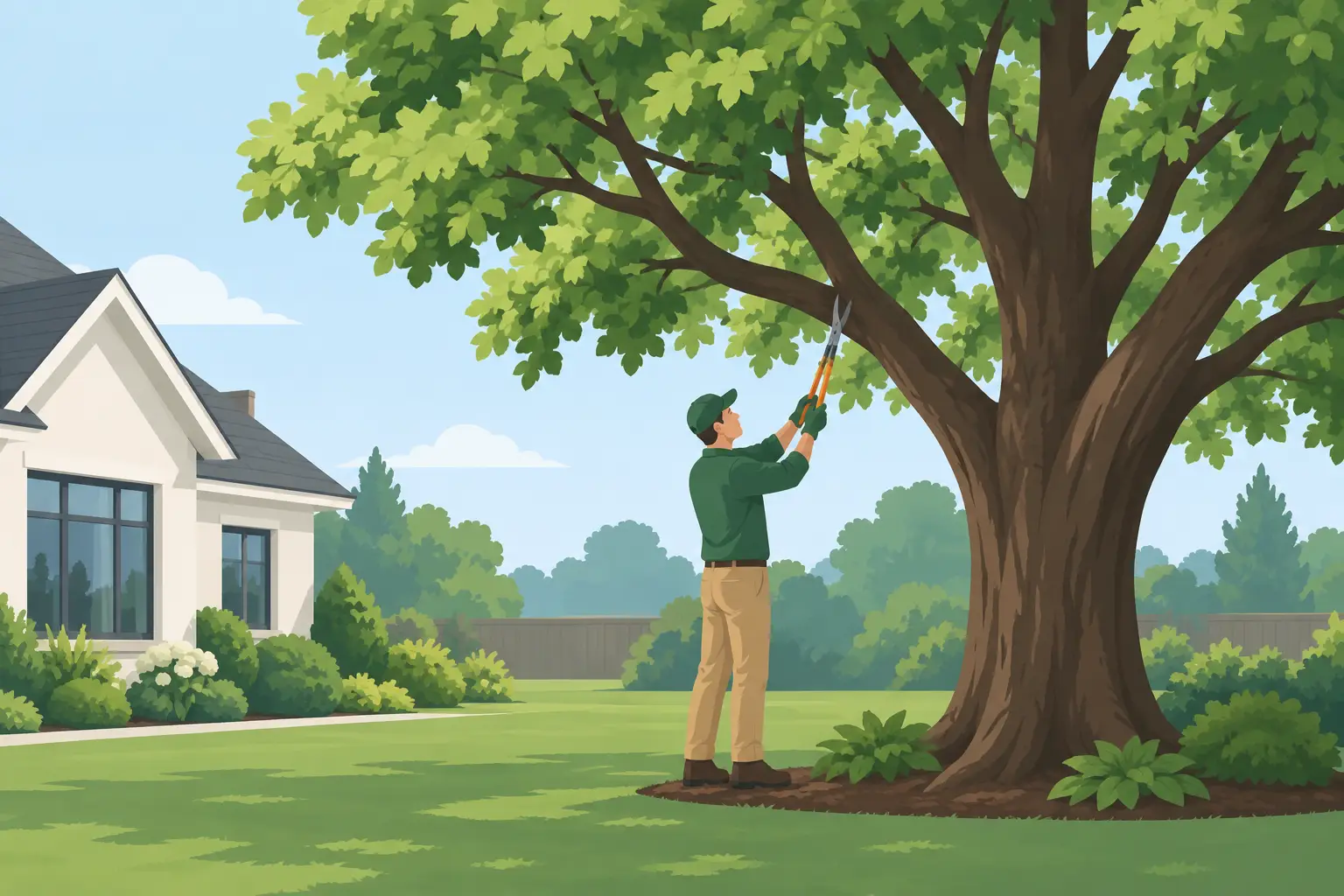
A mature oak shading the patio or a maple framing the front yard can add real value to a property. It can also become a major safety concern when branches grow over a roof, roots push against hardscape, or storm damage exposes weak areas. This guide to managing mature trees helps Plymouth-area homeowners and property managers make practical decisions before a small issue turns into expensive damage.
Mature trees do not need constant cutting. They need the right work at the right time. Good management protects the tree where possible, keeps people and structures safe, and avoids rushed decisions after the first heavy snow or summer storm.
Start With a Clear Look at Tree Health
Walk the property a few times each year, especially after winter and after high winds. Look up from a safe distance and check the trunk, main limbs, canopy, and ground around the tree. Changes that happen gradually are easy to miss when you see the same yard every day.
A healthy mature tree may still have deadwood, uneven growth, or a few surface roots. The concern is a pattern of decline, structural weakness, or a branch that could strike a home, driveway, sidewalk, utility line, or play area.
Watch for these conditions:
- Large dead, hanging, split, or broken branches in the canopy
- Deep cracks or open seams where major limbs join the trunk
- Mushrooms, decay pockets, or soft, crumbling wood at the base
- New leaning, heaving soil, exposed roots, or roots damaged by excavation
- Thinning leaves, bare upper limbs, or leaf-out that is noticeably weaker than nearby years
None of these signs automatically means the entire tree must come down. A dead limb can often be removed while the rest of the tree remains sound. On the other hand, a tree with decay at the base may look green and full right up until it fails. The location matters as much as the condition. A compromised tree in an open backyard is different from one hanging over a bedroom or parking area.
Prune Mature Trees With a Purpose
The goal of pruning is not to make a large tree look smaller. It is to remove dead, damaged, diseased, or poorly placed branches while keeping the tree’s natural structure intact. Proper trimming can improve clearance over a roof, driveway, walkway, or street without stripping the canopy.
For mature trees, avoid topping. Topping means cutting back large upright limbs to stubs or leaving a severely reduced crown. It may seem like a quick way to control height, but it creates large wounds and often triggers weak, fast-growing shoots. Those shoots can become a greater failure risk later.
Instead, selective pruning focuses on individual branches. A qualified crew can remove hazardous limbs, reduce the weight on an overextended branch, improve clearance from structures, and take out rubbing or broken growth. The amount removed should be conservative. Taking too much live canopy at once stresses the tree and can leave it more exposed to sun, wind, and disease.
Timing depends on the species and the work needed. Dead or dangerous limbs should be handled promptly, regardless of season. Routine pruning is often easier when trees are dormant, but there are exceptions. Oaks, for example, should not be pruned during periods when disease transmission is a concern. If you are unsure, ask for a site-specific recommendation rather than scheduling work solely because it is a certain month.
Protect Roots Before They Become a Problem
The most valuable part of a mature tree is often the part you cannot see. Roots extend far beyond the trunk, and most of the fine feeder roots are close to the soil surface. Construction, trenching, grading, driveway work, and even repeated equipment traffic can damage them.
Before starting a landscaping or remodeling project, identify trees worth preserving and set a protection area around them. Keep heavy equipment, stockpiled soil, building materials, and vehicle traffic out of that zone. Adding soil over roots can be just as harmful as cutting roots because it reduces the oxygen available in the soil.
Be careful with mulch as well. A 2- to 4-inch layer spread under the canopy helps hold moisture and reduces mower damage. Keep mulch several inches away from the trunk. Piling it against the bark traps moisture and can lead to decay, pests, and girdling roots.
Water matters most during long dry periods. A mature tree generally benefits more from slow, deep watering than short daily sprays. Let water soak into the root zone rather than running off across the lawn. There is no single schedule for every tree because soil type, slope, rainfall, and species all affect how quickly the ground dries out.
Plan for Minnesota Storms Before They Arrive
In the West Metro, mature trees deal with heavy wet snow, ice, strong summer winds, and saturated soil after major rain. Storm preparation is not about removing every large tree from a yard. It is about finding the branches and structural issues most likely to fail.
Start by checking for limbs over roofs, service lines, garages, sheds, fences, and frequently used outdoor spaces. Branches that are dead, heavily weighted to one side, or already cracked deserve attention before weather puts extra load on them. If a branch is near a power line, do not attempt to trim it yourself. Contact the utility provider or a qualified tree professional equipped to work safely around the area.
After a storm, keep people away from downed limbs, hanging branches, and uprooted trees. Tension in broken wood can release unexpectedly, especially where a limb is partially attached or caught in another tree. Photograph the damage from a safe distance if needed for insurance, then arrange an assessment.
Emergency tree work should focus first on immediate hazards: blocked access, limbs on structures, trees threatening occupied areas, or branches tangled near utilities. Cleanup and cosmetic pruning can follow once the property is safe.
Know When Removal Is the Safer Choice
Tree removal is sometimes the responsible decision, even when a tree still provides shade and curb appeal. A mature tree may need removal when it has extensive decay, major root failure, repeated large limb breakage, a dangerous lean toward a target, or damage that cannot be corrected through pruning.
Removal also makes sense when a tree is crowding a structure and causing ongoing roof, gutter, siding, or foundation concerns. The decision should not be based on size alone. Many large trees are healthy and stable. The question is whether the tree can be reasonably managed without creating an unacceptable risk.
Removal near a home, fence, landscaping, or neighboring property requires planning. The crew should have a clear drop-zone strategy, protect the work area, lower sections safely when space is limited, and remove debris as agreed. Stump grinding is worth considering when you want to reclaim lawn space, eliminate a trip hazard, or prepare for new landscaping. Leaving the stump can be fine in a natural area, but it may continue to send up shoots or interfere with mowing.
A Seasonal Routine Makes Tree Care Easier
Managing mature trees works best when it is part of regular property maintenance, not a response to an emergency. In spring, look for winter damage, broken limbs, and weak leaf-out. Summer is a good time to monitor drought stress, branch clearance, and storm exposure. Fall is useful for checking structure once leaves begin to thin, while winter often provides a clear view of the canopy and easier access for planned trimming.
Property managers should keep a simple record of inspections, completed pruning, storm events, and known concerns. That record is especially useful across multiple properties or when a tenant reports a new issue. Homeowners can do the same with a few dated photos from the same angles each year.
Get Help Before the Work Becomes Urgent
Mature-tree work is not a good place for ladder-and-chainsaw decisions. A branch can be heavier than it looks, a tree can shift during a cut, and a small mistake near a roof or power line can create a serious problem. Professional help is especially worthwhile for large limbs, climbing work, storm damage, trees near structures, and any tree showing signs of decay or instability.
For homeowners in Plymouth, Minnetonka, Maple Grove, and nearby communities, Xtreme Tree Service MN can assess the situation, explain practical options, and provide a clear estimate for trimming, removal, stump grinding, hauling, or storm cleanup. The right next step may be targeted pruning, monitoring, or safe removal. Acting while there is time to plan usually gives you better options and a safer yard.