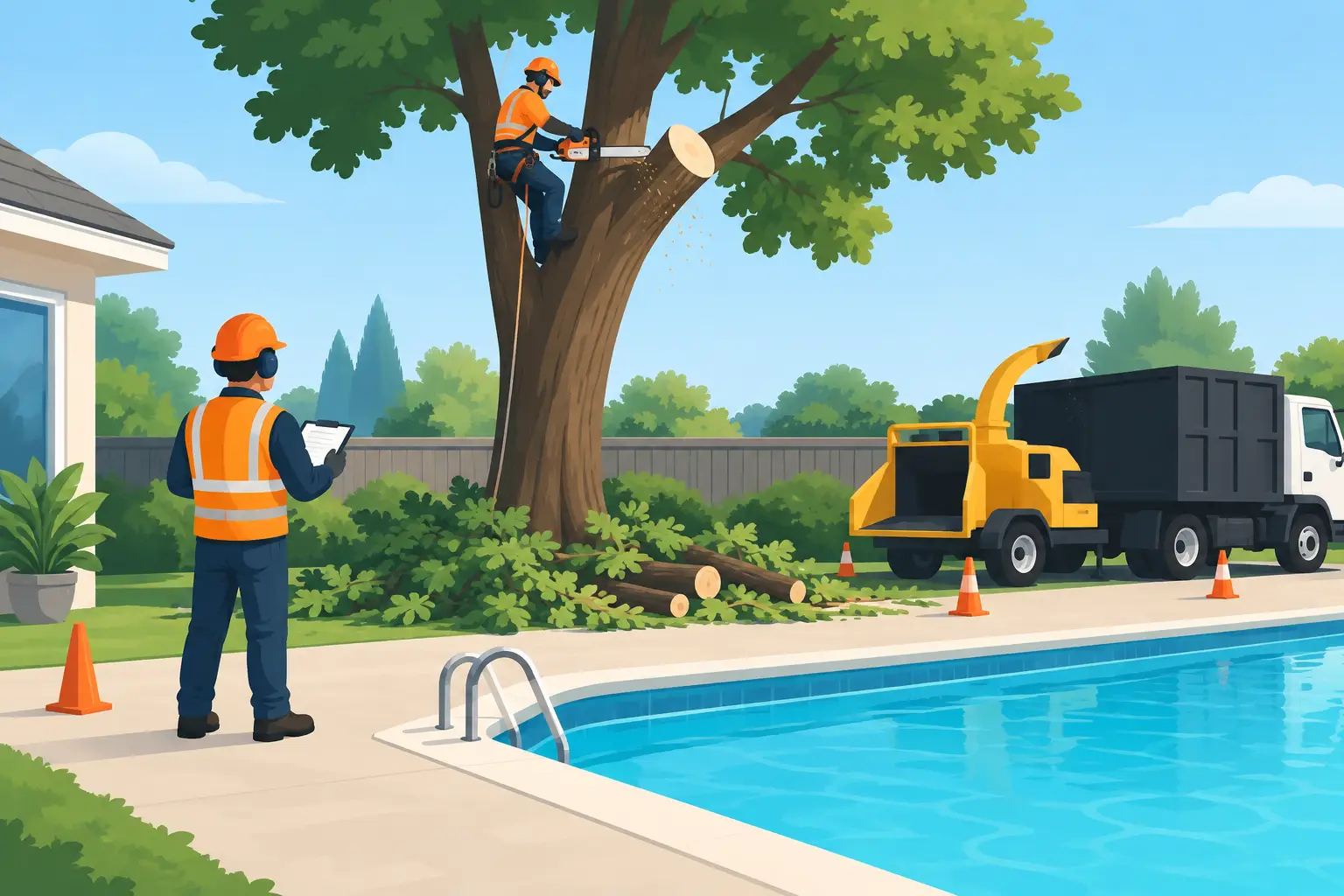
A mature tree leaning over a pool can turn from a shade tree into a property risk fast. This tree removal near pool example shows what a safe plan looks like when a homeowner has a declining oak beside an in-ground pool, a paver deck, and a vinyl fence with little room for error.
The goal is not simply to get the tree on the ground. The job is to remove it without damaging the pool liner, coping, deck, fencing, landscaping, or nearby home. That takes planning, the right equipment, and a crew that controls every piece before it moves.
The job: a declining oak beside an in-ground pool
Picture a large oak growing about eight feet from the edge of an in-ground pool. Its canopy extends over the water, and several limbs hang above the pool deck. The tree has visible deadwood, a cavity near the base, and a lean toward the pool. The homeowner wants it removed before a summer storm or heavy snow load causes a larger failure.
A tree in this position cannot be safely dropped in one piece. Even if there appears to be an open area nearby, the direction of lean, branch weight, wind, and the limited landing zone make a standard felling cut the wrong approach. The pool and hardscape leave no margin for a mistake.
A professional crew begins by looking at the full work area, not just the tree. That includes the tree’s condition, access for equipment, overhead utility lines, slope, deck layout, fence placement, and a safe route for hauling brush and wood. If utility lines are close, the work plan may need to change or the utility company may need to be involved before removal starts.
Tree removal near pool example: planning the work zone
Before climbing or setting equipment, the crew protects the area below the tree. Pool covers can help keep small debris out of the water, but a cover alone is not adequate protection from heavy limbs or logs. Depending on the pool setup, the crew may use plywood, padded panels, or other temporary protection over vulnerable sections of decking and coping.
Furniture, grills, planters, and pool equipment should be moved out of the work zone. Gates may need to be removed temporarily to create access for a compact loader or stump grinder. If the pool has an automatic cover, exposed tracks and mechanisms deserve extra attention because they can be damaged by falling debris or heavy equipment.
The crew also establishes a controlled drop zone. On a tight backyard job, that zone may be a narrow section of lawn protected with ground mats. Mats spread equipment weight and reduce rutting, especially after rain or during soft spring conditions common in the West Metro.
Clear communication matters here. The homeowner should know which gate will be used, where equipment will be parked, what areas need to stay clear, and whether the pool needs to remain closed during the job. For most removals near a pool, keeping people and pets out of the backyard until cleanup is complete is the safest choice.
Why sectional removal is usually the right method
With the pool directly below the canopy, the crew removes the tree in manageable sections. A climber or aerial lift operator starts with dead branches and outer limbs, working from the top down. Each piece is cut small enough to be lowered by rope or directed into the designated landing zone.
Rigging is what makes this work controlled. Rather than letting a limb fall freely, the crew attaches it to a rope system and lowers it with help from a ground worker. The size of each piece depends on its weight, shape, attachment point, available lowering area, and the condition of the tree.
For large wood over the pool, smaller cuts are often slower but safer. A heavy oak limb may look manageable from the ground, yet it can swing, bounce, or split when released. Cutting it into shorter sections reduces force and makes it easier to guide away from the pool edge.
Once the canopy is removed, the crew works down the trunk in sections. If there is enough room, trunk rounds may be lowered by rope. If access is especially limited or the tree is too compromised for climbing, a crane or aerial equipment may be the safer option. The best method depends on the site. A crane can reduce time over the pool, but it requires suitable street or driveway access and enough room to set up safely.
Protecting the pool, deck, and landscaping
A pool creates more than one risk point. The obvious concern is impact damage from a branch or trunk section. Less obvious concerns include sawdust in the water, debris in skimmer lines, damage to pool covers, and gouges in pavers or concrete from dragged wood.
A careful crew keeps brush and logs moving away from the pool rather than piling material on the deck. Ground workers should use designated travel paths and avoid dragging limbs across grass, planting beds, or hardscape whenever possible. If the only equipment route crosses turf, ground protection helps limit damage.
Nearby landscaping requires realistic expectations. Mature shrubs beneath a large tree may need selective trimming for access, and delicate perennials can be difficult to protect completely in a confined space. A good estimate should address those conditions upfront. Homeowners should not have to guess whether a crew plans to drive over a lawn area, remove a fence panel, or work near irrigation heads.
The weather also affects the job. Wind makes controlled lowering harder, especially when the canopy extends over water. Wet ground can limit equipment access. In winter, snow can conceal deck edges and landscaping, while frozen ground may help support equipment but can make cleanup more challenging. A safe crew adjusts the schedule when conditions make the work less controlled.
What happens after the tree is down
The removal is not finished when the last trunk section reaches the ground. Brush is chipped or hauled away, logs are removed or left only if requested, and the work area is cleared of sawdust, twigs, and wood debris. Around a pool, cleanup includes checking the water surface, deck, cover, and surrounding landscaping for remaining debris.
If the homeowner wants the stump removed, stump grinding can usually be scheduled as part of the project. Grinding near a pool calls for the same careful planning as the removal. The operator needs to account for underground utilities, irrigation, pool plumbing, and the location of the pool shell. A stump close to the pool may need a conservative grinding depth rather than aggressive excavation.
The remaining mulch from stump grinding can be left for use in beds, hauled away, or spread where appropriate. Fresh grindings are not always a good fit around every plant, so it is worth discussing the cleanup preference before the work begins.
Questions to ask before hiring a tree service near a pool
A homeowner does not need to know every rigging technique, but a few direct questions can reveal whether the crew has a clear plan. Ask how they will keep wood out of the pool, where equipment will travel, whether they expect to remove fence sections, and how they will protect the deck and landscaping.
It is also reasonable to ask whether the tree can be climbed safely or whether an aerial lift or crane is needed. A crew that looks at the tree, access, and hazards before answering is taking the job seriously. Be cautious of anyone offering a quick price without inspecting the pool area and the condition of the tree.
For property managers, confirm the work hours, parking needs, tenant access restrictions, and debris-hauling plan. A removal near a shared pool or common area may need extra coordination to keep residents clear and avoid blocking drives or walkways.
A safer result starts before the first cut
A tree beside a pool is not a good place for rushed decisions or uncontrolled cuts. The right plan protects the features you have invested in while addressing the tree before it becomes an emergency. Xtreme Tree Service MN provides clear estimates, safe removal planning, and thorough cleanup for homeowners and property managers throughout Plymouth and the West Metro. When a tree is crowding your pool area, having it assessed early gives you more options and a safer path forward.