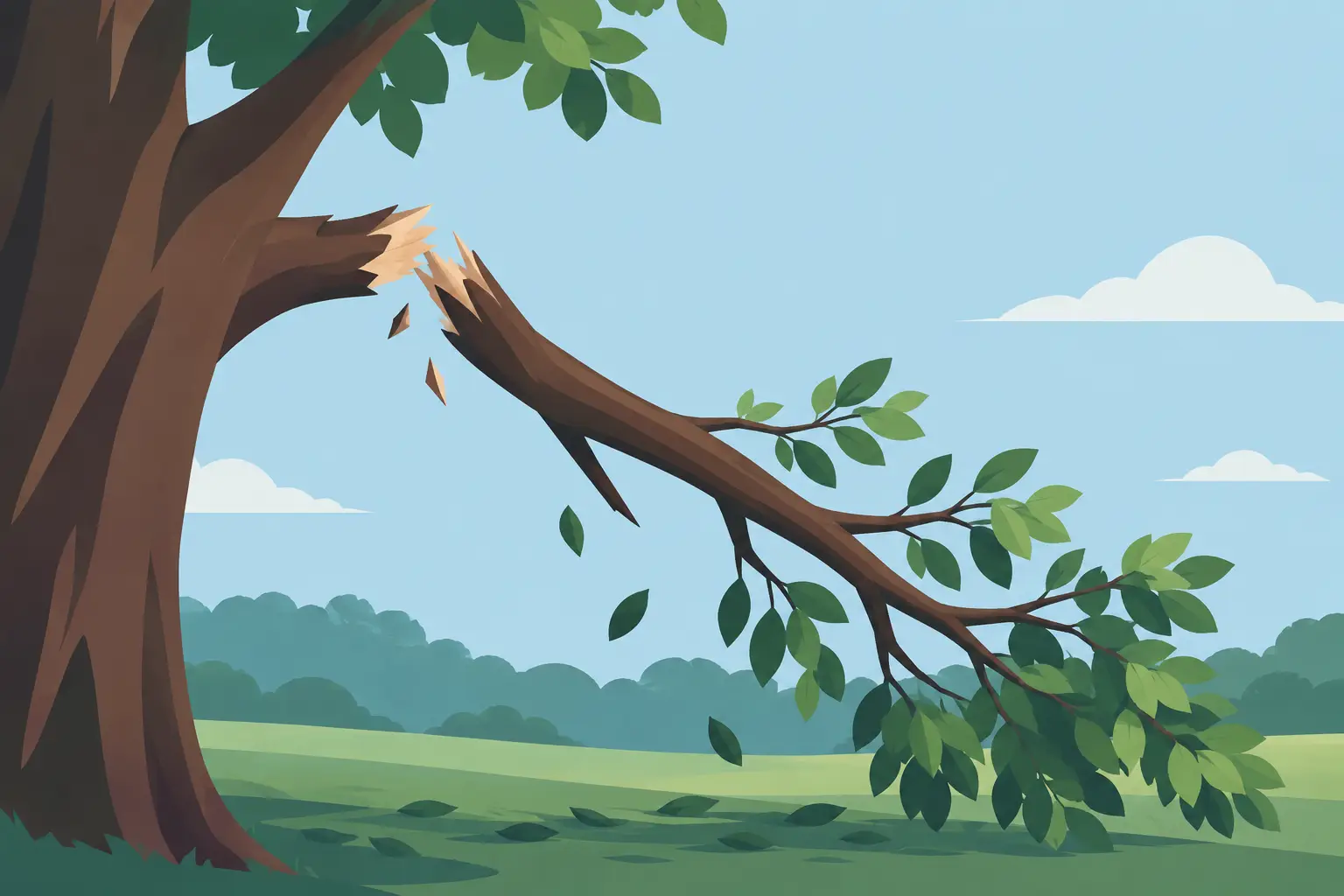
A branch can look solid from the ground and still come down without much warning. If you are asking, why are branches falling suddenly, the answer is often hidden in the tree itself: internal decay, storm stress, drought, insect damage, or too much weight on a weakened limb. In Plymouth and across the West Metro, changing weather can expose those problems fast.
A fallen branch is not always an emergency, but it should not be ignored. Large limbs can damage roofs, vehicles, fences, utility lines, and landscaping. More importantly, a branch that falls may be a warning that other parts of the tree are under stress.
Why Are Branches Falling Suddenly From Healthy-Looking Trees?
Trees do not always show trouble from a distance. Leaves may still be green, bark may look normal, and the trunk may appear sturdy. But branches can weaken over years before the failure becomes visible.
Internal decay and hollow wood
Decay is one of the most common reasons for unexpected branch failure. Fungi, old wounds, cracked branch unions, and broken stubs can allow decay organisms into the wood. The outside of a limb may remain intact while the center slowly loses strength.
Look for mushrooms near the base of the tree, soft or crumbly wood, peeling bark, cavities, and areas where the branch has an unusual swelling or sunken section. These signs do not automatically mean a tree must be removed, but they do justify a professional inspection, especially over a driveway, patio, play area, or building.
Storm damage that shows up later
Minnesota windstorms, heavy wet snow, and ice can overload branches. A limb may not break during the storm. Instead, it can develop a crack at the union where it meets the trunk or a split farther out on the branch. Days or weeks later, normal wind or the weight of leaves can finish the job.
After a major storm, check trees from a safe distance. Broken tops, hanging branches, fresh cracks, and limbs resting on other limbs all need attention. A branch hanging high in the canopy is especially dangerous because it can fall without warning when the wind shifts.
Drought and heat stress
Dry periods can make trees more vulnerable than many property owners realize. When a tree is short on water, it may shed smaller limbs as a stress response. Drought can also weaken a tree over time, leaving it less able to handle wind, disease, and insects.
This does not mean every fallen branch is caused by lack of water. Mature trees have large root systems, and watering practices depend on soil, species, and recent conditions. Still, prolonged dry weather followed by a heavy rain or strong wind can reveal a branch that was already failing.
Weak branch structure
Some branches are more likely to fail because of how they grew. Co-dominant stems, where two main trunks rise from the same point, may have a tight V-shaped connection with bark trapped between them. This is called included bark. The stems may look connected, but they are not strongly joined.
Long, overextended limbs can also become too heavy at the ends. Fast-growing trees and neglected trees often develop this problem. Proper pruning can reduce weight and improve structure, but topping or cutting back branches too aggressively can create weak regrowth later. The right cut matters.
Insects, disease, and root problems
Insects and diseases can weaken branches directly or reduce the tree’s overall health. Dead sections of canopy, thinning leaves, small leaves, premature leaf drop, and bark damage can all point to a larger issue. Root damage is another concern, particularly after construction, soil compaction, grade changes, or repeated vehicle traffic near the tree.
When roots are compromised, the entire tree may become less stable. That is a different risk from a single dead branch, and it calls for a careful assessment rather than a quick trim.
Warning Signs Before Another Branch Falls
You do not need to climb a ladder or inspect every limb closely. A ground-level check can reveal enough to know when it is time to call for help. Watch for dead limbs with no leaves when the rest of the tree is leafed out, branches with hanging or detached bark, visible cracks, and limbs that suddenly sag lower than usual.
Also pay attention to what is on the ground. Repeated small branch drop, fresh twigs after calm weather, or piles of deadwood beneath one side of a tree can indicate decline in that part of the canopy. One small twig after a windy day is normal. Several larger branches, or branches falling in calm conditions, are not something to brush off.
A branch over a target deserves extra caution. In tree work, a target is anything that could be injured or damaged if the branch falls: people, pets, cars, walkways, roofs, decks, power lines, and neighboring property. The same limb is much more urgent when it hangs over a front entry than when it is over an unused back corner of a yard.
What to Do When a Branch Comes Down
Start by keeping people and pets away from the area. Do not stand beneath other hanging limbs to inspect the damage, and do not try to pull a partially attached branch down with a rope. That can change the load on the branch and cause it to swing or fall in an unpredictable direction.
If a branch has contacted a power line, stay clear and keep others away. Do not touch the branch, the wire, a fence, or anything else that may be energized. Contact the utility provider or emergency services as appropriate. Tree crews should not work near energized lines unless the electrical hazard has been properly addressed.
For a branch on the ground with no utility involvement, take a few photos from a safe distance if you need them for insurance or property records. Then assess the basic questions: Is the branch blocking access? Did it damage a structure? Are there more cracked or hanging limbs overhead? A cleanup job may be straightforward, but a damaged tree may need pruning, cabling in limited cases, or removal depending on its condition and location.
Avoid using a chainsaw on a branch that is bent, pinned, or under tension. Wood can release suddenly when cut. Even experienced operators treat storm-damaged limbs differently than ordinary firewood because the forces are less predictable.
Preventing Sudden Branch Drop
Regular pruning is the most practical way to reduce branch-related hazards. The goal is not to strip the tree or make it look unnaturally bare. Good pruning removes dead, damaged, rubbing, and poorly attached limbs while maintaining the tree’s natural shape.
Timing depends on the tree species and the work needed. Deadwood can generally be removed when conditions allow, while structural pruning may be better at certain times of year. If a limb is immediately hazardous, safety comes first. Waiting for the ideal pruning season is not worth the risk of a branch over a roof or walkway.
Property managers should also build trees into routine exterior inspections. Check parking areas, tenant walkways, dumpsters, signs, lighting, and building entrances after high winds and heavy snow. Homeowners can do the same around driveways, decks, playsets, and areas where children or pets spend time.
Do not rely on a tree’s appearance alone. A large, mature tree can be a valuable part of the property, and removal is not always the answer. In many cases, targeted pruning and deadwood removal are enough to improve safety. When severe decay, major cracks, root failure, or extensive canopy decline are present, removal may be the safer choice.
When to Call a Tree Service
Call for an assessment when a branch has fallen without an obvious weather event, when you see a crack or split in a major limb, or when dead branches are hanging over a structure or travel area. It is also smart to call after storm damage if you are unsure whether a tree can be safely cleaned up or if the remaining limbs are stable.
A qualified crew can evaluate the branch structure, identify obvious defects, explain the options, and handle removal with protection for the home, landscaping, and nearby structures in mind. Xtreme Tree Service MN provides clear estimates and safe cleanup for homeowners and property managers dealing with hazardous limbs and storm damage.
A fallen branch is often the first visible sign that a tree needs attention. Addressing it while the work is controlled is usually safer, simpler, and less stressful than waiting for the next windstorm to make the decision for you.