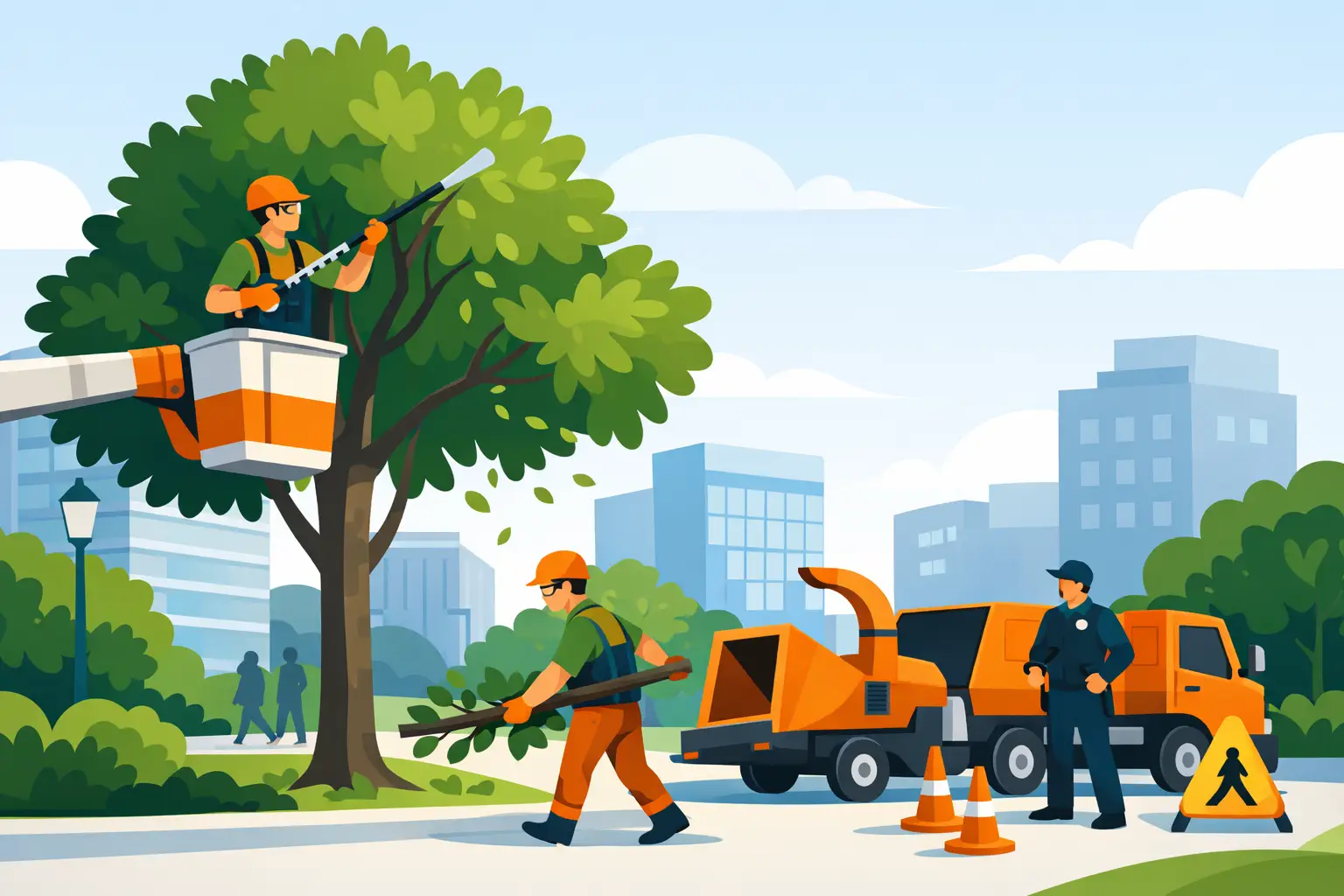
A low branch over a parking area, a dead ash near a building, or a storm-damaged limb hanging above a walkway can become a property problem fast. Commercial tree maintenance gives property managers a practical way to stay ahead of those risks while keeping grounds clean, accessible, and professional-looking.
For offices, retail properties, apartments, HOAs, and small commercial sites across Plymouth and the West Metro, tree work is not just about curb appeal. It is part of protecting people, vehicles, structures, and the day-to-day use of the property.
What Commercial Tree Maintenance Covers
Commercial properties have different needs than a single backyard. There may be several buildings, tenant traffic, shared parking areas, sidewalks, utility lines, signs, landscaping beds, and neighboring properties to consider before a crew starts work.
A good maintenance plan starts with an on-site look at the trees and the areas around them. The goal is to identify immediate safety concerns, reduce future problems, and plan work around the property’s operations.
Common commercial tree services include pruning overgrown branches, removing dead or declining trees, clearing storm damage, grinding stumps, and hauling away debris. The right scope depends on the tree species, its condition, its location, and what it could hit if it fails.
A tree does not need to be fully dead to need attention. Limbs can become weak from decay, insect damage, heavy snow, past storm damage, or poor branch structure. When those limbs hang over a driveway, entry, roofline, playground, or parking lot, waiting can create unnecessary exposure.
Why Routine Tree Care Matters for Property Managers
Tree problems often build slowly. A branch grows into a light pole. A canopy blocks a security camera. Roots lift the edge of a sidewalk. A damaged tree begins leaning farther after each major wind event. None of these issues may look urgent at first, but they are easier to address before they become an emergency call.
Routine pruning also helps maintain clear space around buildings and parking areas. This can improve visibility for drivers and pedestrians, keep signs easier to see, and prevent branches from rubbing against roofs, gutters, siding, or windows.
Appearance matters, too. Well-maintained trees help a commercial property look cared for. On the other hand, hanging limbs, piles of storm debris, and old stumps can make a site feel neglected. For rental properties and customer-facing businesses, that detail affects first impressions.
The key is not to over-prune simply to make trees look smaller. Removing too much live growth can stress a tree and create new problems. Proper pruning focuses on dead, damaged, crossing, low, or poorly placed branches while respecting the tree’s structure and long-term health.
Signs It Is Time to Schedule Service
Property managers do not need to diagnose every tree issue themselves. They do need to know when it is worth having a professional take a look.
Pay attention to branches hanging over parking stalls, sidewalks, entrances, roofs, and outdoor gathering areas. Look for broken limbs that remain caught in the canopy, visible cracks in major branch unions, mushrooms or decay around the base, peeling bark, or a tree that has developed a new lean.
Other common concerns include branches interfering with building access, rooflines, street clearance, outdoor lighting, or signage. Trees growing too close to power lines require extra caution. Never attempt to trim around electrical lines yourself. The proper approach depends on the line, the tree’s position, and the work required.
Stumps are another issue that gets pushed down the list until someone trips over one, lawn equipment hits it, or a landscaping project cannot move forward. Stump grinding clears the area below ground level so the site can be restored, reseeded, or replanted as needed.
Planning Commercial Tree Maintenance Around Your Site
The best approach is usually planned work, not waiting for a problem. A seasonal walk-through can help prioritize what needs attention now and what can be handled later. For many West Metro properties, late winter through early spring is a useful time to assess trees before leaf-out, while summer and fall often reveal clearance and visibility issues more clearly.
That said, there is no single schedule that fits every property. A wooded apartment complex may need regular pruning and hazard checks. A small office building with a few mature boulevard trees may only need occasional service. Properties with heavy pedestrian traffic or aging trees deserve more frequent attention than low-traffic sites with young, healthy plantings.
Before work begins, it helps to identify access points, parking restrictions, tenant considerations, irrigation heads, landscaping beds, and anything near the work zone that needs protection. Clear communication on these details helps the crew work efficiently and reduces disruption.
For larger jobs, timing matters. Tree removal near a busy entrance may be best scheduled outside peak business hours. Work near tenant parking may require temporary closures or advance notice. A dependable crew should explain the work area, expected timing, and cleanup plan before starting.
Safe Removal Is About More Than Cutting a Tree Down
When a tree is dead, unstable, badly damaged, or growing too close to a structure, removal may be the safest option. Removal is not always the first choice, but there are times when pruning cannot adequately manage the risk.
Commercial tree removal requires careful planning because nearby targets are common. Buildings, HVAC units, fences, parked vehicles, underground landscaping, and public walkways all affect how the work is done. The crew may need to remove the tree in sections, control limbs with ropes, manage the drop zone, and keep people clear of the area.
The lowest price is not always the best value when the work involves a large tree near a building or active parking lot. Ask what is included in the estimate: removal method, debris hauling, site protection, stump grinding, and final cleanup. Clear expectations prevent surprises after the work is finished.
Storm Damage Needs a Fast, Calm Response
Minnesota storms can change a property overnight. Heavy snow, ice, high winds, and saturated soil can break branches or bring down entire trees. The first priority is keeping people away from unstable limbs, downed trees, and any area near power lines.
If a tree or limb has landed on a building, blocked an entrance, or created an immediate safety concern, prompt professional help is the right next step. Avoid moving large limbs yourself, especially when they are under tension or tangled in other branches. A branch that looks settled can shift unexpectedly when cut.
After the immediate hazard is handled, cleanup matters. Hauling away branches, clearing access routes, and addressing damaged stumps or remaining tree sections helps the property return to normal quickly. For managers, that follow-through is just as important as the initial emergency response.
What to Expect From a Reliable Tree Service Crew
Commercial property work should be straightforward. You need a crew that shows up, communicates clearly, works safely around the site, and leaves the property in good shape.
A proper estimate should identify the work to be done and make clear whether cleanup and hauling are included. If there are concerns about access, landscaping protection, equipment placement, or traffic flow, those should be discussed before the crew arrives.
During the job, the work area should be managed carefully. That means protecting nearby structures and landscaping where possible, keeping the drop zone controlled, and minimizing disruption to tenants, customers, and neighbors. Once the work is complete, debris should be removed and the site left clean.
For West Metro property managers, Xtreme Tree Service MN provides direct communication, fast estimates, and practical tree care for routine maintenance, removals, stump grinding, and storm cleanup. Whether the need is one hazardous limb or ongoing attention across several properties, the right plan starts with a clear look at the site and a crew prepared to do the work safely.
A few hours of planned tree care can prevent a much bigger problem later. If a tree, branch, or stump is raising questions on your property, having it assessed early is usually the simplest and safest move.