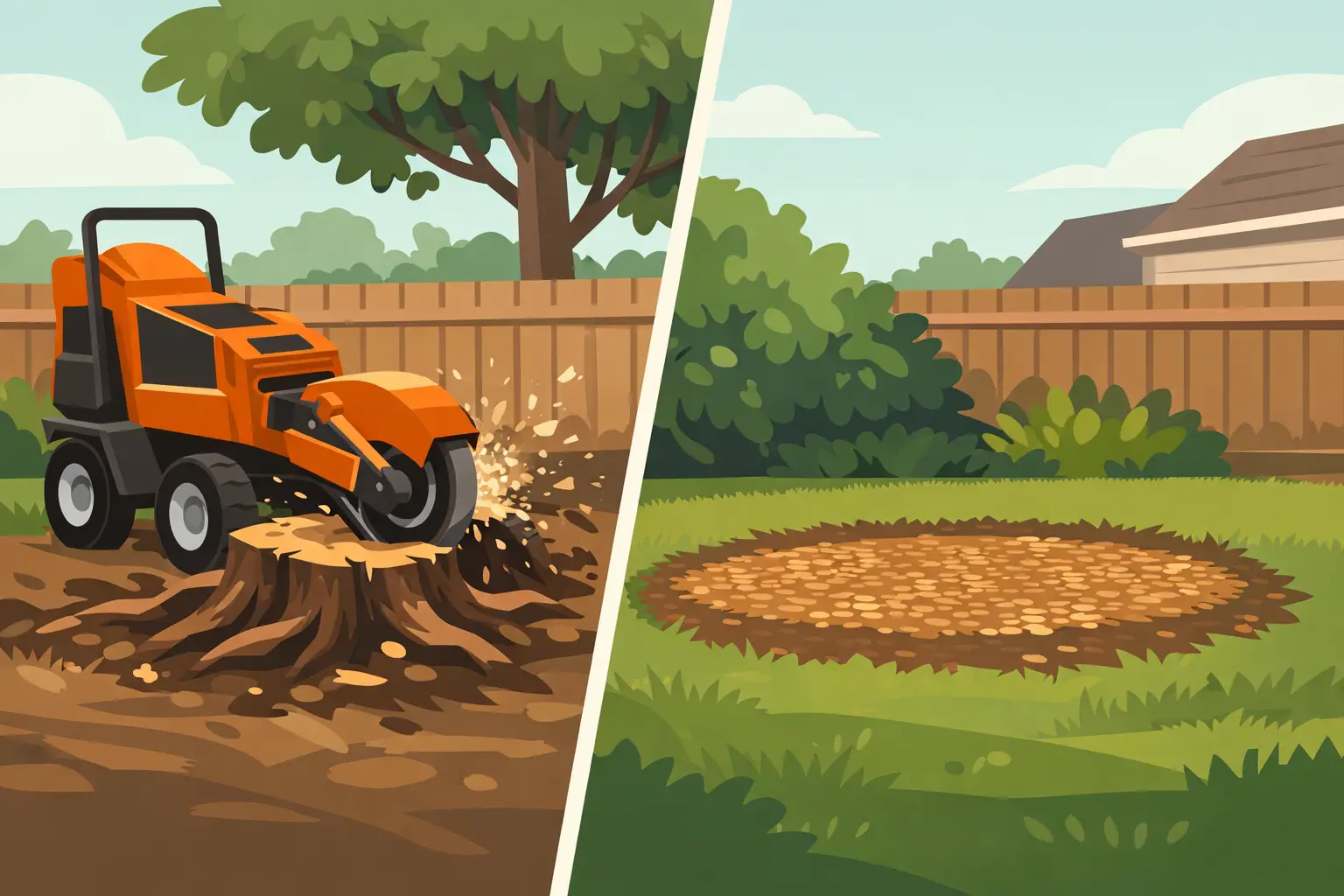
A tree can be gone, but the job does not always feel finished until the stump is gone too. Backyard stump grinding before and after results can change how a yard looks, how it functions, and how safely people can move through it. That low stump beside the patio, fence, playset, or driveway may seem harmless, but it can remain a tripping hazard and a constant obstacle when mowing, landscaping, or planning a new project.
For homeowners and property managers across Plymouth and the West Metro, stump grinding is usually the practical next step after tree removal. The goal is not just to make a stump less noticeable. It is to reduce it below grade, clean up the work area, and leave the space ready for the next use.
What a Backyard Looks Like Before Stump Grinding
Before grinding, a stump often creates more problems than its size suggests. It takes up usable space, catches mower blades, and gets in the way of landscaping plans. In a smaller backyard, even one stump can make a lawn feel unfinished.
Roots may still be close to the surface around the stump. You may see new shoots growing from the remaining root system, especially after a recently removed tree. The stump can also hold moisture and gradually soften over time, creating a place where insects and fungi may settle in.
The location matters. A stump in an open section of lawn is generally straightforward to access. A stump close to a deck, retaining wall, garden bed, utility box, or neighboring fence requires more planning. A professional crew looks at access, nearby structures, the stump diameter, and the surrounding ground before bringing equipment into the yard.
For properties with established landscaping, the work is not only about removing wood. It is about protecting turf, edging, irrigation components, plant beds, and hard surfaces while the grinder is moved into position.
Backyard Stump Grinding Before and After: What Changes
The most visible difference after stump grinding is simple: the above-ground stump is gone. A grinder uses a rotating cutting wheel to break the stump into wood chips, working down below the surface rather than pulling the entire root system out of the ground.
That distinction matters. Full stump and root excavation can disturb a much larger area. Grinding is often the cleaner, more practical choice for a residential yard because it removes the obstruction without tearing up broad sections of lawn. The remaining roots underground will naturally decay over time.
After the work, the area is typically left as a shallow depression filled with a mix of soil and wood chips. Depending on the stump size and the homeowner’s plans for the space, some grindings may be removed or spread on-site. The area can then be backfilled with topsoil and seeded, or prepared for sod, mulch, or a new landscape bed.
A finished result should not mean a pile of debris left behind. Cleanup is part of doing the job right. The crew should rake and gather excess grindings, remove debris as agreed, and leave the work area orderly. Some minor lawn repair is normal after any stump work, particularly when the ground is wet or access is tight, but careful planning helps keep disruption limited.
What Stump Grinding Does Not Do
Stump grinding does not instantly erase every underground root. Large roots may remain below the surface and break down gradually. If you are planning to install a patio, pour concrete, build a structure, or plant a new tree in the exact same spot, say so before the work begins. Those projects may call for a different grinding depth, additional root removal, or a new planting location.
It also does not guarantee a perfectly level lawn the same day. As old roots decay, the soil may settle slightly over the following months. Adding topsoil and seed as needed is a normal part of restoring the area.
Why Grinding Is Usually Better Than Leaving the Stump
Leaving a stump may feel like the lower-cost choice in the short term, but it can create ongoing maintenance issues. Every pass with a mower requires working around it. Children, guests, and maintenance crews may not see it when the grass is tall or leaves are down. A decaying stump can also detract from an otherwise well-kept property.
Grinding clears space for practical uses. Homeowners often use the recovered area for lawn, a garden bed, a shed location, a swing set, or simply a cleaner path through the yard. For a rental property or commercial site, removing stumps can also reduce a preventable trip hazard and make routine grounds maintenance easier.
There are situations where waiting makes sense. If a stump is deep in a wooded portion of a large property and does not affect access, safety, or future plans, removal may not be urgent. But for maintained yards, shared outdoor areas, and spaces near walkways, grinding is usually the more complete solution.
What Affects the Cost and Time Required
Stump grinding is not one-size-fits-all. A small, open stump may take little time. A wide hardwood stump near a fence or landscaped bed can require more careful work. The main factors are stump diameter, tree species, access, depth, root flare, and the presence of nearby obstacles.
Minnesota yards also bring seasonal considerations. Frozen ground can limit certain work, while spring rain may leave turf soft enough that crews need to take extra precautions. In some cases, waiting for better ground conditions protects the lawn and gives the equipment safer access.
Before work starts, it helps to point out irrigation lines, landscape lighting, invisible pet fences, and private utilities. Public utility locating is a separate process from identifying homeowner-installed lines. Clear communication before the crew arrives helps prevent delays and protects what is buried in the yard.
Preparing Your Yard for Stump Grinding
Most homeowners do not need to do much, but a few simple steps make the job go smoothly. Clear lawn furniture, planters, toys, and loose items away from the stump area. Keep gates unlocked and make sure the crew has a clear route to the backyard. If pets use the yard, keep them indoors during the work because stump grinding produces noise and flying wood chips.
Tell the crew if the stump is near irrigation, a septic system, underground wiring, or any structure with a hidden footing. Photos and a quick walkthrough can help establish clear expectations, especially when access is narrow or the work area is close to a neighbor’s property.
Professional stump grinding crews use protective measures based on the site. That may include shields to contain chips, mats for sensitive turf, and a careful equipment path that avoids tight landscaping. The right approach depends on the property, not a standard routine.
Planning the Space After Grinding
The best time to decide what comes next is before the grinder arrives. If the goal is grass, ask for enough depth to allow soil and seed or sod to establish over the area. If you want a planting bed, wood chips can sometimes be useful as part of the mulched area, though they should not be piled against plants or mixed heavily into planting soil.
Planting another tree directly over the old stump location is usually not ideal. Remaining roots, settling soil, and competition from decaying material can make establishment harder. Moving the new tree several feet away often gives it a better start.
For a clean, safe result, work with a crew that treats stump grinding as more than a quick pass with a machine. Xtreme Tree Service MN focuses on safe access, clear communication, and thorough cleanup so the space is ready for what comes next.
A stump does not have to stay in the way of your yard plans. Once it is properly ground and the area is restored, the change is practical right away: easier mowing, safer footing, and one less unfinished part of the property to work around.