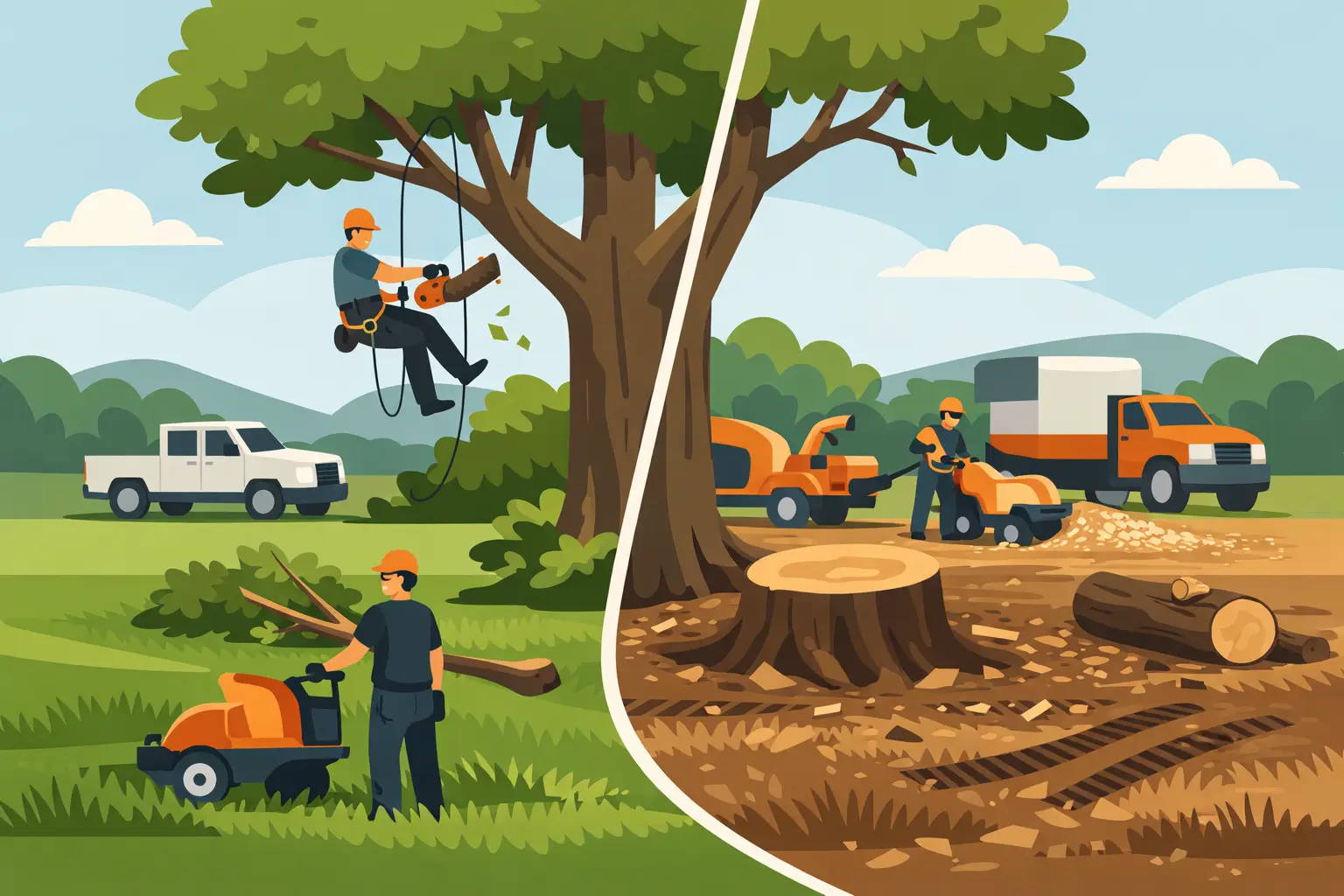
A mature maple can come down in a few hours, but your lawn has been growing for months or years. So, can tree work damage grass? Yes, it can. Heavy wood, equipment traffic, falling debris, and stump grinding can all affect turf. The good news is that experienced crews can greatly reduce the impact with planning, proper equipment, and a thorough cleanup.
For homeowners and property managers in Plymouth, Minnetonka, Maple Grove, and the West Metro, protecting the lawn is a reasonable concern. Tree work often needs to happen near gardens, driveways, fences, patios, and established grass. A professional crew should be clear about what the job involves, where access is needed, and what lawn disruption is possible before work begins.
Can Tree Work Damage Grass During Removal?
Tree removal carries the highest chance of lawn damage because the work involves weight, movement, and access. A large trunk section can leave a deep mark if it is dropped onto turf. Repeated travel by trucks, loaders, or skid steers can compact wet soil. Even small branches can scuff grass if they are dragged across the yard without care.
That does not mean every removal leaves a torn-up lawn. The condition of the property, the size and location of the tree, weather, and available access all matter. A dead ash tree beside a driveway is usually easier on the lawn than a large oak standing behind a home with no equipment access.
A careful crew breaks down the tree in controlled sections rather than letting large pieces fall freely. Ropes, rigging, and designated drop zones help direct limbs and wood away from areas that need protection. When possible, crews use driveways or firm access routes instead of crossing the yard repeatedly.
What Causes the Most Lawn Damage?
The biggest issue is usually not the chainsaw work itself. It is the weight and movement required to remove tree material safely. Understanding the common causes helps set realistic expectations for your project.
Heavy equipment and soil compaction
Equipment can be necessary for safe, efficient removal, especially when a tree is large, hazardous, or difficult to access. The downside is compaction. Tires and tracks press air out of the soil, making it harder for grass roots to get water and nutrients. Compacted turf may look thin, grow slowly, or hold water after rain.
Wet ground is more vulnerable. In Minnesota, spring thaw, heavy rain, and saturated summer soil can turn a routine access path into ruts quickly. In some cases, waiting for firmer conditions is the best choice for lawn protection, as long as the tree does not present an immediate safety risk.
Falling limbs and trunk sections
Branches can bruise or flatten grass, while large trunk pieces can create bare patches or depressions. Professional removal methods reduce this risk, but some impact is unavoidable when a large tree must come down in a confined backyard.
The crew may need a clear landing area for controlled lowering or cutting. Moving patio furniture, lawn ornaments, grills, and vehicles before arrival gives the team more room to work safely and helps keep the job organized.
Dragging brush and hauling wood
Brush removal can leave lines in the turf when heavy limbs are pulled over the lawn. Repeated dragging in the same path can damage the grass more than a single pass. Good job planning limits unnecessary travel and keeps brush handling as contained as possible.
Hauling also matters. A truck parked on the street or driveway is generally better for the yard than one parked in soft grass. That may mean more carrying for the crew, but it can prevent unnecessary lawn damage.
Stump grinding debris
Stump grinding creates wood chips and soil around the stump area. That is normal. The area will need attention afterward, especially if the stump was large or had surface roots. Grass may not grow back well until excess chips are removed, the area is leveled, and fresh topsoil and seed are added.
Stump grinding is still usually less disruptive than leaving a decaying stump in place. It removes a tripping hazard, frees up usable yard space, and makes mowing easier. Just plan for a small lawn repair area afterward.
How Professional Crews Protect Your Grass
No honest tree company should promise zero impact on every project. There are times when the safest method requires equipment or a controlled drop zone. What matters is whether the crew takes reasonable steps to protect the property instead of treating the lawn as an afterthought.
Before work starts, the team should look at access routes, slope, gate width, drainage, nearby landscaping, and the condition of the ground. This helps determine whether equipment can be used without causing excessive damage or whether a more manual approach makes better sense.
Ground protection mats can spread equipment weight across a larger area and reduce rutting. They are especially useful in soft ground or when machinery must cross a lawn. Plywood can help in limited situations, though professional mats are more effective for heavier equipment.
Tree sections should be lowered, guided, or cut into manageable pieces when they are near turf, gardens, roofs, or structures. This takes more time than dropping everything into the yard, but it is the right approach when protecting the property is part of the job.
Cleanup also makes a difference. Raking small debris, removing branches, blowing hard surfaces clear, and hauling away wood leave the property safer and easier to use. Cleanup will not erase compaction or a stump-grinding area, but it prevents leftover debris from becoming another lawn problem.
What You Can Do Before Tree Work Begins
A few simple steps help protect your yard and help the crew work efficiently. Mark sprinkler heads, invisible fence lines, landscape lighting wires, and septic components if they are near the work area. These items may not be visible through grass, mulch, or leaves, and marking them avoids surprises.
Let the crew know about soft spots, drainage issues, recently seeded grass, and underground systems. If a particular garden bed, section of lawn, or access route is a priority, point it out during the estimate. Clear communication before the job is much more useful than trying to address it after equipment is already on site.
If possible, mow the lawn before the appointment and remove toys, furniture, hoses, and movable decorations from the work area. This gives the crew a clearer view of the ground and prevents avoidable damage to personal property.
Repairing Grass After Tree Work
Most lawn marks from tree work are temporary and repairable. Flattened grass often stands back up after watering and a few days of normal growth. Lightly scuffed areas may recover on their own, especially during active growing conditions.
Ruts, compacted soil, and bare spots need more attention. Rake away loose debris, loosen compacted soil, add topsoil where needed, and apply grass seed suited to the location. Sunny and shaded areas may need different seed blends. Keep new seed consistently moist until it establishes, and avoid heavy foot traffic while the grass is young.
For a larger removal project, it may make sense to schedule lawn repair after the tree work is complete. There is little value in reseeding an access path before the final hauling, grinding, or cleanup is finished.
When Some Lawn Impact Is Worth It
A hazardous tree can threaten people, homes, vehicles, and nearby utility lines. In that situation, preventing every tire mark cannot come before safe removal. The same is true after storm damage, when a fallen tree may block a driveway, rest on a structure, or create an immediate hazard.
The goal is not perfection at the expense of safety. The goal is a plan that removes the tree safely while keeping disruption as limited and manageable as possible. Xtreme Tree Service MN approaches each property with that practical balance in mind: safe execution, clear expectations, and cleanup that leaves the yard ready for the next step.
If you are planning tree removal, pruning, or stump grinding, walk the yard with the estimator and talk through the access route before scheduling. A direct conversation about lawn protection can prevent surprises and help you make the right decision for both your trees and your property.