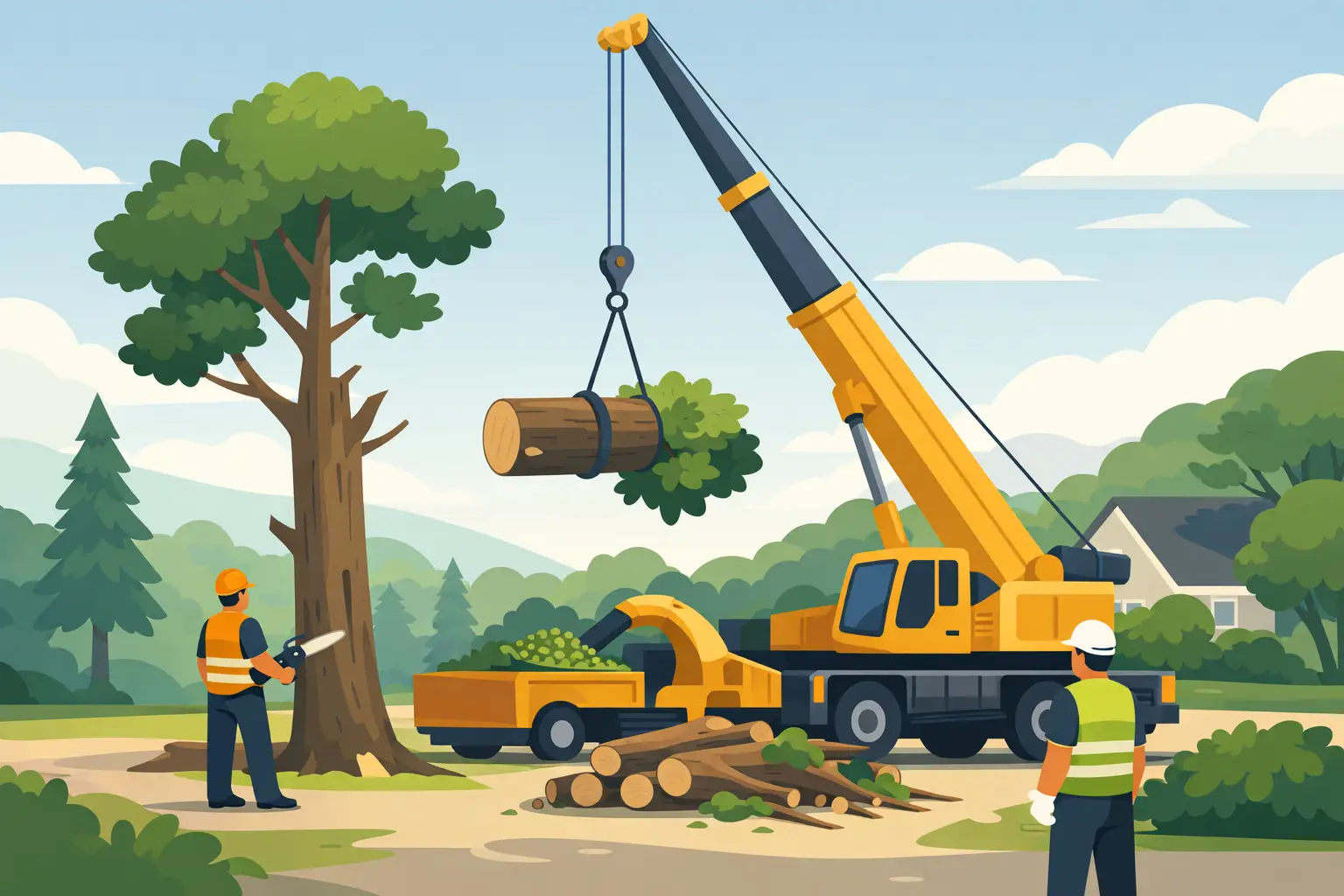
A large tree can become a tight-space problem fast. When a trunk is close to a house, leaning over a fence, tangled in utility lines, or weakened by storm damage, standard cutting methods may not offer enough control. Crane tree removal allows the crew to lift sections away from the work area instead of dropping them into the yard.
For homeowners and property managers in Plymouth and the West Metro, the goal is simple: remove the tree safely while protecting the home, landscaping, driveway, and nearby structures. A crane is not needed for every removal, but in the right situation, it can be the safest and most efficient option.
What Crane Tree Removal Does Differently
Most tree removals involve climbing the tree, cutting it down in controlled sections, and lowering or dropping those pieces into a designated landing area. That works well when there is open yard space and the tree is structurally sound enough to climb.
Crane-assisted removal changes the process. A qualified operator positions the crane where it can safely reach the tree. The tree crew attaches rigging to a planned section, makes the cut, and the crane lifts that piece clear of the property. It is then moved to a processing area where the crew cuts it down for hauling.
This approach reduces the need to swing heavy wood over a roof, drop branches into a small yard, or drag large sections across turf and landscaping. It also gives the crew more control when the tree is too compromised to climb safely.
The crane does not eliminate risk. It shifts the work toward careful planning, proper rigging, clear communication, and a crew that understands how the lifting operation affects every cut. The setup has to account for the tree’s condition, the crane’s position, the weight of each section, access through the property, and overhead hazards.
When a Crane Is Worth Considering
A crane is often recommended when the safest way to remove a tree is to lift it straight up and away. Common situations include a large tree growing close to a home, a dead or decaying tree with unstable limbs, or a tree that extends over garages, sheds, decks, pools, and other structures.
Storm damage is another common reason. A split trunk, partially uprooted tree, or hanging limb can be unpredictable. If the tree has lost structural strength, asking a climber to work farther into it may add unnecessary risk. Crane access can allow sections to be removed without placing as much weight or movement on the damaged tree.
Crane removal can also make sense in tight suburban lots. Many Plymouth, Minnetonka, and Maple Grove properties have mature trees with limited drop zones. There may be a fence on one side, a neighbor’s home on the other, and landscaping below. In those conditions, lifting sections out can be more controlled than trying to lower every piece by rope.
That said, bigger is not always the deciding factor. A tall tree in an open backyard may be removed safely without a crane. A smaller tree wedged between a house and power lines may require more specialized planning. The right method depends on access, tree condition, nearby targets, and the amount of room available to work.
Signs a tree may need a crane
You do not need to diagnose the method yourself, but a few conditions are worth mentioning when you request an estimate. Let the tree service know if the tree is leaning toward a structure, has visible cracks or decay, was struck by lightning, lost major limbs in a storm, or cannot be reached without working over a roof.
Also mention narrow access, soft ground, septic areas, sprinkler systems, newly installed landscaping, and nearby utility lines. These details help the crew assess whether a crane can be positioned safely and whether another removal method is a better fit.
How the Job Is Planned
A safe crane job begins before the crane arrives. The crew evaluates the tree and the work area to determine where equipment can be staged, how sections will be lifted, and where they will be set down. Ground conditions matter. A crane needs stable placement, and the crew must avoid areas that could be damaged or cannot support the equipment.
The estimate should also cover access and protection. Depending on the property, that can include identifying underground irrigation, protecting portions of the driveway, establishing a work zone, and keeping vehicles or patio furniture out of the lifting path. If a street or shared drive is involved, the crew may need to coordinate the work area in advance.
Before cutting starts, the team establishes hand signals or radio communication between the climber, crane operator, and ground crew. Every lift is planned for its size and weight. The crew does not simply cut a large piece and hope the crane can handle it. Wood weight varies with species, moisture, decay, and limb structure, so conservative cuts are part of doing the work safely.
Utility lines require special attention. Tree crews can work around some service lines with the proper clearance and plan, but energized power lines are a different hazard. If branches are in or near electrical equipment, the utility company or a line-clearance-qualified contractor may need to handle that portion first. A responsible crew will not take shortcuts around live power.
What Homeowners Can Expect on Removal Day
Crane work is usually faster at the cutting stage than a complicated rope-and-rigging removal, but setup and cleanup still take time. The crew needs room to work, a clear path for trucks and equipment, and a safe perimeter around the tree.
Before the crew arrives, move vehicles from the driveway and keep children and pets indoors or well away from the work zone. Clear patio furniture, grills, planters, and other movable items from beneath the tree or along the equipment path. If there are gates, access codes, or neighbor coordination issues, handle those before the scheduled start time.
During the removal, there will be equipment noise, truck traffic, and periods when the work area is closed off. This is normal. The most helpful thing a homeowner can do is give the crew space to work while remaining available for a question about access or property details.
Once the tree is down, the crew processes the wood, chips brush, hauls debris, and performs a cleanup of the work area. Stump grinding can often be scheduled as part of the project or handled separately, depending on the location of the stump and the scope of the removal.
Cost Factors for Crane-Assisted Removal
Crane removal costs more than a straightforward removal because it involves specialized equipment, an operator, additional planning, and a coordinated crew. But the higher equipment cost can be justified when it reduces risk to a roof, fence, landscaping, or the people doing the work.
The price depends on more than tree height. A large tree with easy crane access may be less complicated than a smaller tree behind a house with no clear setup area. Tree condition, distance from structures, the number of lifts required, hauling volume, site access, and stump grinding all affect the final estimate.
The best estimate is one that explains the planned scope clearly. Homeowners should know whether debris hauling, brush chipping, log removal, and cleanup are included. If lawn protection, traffic control, or additional utility coordination is needed, that should be discussed before work begins rather than becoming a surprise on job day.
Choosing the Right Crew for the Work
Crane tree removal is not a job for casual equipment use. Look for a local tree service that treats the removal plan as seriously as the cutting itself. Clear communication matters because customers need to understand what equipment will be on site, what access is required, and how the crew will protect the property.
Ask how the team will manage the tree near your home or other structures, how they will address overhead lines, and what cleanup will look like when the work is complete. A dependable crew should be direct about limitations too. If crane access is not possible, there may be another safe removal method. If conditions are unsafe due to wind, ice, or unstable ground, postponing the job can be the right call.
Xtreme Tree Service MN approaches large and hazardous removals with a practical focus on safe execution, property protection, and a clean job site. A fast, no-pressure estimate gives you a chance to understand the plan before deciding how to proceed.
If a tree is damaged, declining, or hanging over something you cannot afford to risk, do not wait for the next heavy wind to make the decision for you. A site assessment can determine whether crane assistance is the sensible path and give you a clear plan for getting the tree down safely.