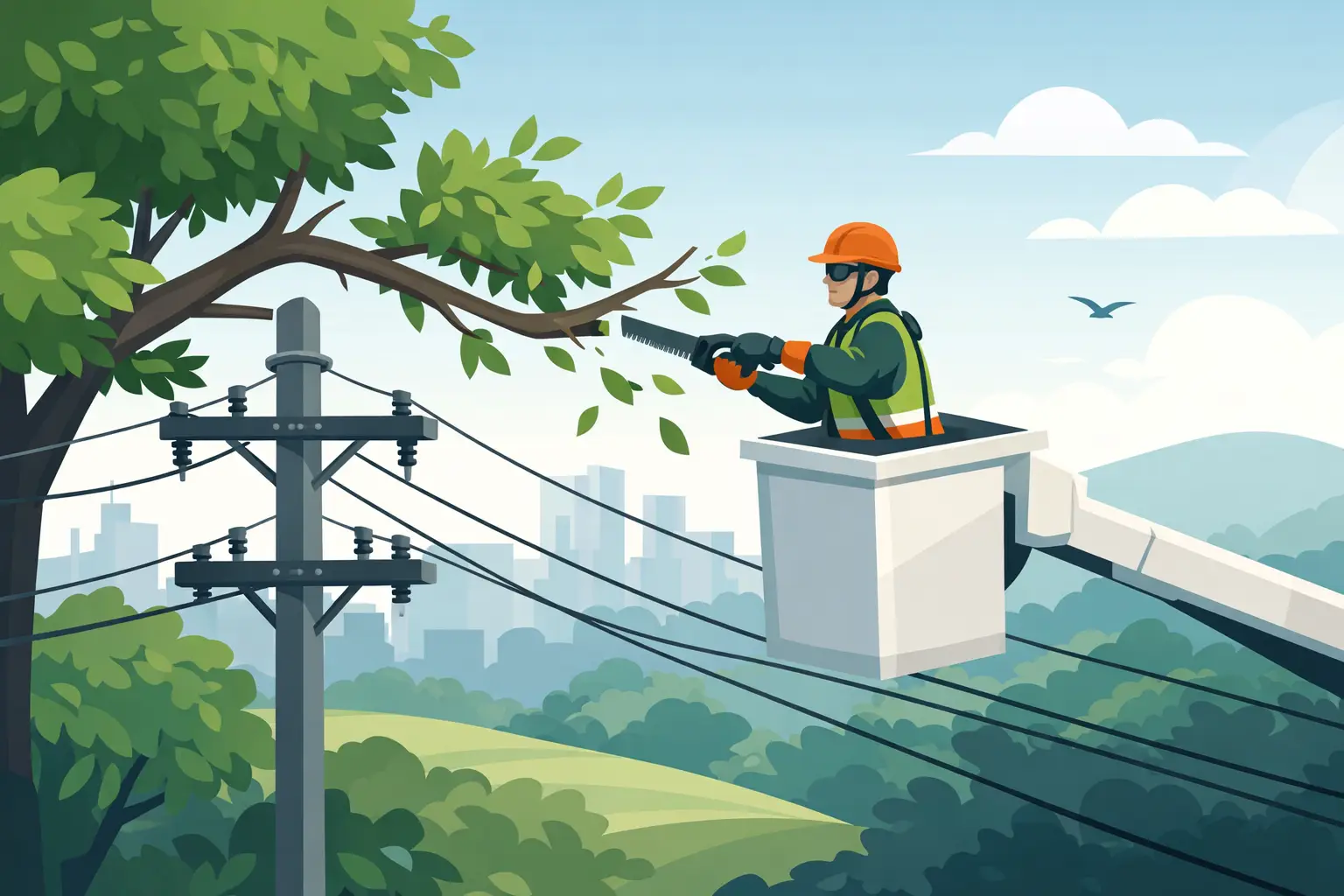
A branch brushing an overhead line can look like a simple trimming job from the ground. It is not. Pruning trees away from powerlines involves a serious electrical hazard, and one wrong cut, misplaced ladder, or falling limb can put people, homes, and service lines at risk.
For homeowners and property managers in Plymouth, Minnetonka, Maple Grove, and the West Metro, the right response depends on where the tree sits, which lines are involved, and how much clearance is needed. The goal is not just to make the tree look cleaner. It is to protect the property, reduce outage risk, and keep people safely away from energized equipment.
Know Which Powerline You Are Looking At
Not every overhead wire carries the same risk. The lower lines running from a utility pole to a house may include telecommunications, cable, or service lines. Higher lines are often electrical distribution lines. From the ground, it is not always possible to identify a line with confidence, especially in a mature canopy.
Treat every overhead wire as energized. Never assume a line is safe because it is insulated, appears damaged, or has been in contact with a branch for years. Electricity can travel through wet wood, equipment, ladders, and people. A branch does not need to fall directly on a wire for a dangerous situation to develop.
There is also an ownership question. Utility companies generally manage vegetation around their primary electrical lines, while a homeowner may be responsible for trees near the service line that runs from the pole to the home. Those responsibilities can vary by location and utility. When there is any doubt, start by contacting the utility company rather than scheduling routine trimming on your own.
When Pruning Near Powerlines Is Urgent
Some tree and line situations should not wait for the next seasonal maintenance visit. Call the utility provider right away if a broken limb is hanging on a line, a tree has pulled a wire down, you see sparking or smoke, or a line is lying on the ground.
Keep everyone away from the area, including pets. Do not touch the tree, wire, fence, puddle, or anything else that may be energized. Do not attempt to move a branch with a rope, pole pruner, truck, or piece of equipment. If there is immediate danger, call 911 and report the hazard.
After a storm, the problem may be less obvious. Heavy snow, ice, and high winds common in Minnesota can bend branches into wires without breaking them. A tree leaning farther than usual, limbs resting on conductors, or a line pulled tight through a canopy all deserve prompt attention. Photograph the condition from a safe distance if helpful, but do not get underneath the tree to inspect it.
Why DIY Pruning Is the Wrong Call
Routine pruning is often manageable for a homeowner when branches are low, accessible, and well away from electrical equipment. That changes quickly near overhead lines. Working close to a powerline adds hazards that standard yard tools and homeowner experience are not designed to handle.
A metal pole pruner can conduct electricity. A fiberglass ladder can become unsafe if it is wet, dirty, or set up poorly. A falling branch can swing, bounce, or pull a line in a direction no one expected. Even a worker standing several feet away can be at risk if a limb contacts an energized line and electricity travels through the tree or ground.
There is a property side to this as well. Improper cuts can leave a tree unbalanced, encourage weak regrowth toward the line, or create wounds that lead to decline. Topping a tree – cutting large upper sections back without regard for branch structure – may create short-term clearance but often leads to fast, weak shoots and a repeat problem.
The safest decision is simple: if branches are near or touching overhead electrical lines, do not cut them yourself. Keep the work area clear and get the right parties involved.
How Professional Powerline Clearance Is Handled
Safe clearance work starts with an on-site assessment. A qualified tree crew evaluates the tree’s condition, branch weight, access, nearby structures, the type and location of lines, and where cut material can land. A dead branch over a service line requires a different plan than a large healthy oak growing into a utility corridor.
When utility-owned electrical lines are involved, the utility may need to inspect the situation, schedule its vegetation-management crew, or arrange for the line to be de-energized or otherwise protected before tree work proceeds. This is not red tape. It is the control that makes work near energized equipment safer.
Once the site is cleared for work, pruning should focus on selective cuts that create clearance while preserving the tree’s structure where possible. Crews may remove deadwood, reduce limbs growing toward the line, or take out a poorly placed leader. In some cases, removing the entire tree is the more responsible option, particularly when it is declining, structurally weak, repeatedly interfering with lines, or too close to a home.
A professional plan also accounts for the ground below. Crews need a controlled drop zone, safe equipment access, and protection for roofs, fences, gardens, driveways, and neighboring property. Good cleanup matters just as much after the work is done. Brush, logs, and sawdust should not become the homeowner’s next weekend project.
The Right Clearance Depends on the Tree and Line
There is no one-size-fits-all trimming distance that homeowners should measure and apply on their own. Clearance requirements depend on line voltage, local utility standards, tree species, expected growth rate, wind exposure, and whether the line is a primary distribution line or a service drop.
Fast-growing species may need more room than slower-growing trees. A young maple that is only a few feet from a line can become a recurring issue much sooner than expected. Mature trees may have heavy limbs that move significantly under snow or wind, even if they appear clear on a calm summer day.
This is why timing matters. Pruning before branches reach the line is usually simpler, safer, and less expensive than waiting until the tree is wrapped around the wires. For many properties, regular tree inspections can catch crossing limbs, deadwood, and poor growth patterns before they become a utility concern.
What Homeowners Can Do Safely
You do not need to climb a ladder to stay ahead of the problem. Walk the property periodically from the ground, especially after storms and before winter. Look for branches growing toward wires, cracked limbs, trees leaning near poles, and limbs that sway into lines during windy conditions.
Keep contractors, delivery drivers, and family members aware of low-hanging service lines. If you are planning roof work, exterior painting, gutter cleaning, or a new fence near an overhead line, mention the line before work starts. Equipment such as lifts, dump trailers, and long ladders need safe clearance too.
For a tree that is near a service line but not in immediate contact, document what you see and arrange an assessment. A clear description helps: identify the tree type if known, note whether branches are touching the line, and explain if storm damage or recent growth changed the situation.
A Better Long-Term Plan for Trees Near Utilities
The best time to address tree-to-line conflicts is before they become an emergency. Young-tree pruning can guide growth away from overhead utilities and reduce the need for major cuts later. When planting, choose a location and mature tree size that fit the available space. Large shade trees and overhead lines are a poor long-term combination.
For existing trees, regular pruning can remove dead, rubbing, or poorly directed branches before they gain size and weight. It also gives a trained crew a chance to spot decay, cracks, root issues, or storm damage that may change the safety plan.
Xtreme Tree Service MN helps West Metro property owners handle routine pruning, hazardous tree removal, and storm cleanup with clear communication and careful site protection. When electrical lines are part of the situation, utility coordination comes first.
A branch near a powerline is not a job to put off or improvise. Keep your distance, report active hazards, and get a clear plan in place before the next storm turns a manageable tree issue into a bigger problem.