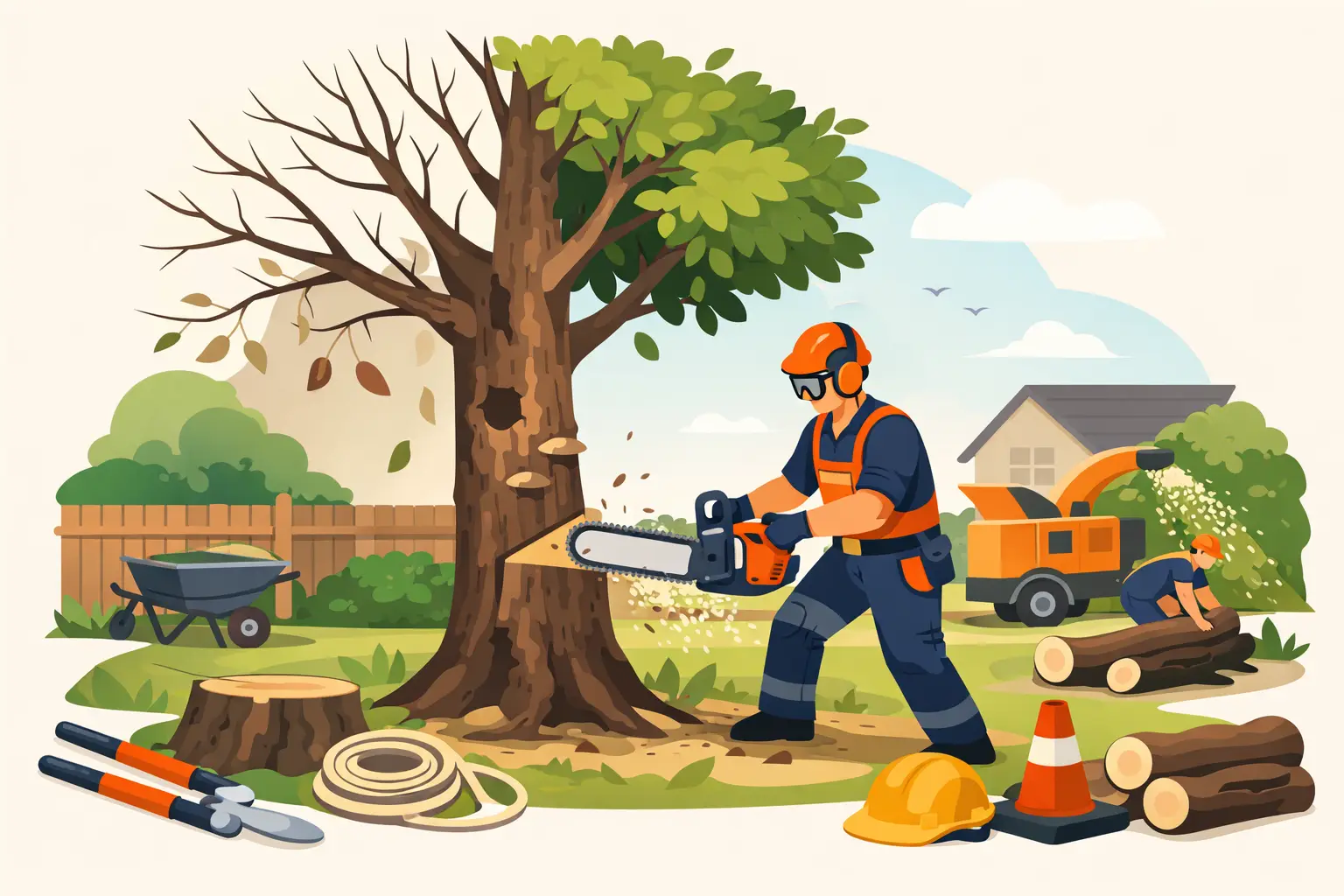
A tree can look mostly green and still be failing where it counts. Fungal decay may hollow the trunk, disease can weaken major limbs, and a dead root system can leave a tree unstable after heavy rain or wind. Removing a diseased backyard tree is often the safest move when the tree could damage a home, fence, driveway, vehicle, or neighboring property.
For homeowners in Plymouth, Minnetonka, Maple Grove, and the West Metro, the decision is rarely just about appearance. It is about knowing whether the tree can be treated, whether it poses an immediate hazard, and how to take it down without creating a bigger problem in the yard.
When a Diseased Tree Needs to Come Down
Not every sick tree needs removal. Some issues can be managed with proper pruning, watering, soil care, or treatment. But removal should be seriously considered when disease has caused significant structural decline or when the tree is in a location where failure could hurt someone or damage property.
A tree should be evaluated promptly if you see several warning signs at once. These can include dead branches throughout the crown, peeling or falling bark, mushrooms or conks growing at the base, deep trunk cracks, soft or hollow areas, large cavities, and sudden leaning. Roots lifting the soil on one side of the tree are another concern, especially after a storm.
The species matters, too. In Minnesota, diseases and pests such as oak wilt, Dutch elm disease, and emerald ash borer can spread or leave a tree weakened beyond recovery. A professional assessment helps separate a tree that needs care from one that has become a removal project.
Location Changes the Risk
A declining tree in an open part of a large lot may not require the same urgency as one hanging over a roof or playground. A smaller dead tree can also be dangerous if it sits near a service line, garage, fence, or busy walkway.
Think about the tree’s size, lean, condition, and targets below it. If a large limb or the full tree were to fall today, where would it land? That simple question often makes the risk clear.
Why Diseased Tree Removal Is Not a DIY Job
Homeowners are often comfortable cutting up a small branch on the ground. Taking down a diseased tree is different. Decay makes the work less predictable because wood that appears solid may break, split, or fail under tension. A damaged trunk may not hold a hinge during a felling cut, and dead limbs can drop without warning.
The risk increases when a tree is close to a house, utility line, landscaped bed, or neighboring yard. There may be no safe direction to drop it in one piece. In those cases, a trained crew may need to remove the tree in controlled sections, using proper rigging and lowering techniques to protect the area below.
Utility lines deserve special attention. Never attempt to trim or remove a tree that is touching, leaning into, or near energized power lines. Call the utility provider if there is an immediate electrical concern. Tree work around lines requires the right clearance, training, and planning.
Hiring an insured, experienced tree service also means the job includes more than the cutting. A good crew plans access, protects turf and landscaping where possible, manages falling debris, and cleans up the work area when the removal is complete.
What a Safe Removal Process Looks Like
Safe work starts before a saw is started. The crew should inspect the tree for dead limbs, cracks, cavities, lean, and decay at the base. They should also identify nearby structures, overhead lines, gates, gardens, and the best route for equipment and debris.
For a tree with a clear fall zone and sound enough wood to control the cut, removal may involve directional felling. When space is limited or the tree is badly compromised, sectional removal is usually the better choice. The climber or lift operator removes limbs and trunk sections in manageable pieces rather than dropping the full tree.
The right method depends on the site. Sectional removal takes more time than simply felling a tree, but it can be the safer option around homes and tight suburban lots. It also reduces the chance of crushed shrubs, damaged fences, or impact damage to the lawn.
After the tree is down, the crew cuts material into manageable pieces, hauls away brush and logs as agreed, and clears the work area. Stump grinding can be scheduled when you want to remove the remaining stump and make the space easier to mow, replant, or landscape.
Protect Nearby Trees From Disease Spread
Removal may stop a diseased tree from becoming a larger problem, but timing and handling matter. Some diseases spread through insects, root connections, or contaminated pruning equipment. That is one reason a diagnosis is worth getting before cutting.
Oak wilt is a good example in the Twin Cities area. Infected oaks may need prompt action, but pruning and removal timing should be handled carefully because fresh wounds can attract insects that spread the disease. Nearby oaks may also need evaluation if root graft transmission is a concern.
With Dutch elm disease, fast removal and proper disposal of infected wood can help reduce habitat for the beetles that carry the disease. Ash trees affected by emerald ash borer may decline over time, becoming brittle and harder to remove safely. Waiting until a dead ash tree is unstable often makes the project more difficult and may increase the cost.
Do not move diseased firewood to another property unless you know it is permitted and safe to do so. Local regulations and disposal guidance can vary based on the pest or disease involved. A knowledgeable local tree service can explain the practical handling options for your specific situation.
Questions to Ask Before Scheduling Removal
Clear communication makes a difficult project easier. Before work begins, ask how the crew plans to remove the tree, whether they expect to use a lift or climb it, and what areas of the property need to be kept clear. Confirm what is included in the estimate, including brush hauling, wood removal, stump grinding, and final cleanup.
It is also smart to ask about access. A backyard gate, narrow side yard, soft lawn, or steep grade can affect the equipment and approach. Let the crew know about irrigation heads, septic components, invisible pet fences, garden beds, and any other features that may not be obvious from the driveway.
If the tree is near a property line, talk with your neighbor before the scheduled date. This is especially helpful when crews need temporary access or when branches extend over the adjoining yard. A short conversation can prevent confusion on removal day.
Do Not Wait for the Next Storm
Storms do not create every tree failure. Often, they expose damage that was already there. A diseased tree with decay, dead limbs, or weak roots is more likely to fail when wind, wet snow, or saturated soil adds pressure.
If you notice a new crack, sudden lean, broken main limb, or roots pulling out of the ground, keep people away from the area. Do not park beneath the tree or try to pull on branches yourself. Emergency tree work is safest when the hazard zone is left undisturbed until a professional can assess it.
Plan the Yard After the Tree Is Gone
Tree removal can change sunlight, drainage, privacy, and the look of a backyard. Before choosing a replacement tree, consider how much sun the area will receive after removal and whether the original disease or pest could affect the new planting.
Avoid immediately planting the same vulnerable species in the same spot if disease was a major factor. A more diverse mix of trees helps reduce the chance that one pest or disease will affect the whole property. If you grind the stump, allow for the settling and wood-chip mix left in the area before installing new sod or planting.
A diseased tree does not always look urgent from the kitchen window, but conditions can change quickly. Getting a clear assessment early gives you more choices, safer scheduling, and a cleaner result. Xtreme Tree Service MN approaches removal with careful planning, safe execution, and thorough cleanup so your property is ready for what comes next.