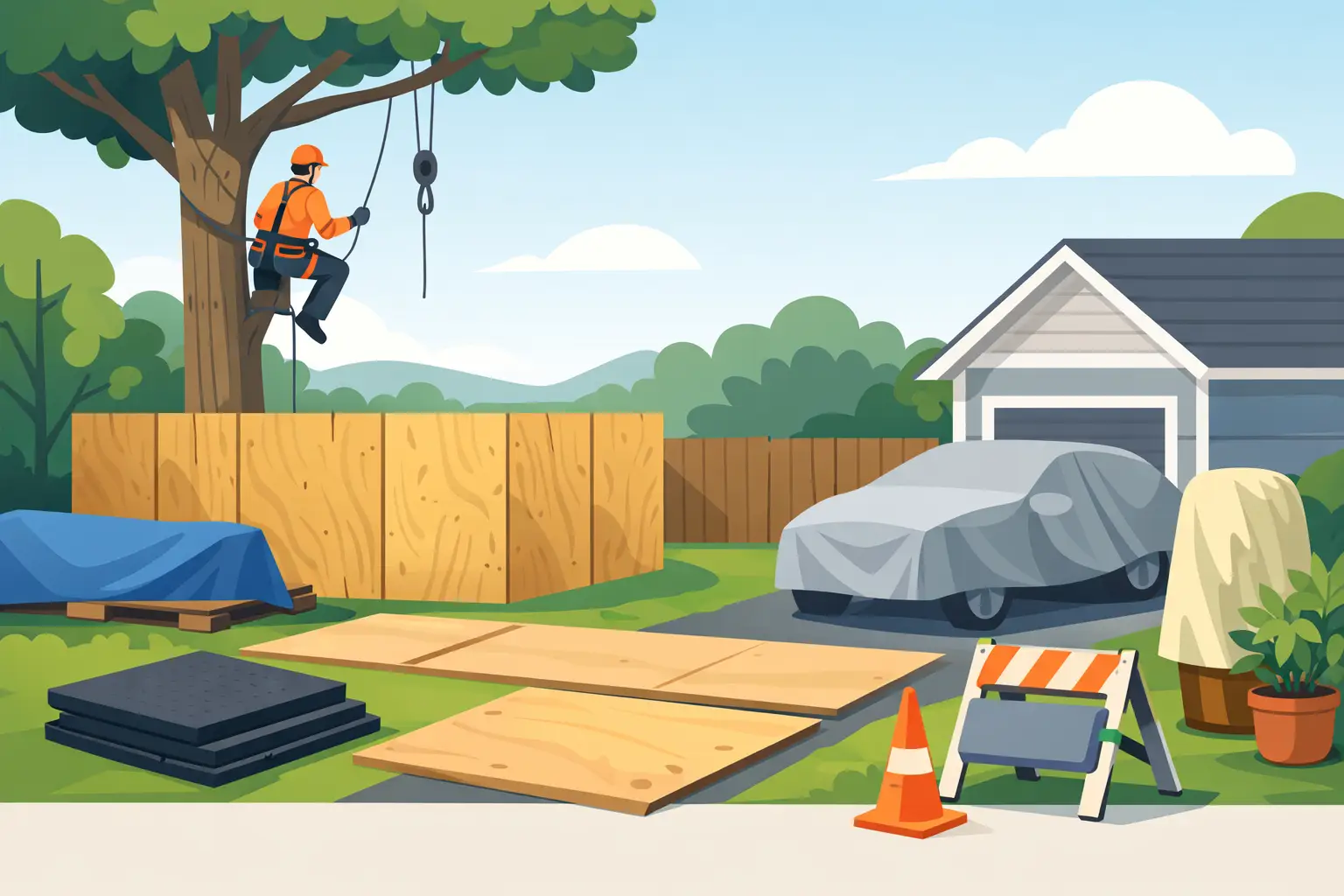
A large limb can be removed safely and still cause expensive damage if the job is not planned around the property. Tree work property protection is more than keeping a branch off the roof. It means looking at the whole work area before the first cut: the home, driveway, lawn, gardens, fences, utility lines, vehicles, and the people who use the property.
For homeowners and property managers in Plymouth, Minnetonka, Maple Grove, and the West Metro, this matters because mature trees often grow close to homes and well-maintained landscaping. A crew should have a clear plan for getting the tree down or trimmed while keeping the rest of the site in good condition.
What Tree Work Property Protection Looks Like
Good protection starts with an on-site assessment. The crew needs to identify where branches can safely land, which direction a tree naturally leans, whether decay affects the wood, and how much room is available around the work zone. A straightforward removal in an open backyard is very different from removing a damaged oak wedged between a garage, a fence, and a row of spruce trees.
The plan should account for more than the tree itself. Crews need to locate sprinkler heads, landscape lighting, septic components, garden beds, patios, and overhead service lines. When a homeowner points out concerns before work begins, the crew can plan around them instead of discovering them after equipment is already on site.
Property protection also includes setting a controlled work area. This may mean moving vehicles, keeping children and pets inside, placing protective mats where equipment will travel, and keeping the drop zone clear. These basic steps reduce unnecessary risk and help the work move faster.
Every Property Needs a Different Removal Plan
There is no single method that fits every tree. If there is enough open space, a tree may be safely felled in one planned direction. That can be efficient, but only when the tree’s condition, lean, wind, and available landing area support that approach.
In tighter spaces, a tree is often removed in sections. The crew climbs or uses appropriate access equipment, removes limbs in manageable pieces, and lowers larger wood with ropes when needed. Sectional removal takes more time than dropping a tree in an open yard, but it gives the crew better control around roofs, decks, sheds, and neighboring property.
The same idea applies to trimming. Branches over a roof or driveway should not simply be cut and allowed to fall. A careful crew controls the pieces, especially when working above fragile landscaping, exterior fixtures, or parked vehicles. The extra planning is worth it when it prevents a small pruning job from becoming a repair project.
Lawn and Landscape Protection
Lawns can be damaged by repeated foot traffic, heavy wood, and equipment, particularly after rain or during spring thaw. Soft ground is more likely to rut under the weight of trucks, loaders, or stump grinders. Sometimes the best choice is to wait for better ground conditions. In other cases, protective ground mats and a planned access route can limit impact.
Not every lawn mark can be avoided during major tree removal. A large tree produces heavy logs, and access has to be practical for safe work. The right expectation is not that the yard will look untouched during a major project. It is that the crew will use reasonable care, avoid unnecessary traffic, and clean up the work area when the job is finished.
Garden beds deserve the same attention. Smaller branches can often be carried out by hand rather than dropped into planted areas. Larger sections may need to be roped down or redirected. Before work starts, point out newly planted shrubs, irrigation lines, decorative stone, and areas that are especially important to protect.
Roofs, Structures, and Utilities
Branches rubbing a roof, hanging over a garage, or growing into a service line require careful decisions. Removing every branch near a structure is not always the right answer. Proper pruning should reduce risk while preserving the tree’s health and shape whenever possible.
For branches near electrical lines, homeowners should not attempt trimming on their own. Utility conductors create serious hazards, and clearance work may require coordination with the utility provider. A professional tree crew should recognize when the job needs that additional step instead of treating energized lines as a routine obstacle.
Dead or storm-damaged limbs are unpredictable. Wood that looks solid from the ground may be cracked, hollow, or hung up in another branch. That is why controlled rigging, proper equipment, and an established drop zone matter. The goal is to keep the work controlled from the first cut until the last piece is on the ground.
Stump Grinding Without Unwanted Surprises
Removing a stump can improve the appearance and usability of a yard, but stump grinding also needs planning. The grinder works below ground level, and its cutting wheel can throw wood chips and debris. Nearby windows, siding, vehicles, gardens, and fences should be protected before grinding begins.
Utility locates are also part of responsible stump work. Gas, electric, communications, and other buried lines may not always be obvious from the surface. A stump near a utility marker, retaining wall, irrigation system, or underground drainage needs a closer review before grinding.
After grinding, the remaining chips can be left for use as mulch or removed, depending on the project. Homeowners should also understand that the ground may settle as roots decay. If the area will be reseeded, landscaped, or used for a new planting, plan for soil and grading after the stump work is complete.
Cleanup Is Part of Protecting the Property
A clean job site is not an extra. It is part of finishing the work correctly. Branches, logs, sawdust, and small debris can create tripping hazards and make it difficult to see whether a lawn, driveway, or garden area needs attention.
Cleanup should include hauling away agreed-upon wood and brush, clearing hard surfaces, and doing a final walk-through of the work area. Small twigs and sawdust are normal after tree work, but the property should not be left looking like the crew rushed to the next job.
It also helps to discuss firewood before the work begins. Some homeowners want usable logs cut to manageable lengths. Others want all wood removed. Clear communication prevents a pile of logs from becoming an unexpected problem after the tree is down.
Questions to Ask Before Hiring a Tree Crew
A good estimate should explain how the crew plans to access the work area, handle large wood, protect nearby structures, and dispose of debris. You do not need a technical lecture, but you should get direct answers.
Ask whether the tree will be removed in sections, whether equipment will cross the lawn, and what protection will be used around gardens or hardscape. If the job is near utility lines, ask how that risk will be handled. For storm damage, ask what will be stabilized first and whether the crew can safely address hanging limbs before additional cleanup begins.
It is also reasonable to ask about insurance coverage and whether the estimate includes cleanup. Price matters, but the lowest bid can become costly if it leaves out the planning, equipment, or labor needed to protect the site.
Clear Planning Makes Tree Work Safer
Tree work often starts because something already feels urgent: a dead ash near the house, a branch over the driveway, storm damage after high winds, or a tree that has outgrown its space. Acting early usually gives you more options and a better chance to schedule work under favorable conditions.
At Xtreme Tree Service MN, the focus is safe removal, careful trimming, clear communication, and cleanup that respects the property. Before approving any project, make sure the plan fits your tree, your yard, and the structures you need protected. That conversation is often the difference between simply getting a tree cut down and getting the job done right.