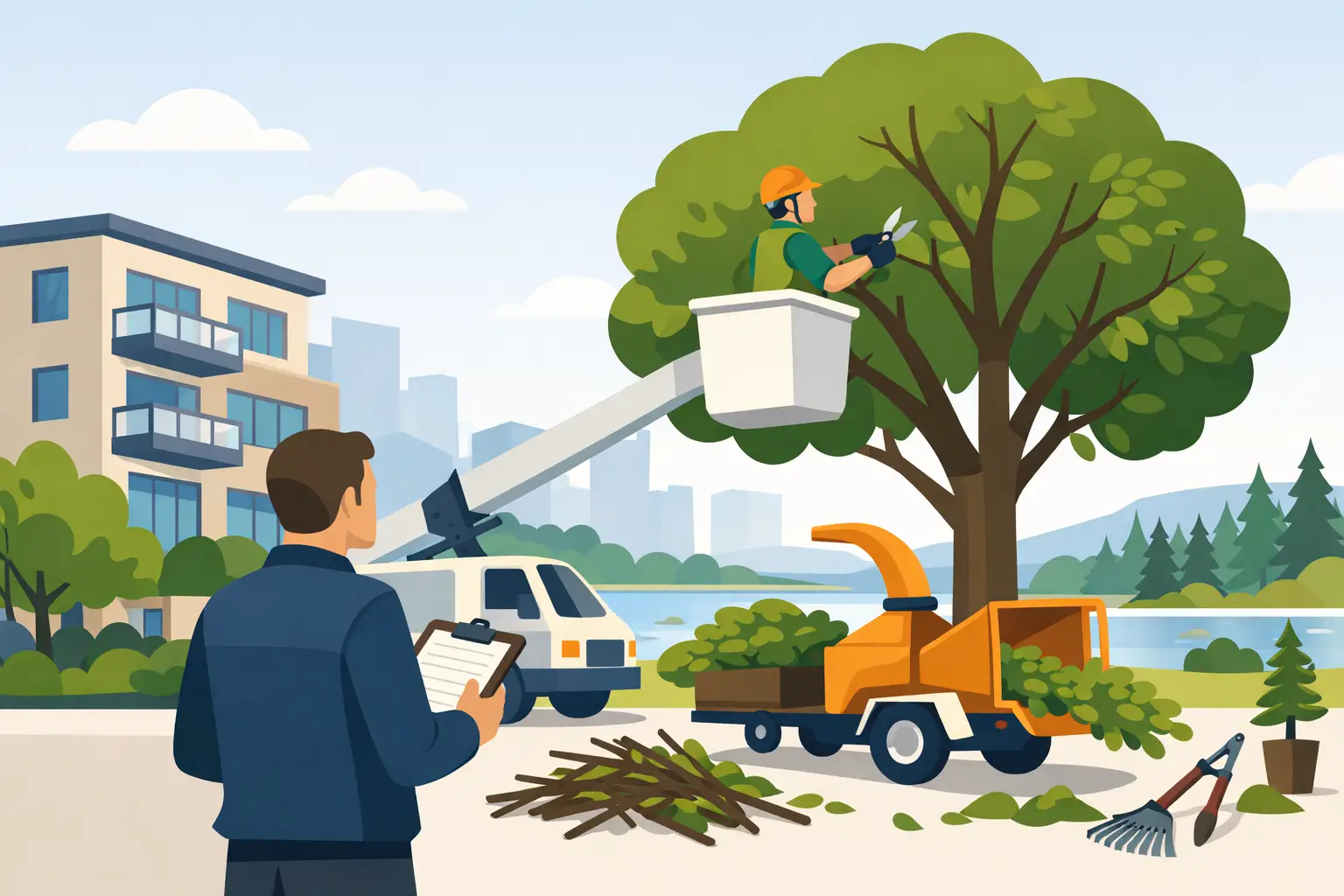
A fallen limb over a parking stall, a branch scraping a roof, or a dead ash tree near a sidewalk can turn into a tenant complaint, a repair bill, or a safety issue fast. This property manager tree maintenance guide is built for Plymouth, Minnetonka, Maple Grove, and West Metro properties where trees add value but also need regular attention.
Tree care is not just about keeping a site looking neat. For property managers, it is part of risk management, curb appeal, tenant satisfaction, and long-term property upkeep. A clear plan helps you address problems before they become urgent and makes storm response far easier when bad weather hits.
Start With a Property-Wide Tree Inspection
Walk the property at least twice a year, usually in spring and fall. Do another check after major wind, heavy snow, ice, or saturated soil. You do not need to diagnose every tree issue yourself, but you should know what deserves a closer look from a qualified tree crew.
Pay special attention to trees near buildings, parking lots, sidewalks, playgrounds, drive lanes, utility lines, fences, and outdoor seating areas. A tree in an open lawn may have time to decline without creating an immediate concern. The same tree leaning over a busy sidewalk needs faster action.
Look for visible changes such as dead or hanging limbs, split branch unions, cracks in the trunk, mushrooms around the base, exposed roots, hollow areas, sudden leaf loss, or a new lean. Low branches can also create problems when they block signs, lighting, security cameras, delivery access, or sightlines at a driveway exit.
Keep a simple record of what you find. Note the tree location, condition, date observed, photos, and whether the issue is routine or urgent. This gives your maintenance team a useful history and helps support clear decisions when budgeting for tree work.
Prioritize Tree Work by Risk, Not Appearance
Not every overgrown tree needs immediate trimming, and not every dead tree creates the same level of risk. Prioritize work based on the chance of failure and what could be damaged if a branch or tree comes down.
High-priority work usually includes dead trees near occupied areas, large dead limbs over parking or pedestrian traffic, storm-damaged trees, trees pressing against structures, and branches interfering with utility service. These conditions should be evaluated promptly, especially when more storms are in the forecast.
Medium-priority work includes trees that are overgrown, rubbing against a roof, blocking exterior lighting, or starting to crowd a building. The concern may not be urgent today, but scheduled pruning can prevent costly roof, siding, gutter, or pavement issues later.
Lower-priority work is generally cosmetic pruning, selective shaping, and routine removal of small volunteer trees. These tasks still matter for appearance and long-term site care, but they can often be grouped into planned seasonal service instead of handled as a rush call.
Build Seasonal Tree Maintenance Into Your Schedule
Minnesota weather puts trees through a lot. Heavy snow, ice, wind, wet spring soil, summer storms, and dry periods can all expose weak branches and stressed trees. A seasonal plan lets you schedule work when access and conditions make sense while leaving room for emergency response.
Spring: Check for Winter Damage
Spring is a good time to inspect trees for broken limbs, cracked branches, and snow load damage. Before leaves fully fill in, crews can often see structural issues more clearly. It is also a practical time to remove limbs hanging over walkways, entrances, and parking areas before outdoor activity increases.
Check drainage near tree bases as well. Standing water and compacted soil can stress roots over time. If a tree suddenly looks thin, loses leaves early, or develops dieback in its canopy, document it and schedule an assessment.
Summer: Manage Clearance and Storm Exposure
Summer tree work often focuses on clearance. Branches grow into buildings, over sidewalks, and around signs faster than many managers expect. Trim back limbs that contact roofs or siding, reduce obstruction around lighting and cameras, and maintain clear access for service vehicles and emergency crews.
Summer storms are also a major factor in the West Metro. Before storm season peaks, remove deadwood and address limbs with visible cracks or poor attachment points. Pruning does not make a tree storm-proof, but removing obvious weak material can reduce avoidable damage.
Fall: Prepare for Snow and Wind
Fall is a strong time to plan larger pruning projects, removals, and stump grinding before winter conditions complicate access. It is also the right time to evaluate trees that have dropped leaves early or shown signs of decline during the growing season.
Keep leaves and debris from piling up around drains, curbs, and building entrances. Tree cleanup is not only an appearance issue. Wet leaves can create slip hazards, block drainage, and make it harder to spot fallen branches.
Winter: Address Access and Emergency Concerns
Winter work depends on weather, site conditions, and the type of project. Emergency removal and hazardous limb work may need immediate attention regardless of season. Planned work can often be completed in winter as well, provided the crew can safely access the area and protect the property.
Watch for heavy snow loading on evergreens and multi-stem trees. Do not try to knock snow or ice off large limbs yourself. A branch under tension can break without warning.
Use Pruning for Safety and Tree Health
Good pruning is selective. The goal is to remove dead, damaged, diseased, rubbing, or poorly placed branches while keeping the tree’s natural structure intact. Cutting too much at once can stress a tree, trigger weak regrowth, and leave it more exposed.
Avoid requesting a severe flat-top cut just to make a tree smaller. Topping often leads to weak shoots, decay, and more frequent maintenance. If a tree has outgrown its space, the better solution may be targeted reduction pruning or removal and replacement with a more suitable species.
For multi-unit communities and commercial sites, set practical clearance standards. Keep branches off roofs and away from gutters. Maintain sightlines at entrances and exits. Raise limbs enough for pedestrians, maintenance equipment, and delivery vehicles where appropriate. The right clearance depends on the area, so a parking lane, sidewalk, and landscaped courtyard should not all be treated the same way.
Know When Removal Is the Safer Choice
Tree removal is not always the first answer, but delaying removal of a clearly hazardous or declining tree can increase liability and damage risk. Removal may be the practical choice when a tree is dead, badly decayed, structurally unstable, heavily storm-damaged, or growing too close to a building or utility line.
Consider the full site impact before deciding. A mature tree provides shade and visual value, so removal can change the look and heat exposure of a property. On the other hand, a large compromised tree near tenant areas may not be worth the risk or repeated trimming costs.
Ask for a clear explanation of the recommended scope. A professional estimate should identify whether the work involves trimming, removal, hauling, stump grinding, or emergency stabilization. It should also address site access, nearby structures, landscaping protection, and cleanup expectations.
Have a Storm Response Plan Before You Need One
The worst time to decide who handles storm damage is after a branch has landed on a roof or blocked access to a building. Keep a current tree service contact on file and make sure onsite staff know who can authorize emergency work.
After a storm, first secure the area. Keep residents, employees, and visitors away from downed limbs, hanging branches, damaged trees, and any tree touching a utility line. Treat all downed wires as energized and contact the utility provider or emergency services when appropriate.
Take photos from a safe distance and document blocked entrances, vehicle damage, roof contact, or hazards near public areas. Then arrange for professional assessment and removal. Fast response matters, but crews should not rush into unsafe conditions. Trees under tension, partially fallen trunks, and broken limbs caught in other branches require careful equipment and controlled cutting.
Choose a Tree Service That Communicates Clearly
Property managers need more than a crew that can cut branches. You need reliable scheduling, clear scope, safe execution, and cleanup that leaves the site ready for tenants and visitors. Before approving work, confirm who will communicate with your point of contact, how access will be handled, and what happens to logs, brush, and stump debris.
For larger sites, it can help to group routine work into one visit. Combining pruning, removal, hauling, and stump grinding may reduce repeated disruption and make budgeting easier. Emergency issues should still be handled separately when safety is involved.
Xtreme Tree Service MN works with homeowners and property managers who need straightforward tree care, safe removal, and a clean job site when the work is done. A fast, no-pressure estimate makes it easier to plan routine projects before they turn into urgent calls.
A well-managed tree line should not be something tenants notice because it is causing trouble. Regular inspections, practical pruning, and prompt action on hazards keep the property safer, cleaner, and easier to manage through every Minnesota season.