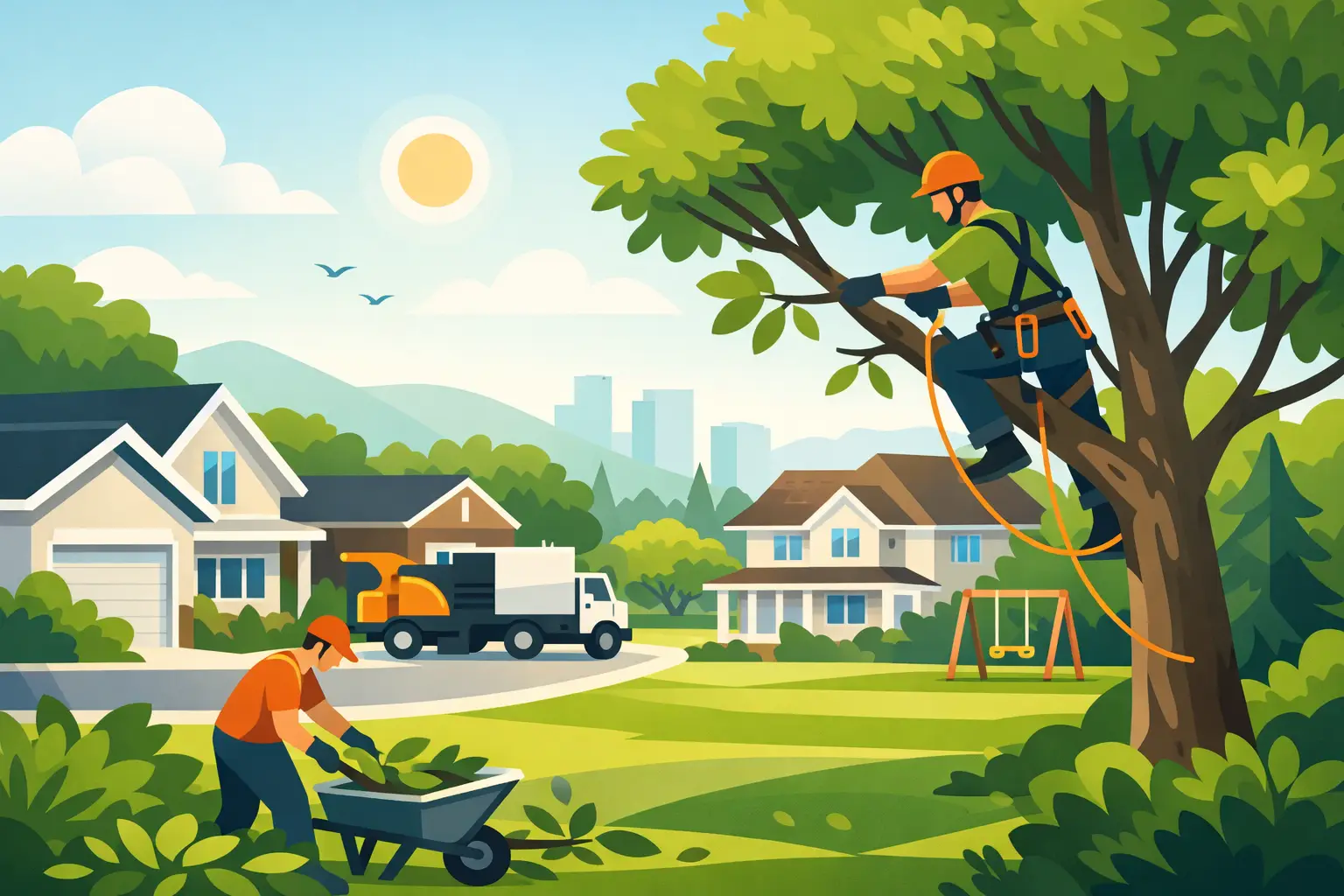
A branch resting on a roof, a dead ash tree near the driveway, or a stump left behind after removal can turn into more than a yard issue. Residential tree care helps homeowners protect their property, keep trees healthy when possible, and address hazards before weather makes them worse.
For homeowners and property managers in Plymouth, Minnetonka, Maple Grove, and the surrounding West Metro, the right approach is rarely just cutting whatever looks overgrown. Good tree work starts with identifying what the tree needs, what is at risk nearby, and whether pruning, removal, or storm cleanup is the safest answer.
Start With the Safety Risks in Your Yard
Trees can look healthy from the ground while still carrying serious problems overhead. Dead limbs, cracked branch unions, hollow sections of trunk, and roots lifting out of the soil are all warning signs worth taking seriously. A tree does not need to be completely dead to create a risk for a house, garage, fence, vehicle, or neighbor’s property.
Pay close attention after high winds, heavy snow, or ice. Minnesota weather puts repeated stress on mature trees, especially those with dense canopies or weak branch structure. A limb that is partially broken may stay in place for days or weeks, then come down without much warning.
Signs that should prompt a professional inspection include:
- Large dead branches hanging over a roof, driveway, patio, or play area
- Cracks where major limbs join the trunk
- A tree suddenly leaning or soil heaving around its base
- Mushrooms or soft, decayed wood near the trunk base
- Limbs touching power lines or growing into service lines
- Storm-damaged branches that are split, hanging, or caught in other limbs
Some issues are visible from the yard. Others require a closer look from someone who understands tree structure and can assess the safest way to complete the work. Climbing, cutting, and lowering branches near a home is not a job to handle with a ladder and a chainsaw.
Pruning Helps When It Has a Clear Purpose
Tree trimming is often requested because a canopy looks overgrown, but appearance is only one reason to prune. Proper pruning can remove deadwood, reduce weight on a long limb, improve clearance over a driveway, and keep branches away from a structure. It can also help young trees develop stronger form before bad growth patterns become expensive problems.
The goal is not to make a tree as small as possible. Cutting too much at once can stress the tree, encourage weak new growth, and leave it more vulnerable to disease or sun damage. Topping a tree by cutting major limbs back to stubs is especially hard on many species and often creates more maintenance problems later.
A better approach is selective pruning. That means removing damaged, crossing, crowded, or poorly attached branches while keeping the tree’s natural shape. In some cases, light thinning is enough. In others, a longer limb needs reduction to lower the chance of failure over a roof or walkway.
Timing depends on the species and the work needed. Dead or dangerous limbs should be handled when they are found. Routine pruning is often easier during dormant months, when leaves are down and the tree’s structure is easier to see. However, there is no one calendar rule for every tree. Oaks, for example, may need special timing to help reduce disease risk, while storm damage should not wait simply because it is not the ideal pruning season.
Know When Removal Is the Better Choice
Homeowners naturally want to save a mature tree when they can. Healthy trees add shade, curb appeal, and value to a property. But removal is often the responsible choice when a tree is dead, severely declining, structurally unsound, or too close to a home or utility line.
A tree may also need removal if its roots are causing repeated problems with a foundation area, sidewalk, driveway, or underground utilities. That does not mean every surface-rooted tree should come down. Roots are normal, and many issues can be managed. The decision depends on the tree’s condition, size, location, and the actual risk it creates.
Removal is also practical when an invasive or disease-prone tree is unlikely to recover. In the West Metro, ash trees affected by emerald ash borer are a common example. A declining ash can become brittle quickly, making removal more difficult and potentially more dangerous if it is left too long.
The best time to remove a hazardous tree is before it becomes an emergency. Planned removal gives the crew more options for protecting the home, landscaping, and nearby structures. Emergency work after a storm is sometimes unavoidable, but it can involve blocked access, wet ground, damaged fences, or branches resting on a roof.
Do Not Treat Stumps as an Afterthought
After a tree is removed, the stump still affects how you use the yard. It can be a tripping hazard, take up planting space, interfere with mowing, and send up new shoots depending on the species. Left in place, it also slows down landscaping plans for a garden bed, patio, fence, or new tree.
Stump grinding removes the visible stump below ground level and leaves the area ready for topsoil, grass seed, or a new landscape plan. The depth needed depends on what will go in that location next. If you are installing a patio or planting a replacement tree nearby, say so before the work begins. That helps set the right expectations for the site.
Grinding produces wood chips and soil material. Some homeowners use the material as mulch elsewhere in the yard, while others prefer it hauled away for a cleaner finish. Either option can work, but it should be discussed before the job starts.
Storm Damage Calls for a Calm, Safe Response
After a storm, the first priority is safety. Keep people and pets away from downed limbs, leaning trees, and anything near electrical lines. If a branch has brought down a utility line or appears to be in contact with one, stay clear and contact the utility provider or emergency services as appropriate. Do not attempt to move it yourself.
For damage involving a roof, take photos from a safe location if you can do so without going near unstable limbs. Then arrange for professional tree help and contact your insurance provider. Avoid making broad cuts or pulling on branches that are under tension. Storm-damaged wood can shift suddenly, and a branch that looks loose may be supporting more weight than expected.
A qualified crew can remove hanging limbs, clear access points, cut and haul debris, and determine whether the remaining tree can be safely pruned or needs to come down. Thorough cleanup matters here. Once the immediate hazard is removed, homeowners need their driveway, yard, and outdoor spaces usable again.
What Good Tree Service Should Look Like
Tree work is not only about getting wood on the ground. It is about controlling where it lands, protecting what is underneath it, and leaving the property in good shape afterward. Before work starts, you should understand what will be removed, how the crew will access the area, whether equipment will cross the lawn, and what cleanup is included.
Clear communication is especially valuable when a tree is close to a house, garden, fence, or neighboring property. A dependable crew will explain the plan, point out any access limitations, and set realistic expectations. Some tight yards require careful sectional removal and controlled lowering. Other jobs allow for more efficient work because there is open space to drop material safely.
Price matters, but the lowest estimate is not always the best value if it leaves unanswered questions about insurance, cleanup, property protection, or disposal. Compare the scope of work, not just the number. Make sure the estimate identifies the tree or branches being addressed, stump work if needed, hauling, and any limits on what the crew can access.
A Simple Seasonal Plan for Healthier Trees
Routine attention can prevent many urgent calls. Walk your property a few times each year, particularly after winter and major storms. Look up for deadwood, check for limbs rubbing the roof or siding, and watch for changes in a tree’s lean or canopy color.
In spring and summer, keep lawn equipment away from trunks and avoid piling mulch directly against the bark. A wide, shallow mulch ring is better than a mulch mound. During dry stretches, younger trees benefit from slow, deep watering. In fall, remove broken limbs before snow and ice add more weight.
Mature trees do not need constant cutting, and every tree does not need removal at the first sign of trouble. The right residential tree care plan is practical: maintain healthy trees, address hazards early, and bring in experienced help when the job involves height, heavy wood, power lines, or property at risk.
If something in your yard does not look right, it is usually easier to get a clear answer before the next storm puts it to the test. A straightforward estimate and an honest assessment can help you make the next decision with confidence.