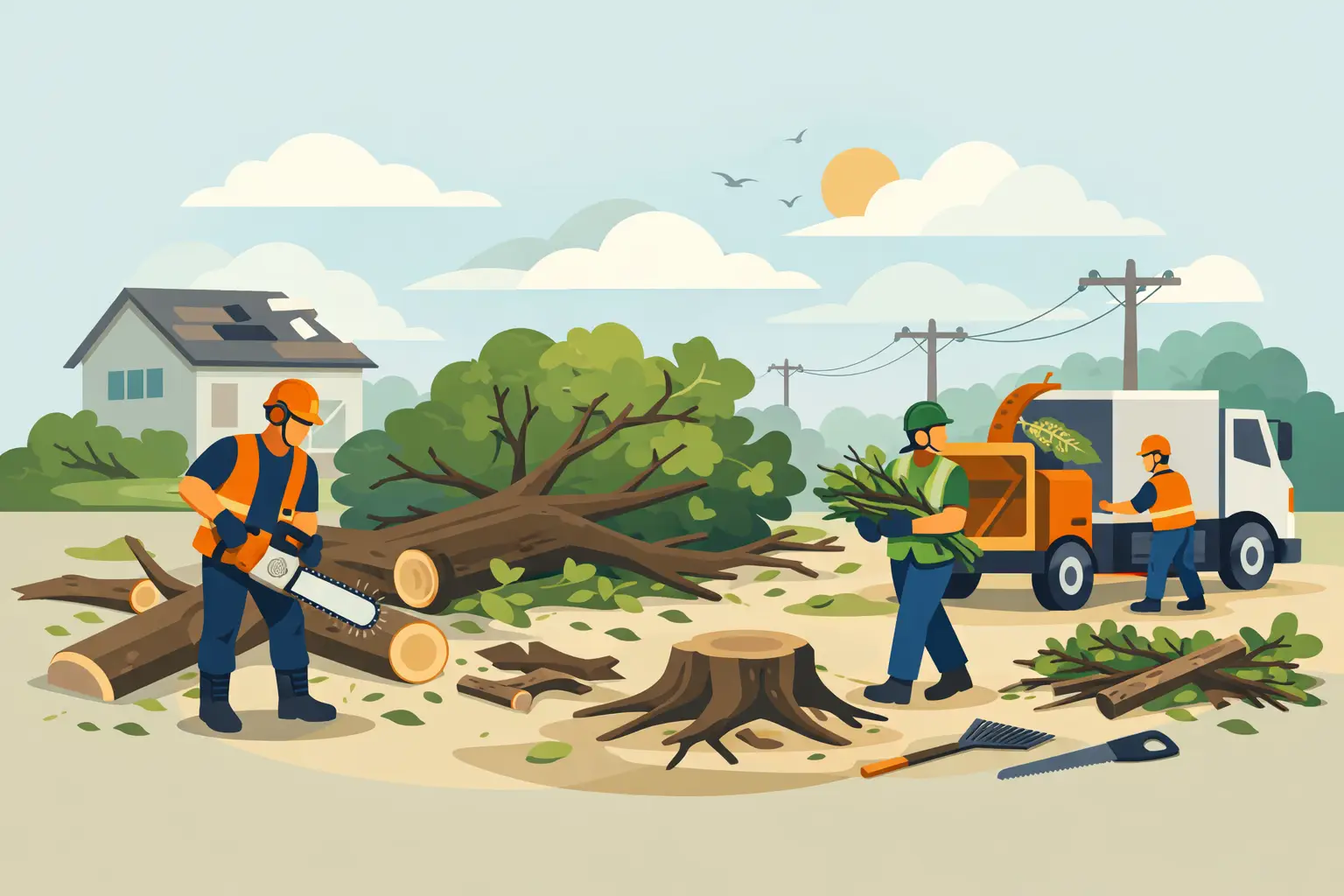
The storm is over, but the yard usually tells a different story. A few branches in the grass is one thing. A split trunk leaning toward the house, limbs hanging over the driveway, or a tree tangled near a power line is a different problem entirely. This guide to post storm tree cleanup is built for homeowners and property managers who need to sort out what is urgent, what can wait, and what should never be handled without the right equipment and crew.
What to do first after storm damage
Start with distance, not cleanup. Walk the property slowly and look from a safe angle before touching anything. After a strong storm, trees can stay under tension even when they look stable, and broken limbs can fall without warning.
If a tree or branch is touching a power line, close to a downed wire, or blocking access to a road or driveway, treat that as an immediate hazard. Keep people and pets away from the area. If a large limb is resting on a roof, fence, garage, or vehicle, avoid going underneath it to inspect the damage.
It also helps to take clear photos before any work begins. That can be useful for insurance, for documenting conditions on a rental or managed property, and for getting a faster estimate from a tree service company.
A practical guide to post storm tree cleanup priorities
Not every storm-damaged tree needs the same response. The fastest way to make good decisions is to separate the mess into three categories: emergency hazards, unstable damage, and routine debris.
Emergency hazards include trees on structures, trees on vehicles, broken trunks, uprooted trees leaning toward occupied space, and any situation involving utilities. These should be handled first and by trained professionals.
Unstable damage is the next level down. That might mean large cracked limbs still hanging in the canopy, a tree that lost a major lead but is still standing, or a root plate that has lifted but not fully failed. These situations may not be an active emergency at this exact moment, but they can turn into one quickly, especially with more wind.
Routine debris is the lower-risk cleanup most people picture after a storm – smaller branches, leaves, twigs, and pieces of brush scattered across the lawn. Even then, it pays to stay alert. A branch that looks loose and harmless may still be pinned, loaded, or partially suspended.
What homeowners can usually handle safely
Small debris pickup is often reasonable if the area is clear and the damage is limited. Gathering twigs, raking leaves, and moving light branches off open lawn can help restore access and make the property look less chaotic.
Use gloves, sturdy boots, and common sense. If a branch is larger than you can move comfortably, leave it alone. If it is wedged under a fence, leaning against another tree, or partly suspended, it is not routine yard waste anymore.
There is also a difference between cleaning up and cutting up. Picking up storm litter is one thing. Cutting fallen limbs with a chainsaw, especially after they have landed awkwardly or under pressure, is where injuries happen fast.
What should be left to a tree crew
Storm cleanup gets dangerous when wood is bent, split, twisted, or loaded against another object. That is why many of the hardest jobs do not look dramatic from the ground. A branch can appear settled while still holding enough stored energy to kick, roll, or snap when cut.
Professional help is the right call when a tree is on a structure, partially uprooted, cracked through the trunk, hung up in another tree, or too large to remove by hand. It is also the safer choice when access is tight and nearby landscaping, fences, sheds, or neighboring property need to be protected during removal.
This is where experience matters. Cleanup is not just about getting wood off the property. It is about controlling the removal, protecting what is still intact, and leaving the site safe when the work is done.
A guide to post storm tree cleanup around homes and driveways
Damage near a house or garage needs a careful approach. Even if the tree did not fully land on the roof, limbs can shift as they are removed. Weight may be resting in places that are not obvious from the ground, and improper cuts can cause more structural damage.
Driveways create their own challenges. A fallen tree across the pavement may block vehicles, but it can also trap tension between curbs, retaining edges, or parked equipment. Clearing it the wrong way can send a log rolling or twisting unexpectedly.
Property managers have another layer to consider: access and liability. If storm damage affects a shared drive, parking area, sidewalk, or tenant entrance, quick response matters not just for convenience but for safety exposure. In those situations, clean communication and fast field assessment are just as important as the actual cutting and hauling.
When a damaged tree can be saved
Not every storm-damaged tree has to come down. Some can be pruned, reduced, or structurally cleaned up and remain good long-term trees. It depends on species, age, overall health, how much of the canopy was lost, and where the damage occurred.
A small to moderate limb failure on an otherwise healthy tree may be repairable with proper pruning. A mature tree with a major trunk split, severe lean, or root failure is a different story. Once the structural integrity is gone, keeping the tree may not be worth the risk.
There is a trade-off here. Saving a tree can preserve shade, screening, and property appearance. But preserving the wrong tree can create repeat costs and an ongoing hazard. A straightforward inspection from a qualified tree crew helps sort out whether pruning is enough or removal is the more responsible choice.
Cleanup, hauling, and what a good job site should look like
Storm response is not finished when the tree is on the ground. Good cleanup matters because the remaining brush, wood, sawdust, and scattered debris are part of the job, not an extra detail.
A well-run crew should think about access, turf impact, nearby plantings, and where debris is staged during the work. On residential properties in Plymouth, Minnetonka, Maple Grove, and the broader West Metro, that often means working around fences, tight side yards, decorative beds, and neighboring structures with limited room for error.
Hauling should be planned, not improvised. The goal is to remove debris efficiently without turning the yard into a second mess. If stump grinding is part of the project after a storm-related removal, that work should also leave the area in a condition that is clear, level, and ready for whatever comes next.
What to expect when you call for storm tree service
The first thing most customers want is a fast answer: Is this urgent, and how soon can it be handled? A good company will ask clear questions about location, tree size, whether anything was hit, and whether utilities are involved. Photos can speed this up.
From there, the process should stay simple. You want a clear estimate, a realistic timeline, and direct communication about what will be removed, what will be hauled away, and what the property will look like when the crew leaves. For emergency work, speed matters, but so does control.
That straightforward approach is one reason local homeowners call companies like Xtreme Tree Service MN after severe weather. They are not looking for a sales pitch. They want safe removal, thorough cleanup, and clear expectations from start to finish.
How to reduce the next round of storm damage
The best storm cleanup is the one you avoid. Trees with deadwood, overextended limbs, weak branch unions, and canopy crowding are more likely to fail when high winds or heavy snow hit. Preventive pruning will not stop every loss, but it can lower the odds of major breakage.
This is especially true for trees hanging over roofs, driveways, play areas, and property lines. Removing weak limbs before storm season is usually cheaper and safer than emergency removal after the fact. The same goes for trees that have been declining for years but keep getting left alone because they are still standing.
If a tree already looks off – leaning more than it used to, dropping large limbs, showing cracks, or lifting soil at the base – do not wait for the next storm to make the decision for you.
After a storm, the pressure to clean everything up fast is real. But the better move is to slow down, sort the hazards properly, and get experienced help where the risk is high. A clean yard matters, but a safe one matters first.