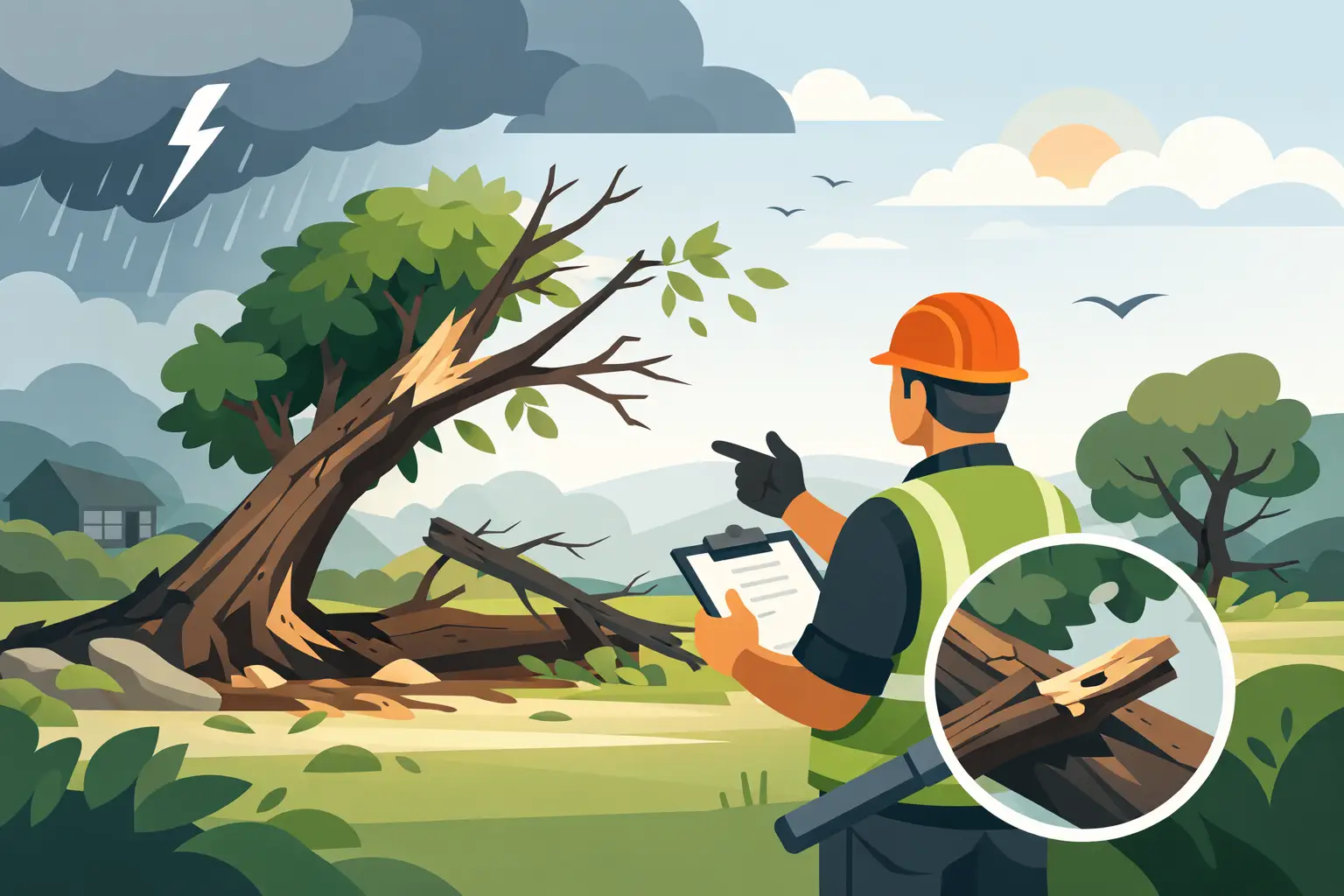
The morning after a strong storm, tree damage is not always obvious from the driveway. A limb may be hanging high over the roof, a trunk may have twisted without fully splitting, or the ground may be lifting around the base without the tree falling over. That is why a solid guide to storm damaged tree assessment matters. The goal is simple – figure out what is dangerous right now, what can be monitored, and what needs professional removal or pruning before it gets worse.
For homeowners and property managers in Plymouth and the West Metro, the safest first step is to slow down and look at the whole site before touching anything. Storm-damaged trees can fail hours or even days after the weather clears. Wind, heavy rain, ice, and saturated soil often leave hidden instability behind.
What to check first after a storm
Start with the area around the tree, not the tree itself. Look for downed power lines, blocked sidewalks or driveways, broken fencing, roof impact, and damage to vehicles or nearby structures. If a branch is on a utility line or even close to one, keep people away and treat it as an emergency.
Next, step back far enough to see the full canopy and trunk. A tree may still be standing but leaning more than it did before the storm. You may notice fresh cracks, torn bark, hanging limbs, or branches lodged in other trees. Those are all warning signs that the tree has taken structural damage.
If the root area looks raised, cracked, or heaved, that is another serious concern. In Minnesota, wet soil and wind can loosen even large, established trees. A tree that shifted at the base may still be upright for now, but it can come down with very little warning.
A practical guide to storm damaged tree assessment
Storm damage is not one-size-fits-all. Some trees can be cleaned up and saved. Others are too compromised to leave standing near a house, garage, parking area, or walkway. The main question is not whether the tree looks bad. It is whether the tree is still structurally sound.
A useful assessment usually comes down to four areas: canopy damage, trunk damage, root damage, and target risk. Target risk means what the tree could hit if it fails. A tree with moderate damage in an open back lot is different from the same tree leaning over a bedroom, garage, or shared entry.
Canopy damage includes broken limbs, split branch unions, and missing sections of the crown. A few broken branches after a storm do not always mean the entire tree needs removal. In many cases, proper pruning can reduce weight, remove failed limbs, and help the tree recover. But when a large portion of the crown is gone, the remaining structure may be unbalanced and prone to more failure.
Trunk damage tends to be more serious. Vertical cracks, deep splits, twisted stems, and bark peeled away from the wood can all point to major structural weakness. A tree can sometimes survive trunk wounds, but survival is not the same thing as safety. If the trunk is compromised, especially low on the tree, removal is often the safer call.
Root damage is easy to miss and often gets underestimated. Soil lifting on one side, exposed roots, or a sudden lean can signal that the root plate has moved. Once that support system is compromised, there is usually no reliable fix for a large tree near a structure.
Damage that usually needs urgent attention
Some storm damage should be treated as immediate. Hanging limbs, also called widowmakers, are one of the biggest hazards because they can drop without warning. Split trunks and partially failed stems are also urgent, especially if the tree is above areas people use every day.
A tree resting on a roof, fence, or another tree should not be considered stable just because it stopped moving. It may be holding under tension, and cutting the wrong section can release that force fast. The same goes for bent or pinned branches. These situations call for professional equipment and controlled removal.
Trees that have shifted at the roots or begun leaning sharply toward a target are another priority. Even if there is no visible crack in the trunk, root failure alone can be enough reason to remove the tree.
Damage that may be manageable
Not every storm-damaged tree is a loss. Smaller broken limbs, scattered branch loss, and minor tip damage can often be addressed with cleanup pruning. A healthy tree with a strong trunk and stable root system may recover well if the damage is limited and the corrective work is done properly.
This is where experience matters. Over-pruning after a storm can create a second problem by removing too much live growth at once. Topping a storm-damaged tree is also a poor fix. It may look like a quick way to make the tree safer, but it often leads to weak regrowth, more decay, and more risk later.
When the damage is moderate, the right approach depends on species, age, tree health before the storm, and location on the property. A mature maple shading the house may be worth corrective work if the structure is still sound. A weak ornamental tree already in decline may not be worth trying to save.
Guide to storm damaged tree assessment by warning sign
If you are deciding whether to call right away, a few warning signs should move the tree to the top of the list. Fresh lean, cracked trunk, root lift, hanging branches, large limbs over the house, and any contact with utilities all deserve quick attention.
Watch for secondary signs too. Sawdust at the base can suggest boring insects moved into stressed wood. Mushrooms around the root flare may point to existing decay that the storm made worse. A tree that looked “fine” before the storm may have already had hidden weakness, and the weather just exposed it.
One of the most common mistakes is focusing only on what fell. Sometimes the bigger issue is what is still standing. The branch on the lawn is obvious. The split scaffold limb over the driveway is the real hazard.
When not to do it yourself
Basic storm cleanup in the yard may be manageable, but storm-damaged tree work gets dangerous fast. If the branch is overhead, if the trunk is split, if the tree is entangled with another tree, or if any part of the job requires a ladder and chainsaw at the same time, it is no longer a DIY task.
There is also the issue of tension and compression in broken wood. Limbs that look settled can spring, roll, or twist as soon as they are cut. That is how people get hurt and how extra property damage happens.
For homeowners, the better move is usually to document the damage, keep people clear, and get a qualified tree crew on site. A company like Xtreme Tree Service MN focuses on safe removal, clear communication, and thorough cleanup, which matters when storm work is urgent and the site is already stressful.
What a professional assessment should cover
A good storm damage assessment should not just answer, “Can this tree be saved?” It should also answer, “Is this tree safe to leave standing where it is?” Those are related questions, but they are not the same.
An experienced crew should evaluate the tree from the crown to the root flare, look at nearby targets, and explain the practical options. That may mean removing failed limbs, reducing weight on damaged leaders, cabling in limited cases, or recommending full removal when the structure is no longer dependable.
The best assessments are straightforward. You should understand what is damaged, why it matters, what can wait, and what should happen now. If there are multiple damaged trees on the property, priority should be based on hazard, not appearance.
After the assessment
Once the immediate hazards are addressed, it helps to think a step ahead. Some trees need follow-up pruning after initial storm cleanup. Others should be monitored over the next season for dieback, leaf loss, fungal growth, or movement at the base.
Storms also reveal long-term maintenance issues. Overextended limbs, crowded canopies, weak branch unions, and deadwood often become the failure points in wind and ice. Preventive pruning does not stop every storm problem, but it can reduce the odds of major breakage.
If a tree comes through with only moderate damage, proper care afterward can improve recovery. That usually means clean pruning cuts, avoiding unnecessary bark injury, watering during dry periods when appropriate, and keeping an eye on delayed decline. But if the tree sits in a high-risk spot and the structure is questionable, removal may still be the wiser choice.
The clearest path after a storm is usually the safest one: treat obvious hazards seriously, do not guess with damaged trees near structures, and get a professional opinion before a small problem turns into a bigger one.