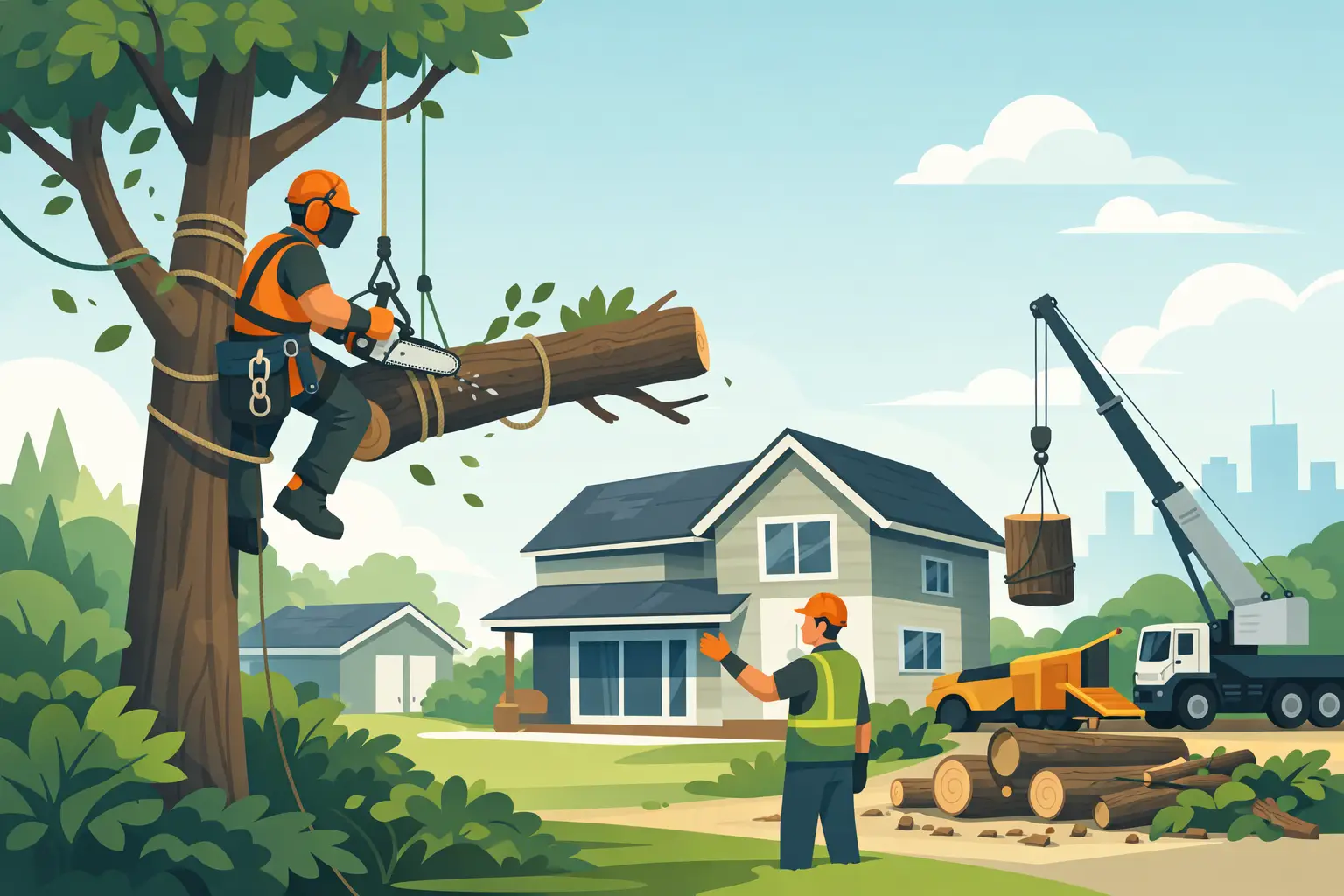
When a tree is leaning over a roof, pressing into a fence line, or dropping limbs near a garage, the job is no longer just tree work. Safe tree removal near structures is about protecting the home, the driveway, the landscaping, and the people who use the property every day. In neighborhoods across Plymouth, Minnetonka, and Maple Grove, that usually means working in tight spaces where there is very little margin for error.
Why safe tree removal near structures takes a different approach
Removing a tree in an open field is one thing. Removing one between a house and a detached garage, or above a patio and utility line, is a different level of risk. The tree may be healthy but poorly placed, or it may already be compromised by rot, storm damage, or root failure. Either way, nearby structures change the plan.
The biggest issue is controlled movement. A tree near a building cannot simply be felled in one piece unless there is enough clear space and the lean works in your favor. Most of the time, the work has to be done in sections. Limbs are removed first to reduce weight and create room. Then the trunk is taken down piece by piece so each cut can be managed instead of guessed.
That slower, controlled method protects more than the main structure. It also helps avoid damage to gutters, decks, sheds, retaining walls, air conditioning units, and neighboring property. On a residential lot, those details matter just as much as bringing the tree down.
What makes a tree high risk near a house or building
Not every close tree is an emergency, but some warning signs should move the job up the list. A visible lean toward the structure is an obvious one, especially if it has changed over time. Large dead limbs over a roofline are another. Cracks in the trunk, hollow sections, root lifting, or soil movement after heavy rain can all point to instability.
Storm damage creates its own problems. A tree may still be standing after high wind, but internal fractures can make it unpredictable. Hanging limbs, split tops, and partially failed trunks often look more stable than they are. That is one reason post-storm removal should be treated carefully, especially when the tree is resting on or above a structure.
There is also the issue of access. Sometimes the tree itself is manageable, but the location is not. Narrow side yards, fenced backyards, overhead wires, and landscaped beds can make routine removal more technical. In those cases, the risk comes from the working conditions as much as the tree.
The role of structure protection before the first cut
A good removal plan starts before equipment is unloaded. The crew should look at drop zones, tie-off points, rigging angles, ground protection, and how debris will move across the property. If there is no safe place to drop material freely, each section needs to be lowered in a controlled way.
This is also where property protection gets real. Plywood, mats, or other surface protection may be needed to reduce impact on lawns, hardscapes, or irrigation areas. Vehicles should be moved. Patio furniture, grills, and portable items should be cleared from the work zone. The more attention paid to setup, the fewer surprises during the removal.
How professionals handle safe tree removal near structures
In most tight residential settings, removal happens from the top down. Smaller branches are cut and lowered first. That opens space and reduces the chance of limbs swinging into the house or catching on nearby features. Once the crown is cleared, the trunk can be removed in shorter sections.
Rigging is often what separates a controlled removal from a risky one. Ropes, pulleys, friction devices, and anchor points allow pieces to be guided down instead of dropped. The goal is not speed for its own sake. The goal is predictable movement. A heavy section that swings unexpectedly can damage siding, crack concrete, or tear up a fence in seconds.
In some cases, equipment access changes the method. A bucket truck or crane may be the safest choice if the site allows it. In other yards, climbing is the only practical option because of gates, overhead obstacles, or limited space. There is no one-size-fits-all approach. The safest plan depends on the tree, the structures around it, and the access available.
Why cleanup is part of safety, not an afterthought
A removal job is not done when the trunk hits the ground. Brush piles, sawdust, wood rounds, and scattered debris create hazards of their own. Nails in old fences, hidden stump roots, and damaged turf can also be left behind if cleanup is rushed.
Thorough cleanup matters for homeowners and property managers because the site needs to be usable again right away. That means hauling away brush, stacking or removing wood as agreed, and leaving the area clear. If stump grinding is part of the job, the finished grade and grindings should also be discussed ahead of time so expectations are clear.
What homeowners should ask before hiring a tree service
The right questions are usually practical ones. Ask how the crew plans to protect the house, garage, fence, and landscaping. Ask whether the tree will be removed in sections and whether rigging will be used. Ask what access they need and what cleanup is included.
It also helps to ask who will be communicating with you before the work starts. Clear expectations matter on jobs near structures because timing, access, and site preparation can affect the outcome. A fast estimate is useful, but a clear plan is what builds confidence.
If the tree is damaged after a storm, describe exactly what is happening. Is it on the roof, hanging over the driveway, blocking access, or split but still standing? The more specific the situation, the easier it is to prioritize the response and prepare the right equipment.
Cost, timing, and why the lowest bid is not always the safest one
Tree removal near buildings usually costs more than open-area removal because it takes more labor, more setup, and more control. That does not mean every high price is justified, but it does mean the cheapest quote may leave out important parts of the job. If one bid assumes a simple drop and another includes sectional dismantling, rigging, and full cleanup, they are not pricing the same service.
Timing can vary too. Some removals can be handled quickly, while others require more planning because of weather, frozen ground, limited access, or nearby utilities. Urgent situations after storms may need immediate stabilization before full removal can be completed. It depends on the condition of the tree and what it is threatening.
For property managers, the trade-off is often between speed and coordination. A fast response matters, but tenant access, parking, and shared spaces may need to be managed at the same time. That is where straightforward communication makes the process easier.
When removal is the right call and when it may not be
Not every tree close to a home needs to come down. Some can be made safer with pruning, crown reduction, cabling, or routine maintenance. If the structure risk is coming from overextended limbs rather than total tree failure, selective work may solve the problem without full removal.
But there are times when removal is the practical choice. Significant decay, poor structure, repeated storm failure, aggressive lean, root damage, or direct interference with the building can all make preservation a losing bet. In those cases, delaying the work usually increases both cost and risk.
A dependable company should be able to say when a tree can be maintained and when it should be removed. That kind of direct answer is more useful than a sales pitch. Xtreme Tree Service MN builds its work around that same idea – clear communication, safe execution, and cleanup that leaves the property in good shape.
If a tree is too close for comfort, the best next step is usually simple: get it looked at before the next storm, the next heavy snow, or the next fallen limb makes the decision for you.