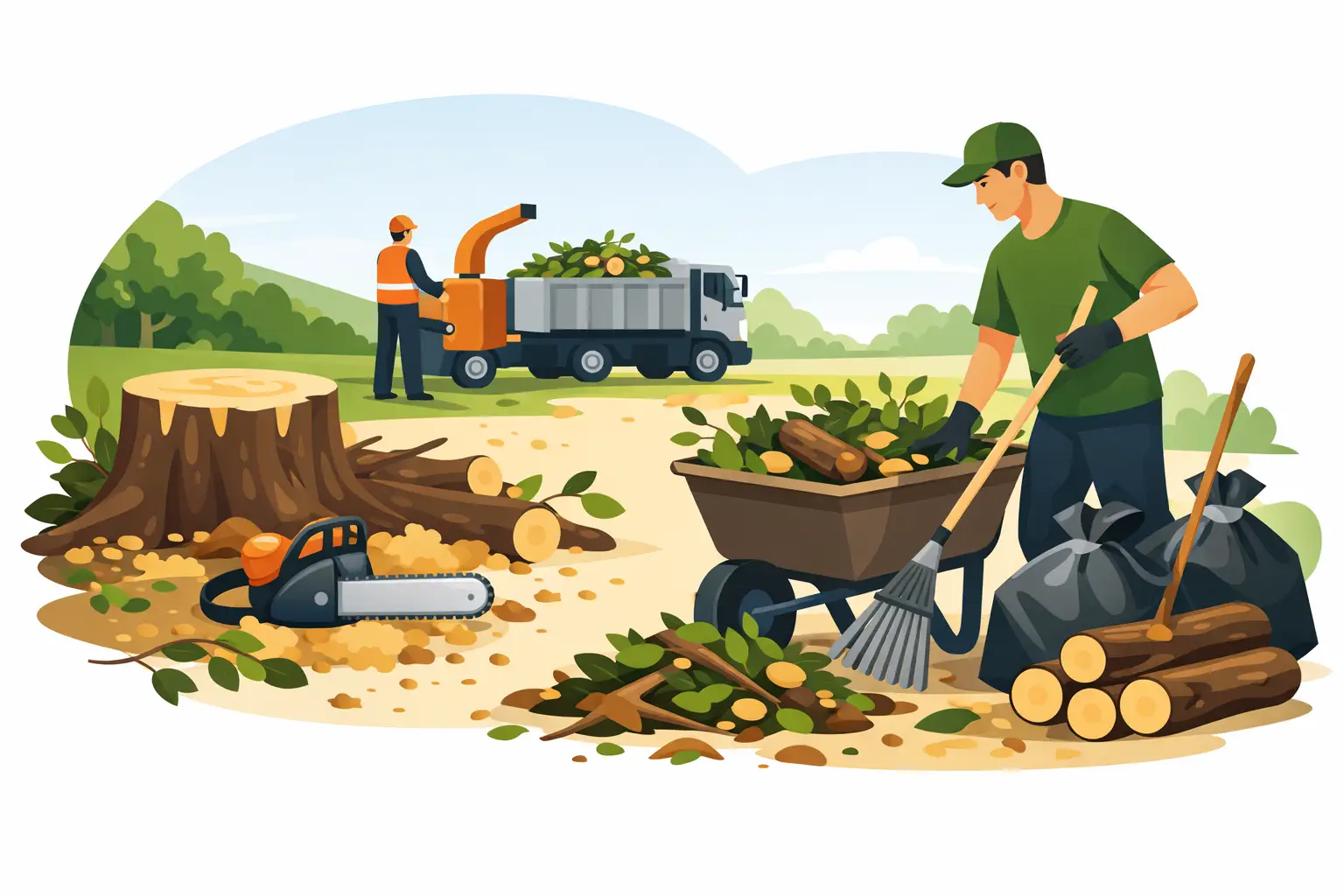
When a tree comes down, the cutting is only half the job. Homeowners asking who cleans up after tree removal are usually trying to avoid the surprise that comes after the crew leaves – branches in the yard, sawdust in the lawn, heavy rounds by the driveway, or a stump still sitting in place.
The short answer is this: in most professional tree removal jobs, the tree company handles cleanup as part of the work scope. But that does not always mean the same thing from one company to the next. Some crews haul away every branch and rake the site clean. Others remove the tree but leave the wood, chips, stump, or fine debris unless those items were included in the estimate.
Who cleans up after tree removal on most jobs?
On a standard residential job, the tree service usually cleans up the debris created by the removal. That often includes cutting down the tree, chipping brush, hauling logs if requested, and raking the visible mess from the work area. A good crew should also pay attention to the surrounding property while they work, not just the tree itself.
That said, cleanup depends on what was quoted. Tree removal is not one single service with one universal definition. The job can include full haul-away, leave-firewood options, stump grinding, surface raking, and site protection. If you assume all of that is automatic, you can end up disappointed.
This is why clear expectations matter before the first cut is made. A dependable company will explain what is being removed, what is being left behind, and what the yard should look like when the work is finished.
What cleanup usually includes
Most customers expect the area to look orderly when the crew leaves, and that is a fair expectation. In many cases, cleanup includes hauling off limbs and brush, chipping smaller material, removing or stacking wood, and raking up the bulk of sawdust, bark, and leaves.
On a well-run job, the crew also works to protect the rest of the property while removing the tree. That can mean using rigging to lower heavy sections, keeping equipment off sensitive areas when possible, and avoiding unnecessary damage to grass, beds, fences, or driveways. Cleanup starts during the work, not only after it.
If the tree is near a home, garage, patio, or neighboring property, the crew may need to take it down in sections. That takes more time, but it usually allows for better control and a cleaner result. When a company is careful about how the tree comes apart, there is often less scattered debris to deal with at the end.
Brush and limb removal
Brush is almost always part of the cleanup. Smaller branches, leafy limbs, and cut tops are typically fed through a chipper or loaded for haul-away. This is usually the mess customers want gone first, because it spreads across the lawn fastest and makes the property feel unfinished.
Wood and trunk sections
Large wood is where expectations often split. Some homeowners want every log hauled away. Others want the trunk cut into manageable pieces for firewood. Neither option is wrong, but it should be discussed in advance.
If the estimate says wood will be left on site, that still should not mean a random pile dropped in the middle of the yard. A professional crew can usually stack it in an agreed area that does not block the driveway, sidewalk, or access to the home.
Raking and surface cleanup
Raking is generally part of basic cleanup, but there is a difference between a clean site and a perfect site. Tree work creates sawdust, chips, bark, and small fragments that can settle into grass or landscape beds. A crew can remove the visible debris and leave the area presentable, but some fine material may remain, especially after a large removal.
That is normal. What matters is whether the company leaves the property in a clean, reasonable condition consistent with the quoted scope.
What cleanup may not include automatically
A lot of frustration comes from items that customers thought were included but were actually separate services. The most common example is stump grinding. Removing a tree does not automatically remove the stump. Cutting a tree to ground level and grinding out the stump are two different tasks with different equipment.
Root cleanup is another point of confusion. Most tree removals do not include digging out the full root system. That would be much more invasive and can damage surrounding lawn, irrigation, and hardscape.
Hauling away chips is also worth asking about. Some crews remove all chips. Others leave them on site if the customer wants mulch, or if chip removal was not part of the quote. The same goes for larger wood sections.
If there was storm damage, the answer can depend on urgency. Emergency work sometimes focuses first on making the property safe – getting a tree off a roof, driveway, or power line area – then returning for more detailed cleanup once the hazard is controlled.
Why cleanup standards vary from company to company
Not every tree service runs the same way. Some companies build thorough cleanup into every quote because they know homeowners want the property put back in order. Others keep the base price lower by limiting what is included.
Equipment also matters. A crew with the right chipper, truck capacity, rigging setup, and stump grinder can usually leave a cleaner site faster than a company trying to piece the job together. Experience matters too. Skilled crews plan where debris will go before they start cutting, which helps keep the work area controlled.
There is also a trade-off between price and finish. The cheapest quote is not always the quote that includes the best cleanup. If one bid is much lower than the others, ask whether haul-away, raking, stump grinding, and wood removal are actually included.
Questions to ask before you book the work
If you want to know exactly who cleans up after tree removal on your property, ask direct questions before approving the estimate. Ask whether brush will be chipped and hauled away, whether trunk wood will be removed or stacked, whether the stump is included, and whether the yard will be raked after the job.
It also helps to ask about access and property protection. Will heavy equipment be used on the lawn? Will plywood or other protection be placed in sensitive areas? If the tree is over a fence, shed, or driveway, how will the crew control the drop?
These are not small details. They tell you how the company works and whether they are planning for the whole job, not just the cutting.
What to look for in an estimate
A good estimate should be clear enough that you do not have to guess. It should spell out whether debris is hauled away, whether logs are left behind, whether stump grinding is separate, and whether final cleanup is included. If the wording is vague, ask for clarification before the job is scheduled.
Clear communication up front usually leads to a smoother job and fewer surprises when the crew packs up.
What a clean, professional job site should look like
After a proper tree removal, the site should feel safe, open, and reasonably clean. You should not be left with brush scattered across the yard or hidden debris piled behind shrubs. The lawn may show signs that work was done, especially after a large removal or wet ground conditions, but the property should not feel abandoned halfway through the process.
For homeowners and property managers, that follow-through matters. Tree removal affects curb appeal, safety, and how quickly the space can be used again. A clean finish is part of the service, not an extra courtesy.
Companies that take cleanup seriously usually show it in the rest of their process too. They communicate clearly, show up prepared, protect nearby structures, and finish the job the way they said they would. That practical professionalism is what many customers are really looking for.
In the West Metro, where homes often have mature trees close to houses, fences, and landscaped yards, cleanup is not just about appearance. It is part of protecting the property and keeping the work from creating a second problem after the tree is gone. That is why crews like Xtreme Tree Service MN put as much attention on safe removal and clean results as they do on getting the tree down.
If you are planning a tree removal, the best move is simple: ask exactly what cleanup includes, get it in writing, and choose a crew that treats the last rake pass as part of doing the job right.